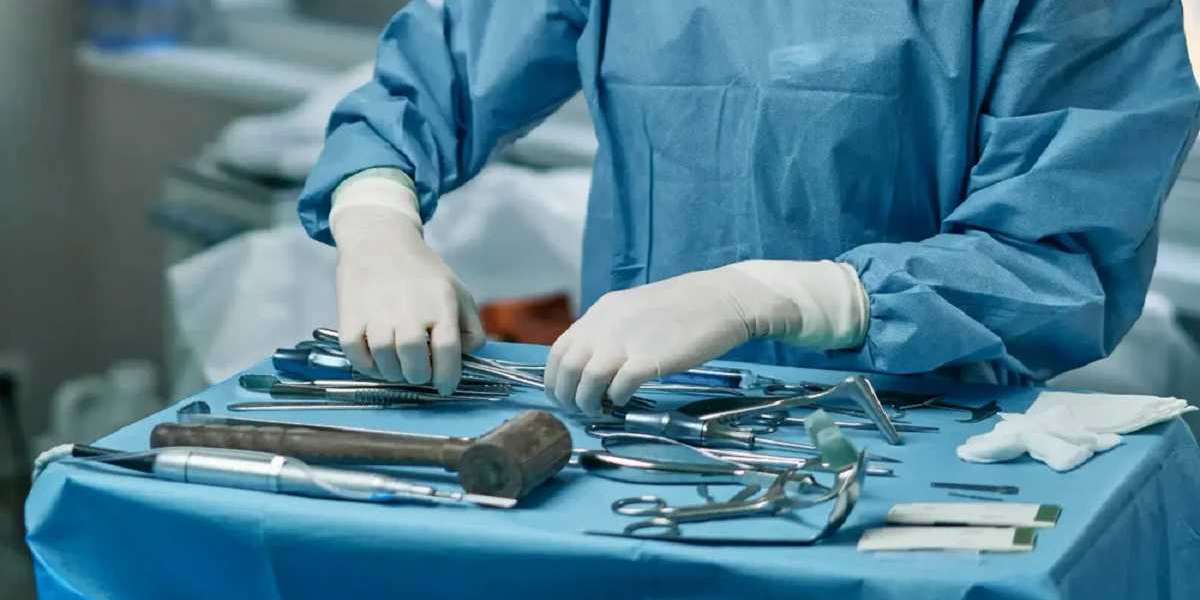

Surgical Instruments: The Backbone of Precision Medicine
The success of any surgery heavily depends on Surgical Tools, and they assist surgeons in performing complicated surgeries with precision and safety. These tools have progressed to more advanced ones based on robotics and ergonomics in a fast evolving sphere of healthcare. Their types, how they are maintained, and why they are important in achieving the best patient outcomes are discussed in this blog.
Education on the Surgical Instrument Types
Surgical instruments are categorized into functional, material, and type of procedure, and they are generalized to all specialties, e. g., orthopedics, cardiology, and neurosurgery.
Instruments Used to Cut and Dissect
Surgical kits are dominated by cutting tools. Scalpels, with their razor sharp blades, create a sharp incision, and scissors, such as Mayo or Metzenbaum types, are used to cut tissues. Scissors have curved or straight blades to do delicate tasks, which are usually made of a high grade of stainless steel to prevent corrosion.
Understanding and Possessing Instruments
Tissues are held in place by the use of forceps and clamps during surgery. Kelly forceps are used to hold heavy tissues, and Debakey forceps are used to provide atraumatic handling to vessels. Needle holders fix sutures and prevent slipping, and increase the accuracy of stitches.
Retracting and Exposing Instruments
Retractors are used to maintain incisions open. Weitlaner retractors have self-locks to allow hands free application, and Gelpi retractors cause minimal tissue injury. The tools are essential in abdominal or thoracic surgery.
Standards of Materials and Manufacturing
The new surgical equipment has been oriented towards durability and biocompatibility. Tungsten carbide tips enhance cutting edges, and titanium gives lightweight strength. The ISO 13485 standards are observed in the manufacture of sterilization compatibility and corrosion resistance.
The market is dominated by suppliers in Germany and Pakistan, with Pakistan exporting more than 20,000 tons of it each year because of the expertise. Plastic single-use tools decrease the risk of infections, but reusable tools are more sustainable with the right maintenance.
Best Practices in Terms of Sterilization and Maintenance
Washing is what is good to extend the life of the instruments and remove cross-contamination.
Sterilization Techniques
Autoclaving using 121 o C will kill 99.99 percent of microbes, but in the case of the heat-sensitive tools, ethylene oxide is suitable. The CDC states that prior to the sterilization process, ultrasonic cleaning is used to remove the debris.
Daily Maintenance Protocols
Post-use checking, greasing of the moving parts with water soluble substances, and storing in the ventilated cases. The retention of the edge is maintained through frequent sharpening and it saves cutting time of up to 15 percent.
Surgery Instrument Revolutionizations
Surgical equipment is changed by technology. Robotic-aided systems such as the da Vinci system offer 3D visualization and tremor-filtered, accurate results, which minimize recovery times. Sensors installed on smart instruments that combine force application with other parameters warn the surgeons of excessive pressure.
Laparoscopic tools are characterized by the miniaturization of designs to perform the most minimally invasive procedures, which reduces hospitalization. Personalized tools to fit the anatomy of specific patients, 3D-printed, increase the results in complex situations.
Choosing Surgical Instruments Suppliers Who are Reliable
Quality suppliers are reliable in terms of compliance. Find FDA-approved certifications and hospital bulk discounts. Affordable, high-precision substitutes to European brands are available at very affordable prices in the hands of Pakistani exporters such as Sialkot.
Assess warranties, refund policies, and personalization services. Collaboration with audited suppliers facilitates the procurement process and helps with the supply chain efficiency.
Future of Surgical Instruments in Healthcare
The future trends are AI integration, which is predictive maintenance, and biodegradable materials, which are eco-friendly surgery. Coatings made through nanotechnology repel fluids, making them easier to clean. With the increasing demand for surgical instruments in the world, which is expected to reach up to 15 billion dollars by the year 2028, the need to invest in advanced surgical instruments will become the standard of healthcare excellence.
To sum it up, surgical tools are a representation of precision engineering at the forefront of medicine. Ranging from the latest technologies to the strictest of maintenance, the quality of the work will guarantee safer surgery and care of patients. To be ahead of the game in this dynamic sphere, healthcare providers must find suppliers whom they can trust.
FAQs
Q1: Which are the most frequently used surgical tools?
A: At the top is a list of scalpels, forceps, scissors, and retractors, which are used in practically all procedures that involve cutting, grasping, and exposing tissues.
Q2: What is the right frequency of sterilizing surgical equipment?
A: Cleanse thoroughly after use. After the previous procedure, ultrasonic cleaning, and autoclaving are ready to proceed with the next procedure.
Q3: What are the ideal materials for surgical instruments?
A: Stainless steel and titanium are tough and biocompatible, and the tungsten carbide is better at cutting.
Q4: What is the rationale for using reusable surgical instruments as compared to disposable surgical instruments?
A: Reusable products are more cost-effective in the long-term and contribute to sustainability; nevertheless, they should be properly maintained and sterilized.