
Market Overview and Growth Outlook
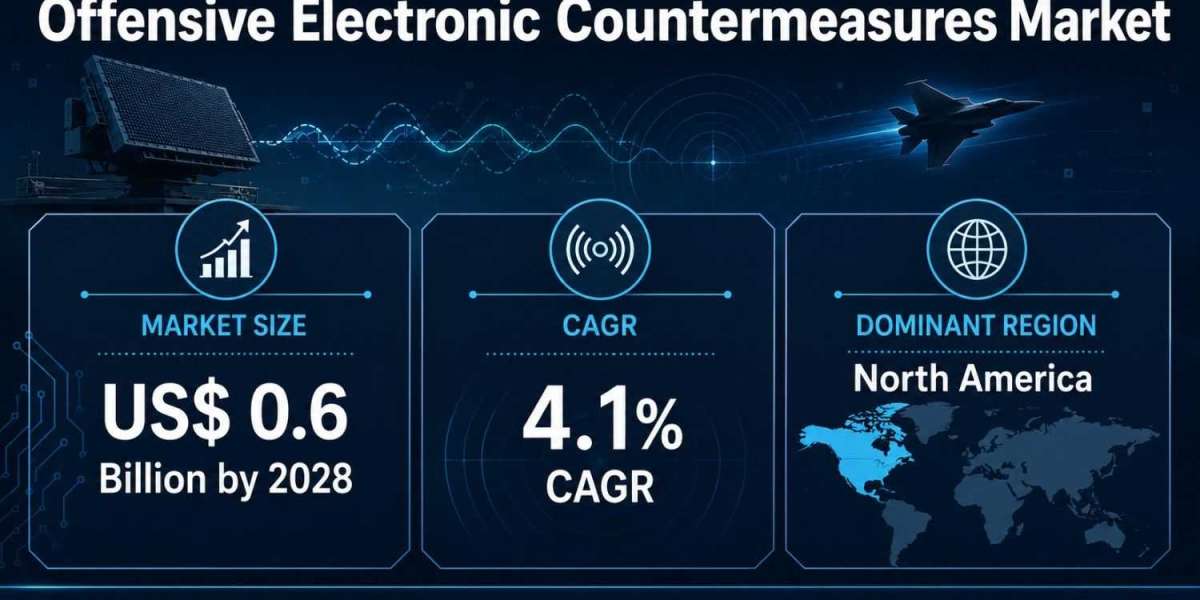
The Offensive Electronic Countermeasures Market size is likely to reach US$ 0.6 Billion by 2028, supported by a long-run CAGR of 4.1%. The market analysis points to rising demand for technologies that disrupt enemy missiles, drone radar, surveillance systems, and electronic communication networks used by hostile forces.
The Offensive Electronic Countermeasures Market is expected to grow at a CAGR of 4.1% during 2023-2028. Growth is increasing because electronic systems are now deeply connected to military operations, making the ability to disrupt or disable adversary equipment a more important part of defense planning.
A clear reading of Offensive Electronic Countermeasures Market size shows that defense buyers are prioritizing electronic advantage, not only physical assets. When communications, sensing, and surveillance systems shape battlefield outcomes, countermeasure technologies become central to mission protection and operational superiority.
Request a free sample report:
https://www.stratviewresearch.com/Request-Sample/offensive-electronic-countermeasures-market#form
Market Segmentation Analysis
The Offensive Electronic Countermeasures Market is segmented by Platform Type (Air, Land, and Naval), Frequency Type (Electro-optical/Infrared (EO-IR) Countermeasures and Radio Frequency (RF) Countermeasures), and Region (North America [The USA, Canada, and Mexico], Europe [Germany, France, The UK, Russia, and Rest of Europe], Asia-Pacific [China, Japan, India, and Rest of Asia-Pacific], and Rest of the World [Saudi Arabia, Israel, and Others]).
Platform Type includes Air, Land, and Naval. Air is anticipated to remain the biggest platform type for offensive electronic countermeasures systems in the years to come, driven by increasing threats to aircraft, military modernization programs, technological advancements, and rising air warfare activities across defense environments.
Frequency Type includes EO-IR Countermeasures and RF Countermeasures. EO-IR countermeasures are expected to be the dominant as well as faster-growing segment during the forecast period, supported by greater use of EO-IR systems in military and defense applications and the need for advanced countermeasures against enemy attacks.
Regional Market Insights
North America is expected to remain the largest market over the next five years. The United States is one of the leading countries with the highest defense spending and has been the largest global procurer of offensive electronic countermeasures, strengthening the region’s role in market demand.
Asia-Pacific is likely to grow at the fastest rate. The source notes that Asia has a significant presence in offensive electronic countermeasures, with Bharat Electronics Limited and Israel Aerospace Industries identified within the broader market landscape, supporting its role in regional growth analysis.
Emerging Trends Shaping the Offensive Electronic Countermeasures Market
The strongest market intelligence signal is the rising importance of EO-IR countermeasures. The shift of adversaries from RF frequency to more precise EO-IR frequency has become a major factor behind higher growth in EO-IR countermeasures, reshaping frequency-level demand in the market.
Another emerging trend is the broadening use of offensive electronic countermeasures beyond traditional military applications. The source states that these technologies are increasingly being used by law enforcement agencies and other security organizations to combat threats such as terrorism.
Key Growth Drivers of the Market
- The ongoing need for military forces to maintain technological superiority increases demand for advanced electronic countermeasure systems.
- The deeper use of electronic devices in military operations makes disruption and disablement capabilities more critical to modern warfare.
- Increasing aircraft threats support the Air platform segment, as defense forces require protection against a range of hostile systems.
- The transition from RF frequency toward more precise EO-IR frequency raises demand for EO-IR countermeasures during the forecast period.
- Use by law enforcement agencies and security organizations expands the ecosystem beyond traditional military applications and supports broader demand.
Competitive Landscape
Top Companies in the Market
BAE Systems PLC
Bharat Electronics Limited
Israel Aerospace Industries
Northrop Grumman Corporation
Raytheon Technologies Corporation
Thales S.A.
Conclusion and Strategic Outlook
The Offensive Electronic Countermeasures Market is expected to maintain a steady growth path, reaching US$ 0.6 Billion by 2028 at a CAGR of 4.1%. The industry outlook is shaped by military modernization, EO-IR demand, air platform protection, and continued RD investment by concentrated market participants.
FAQs – Offensive Electronic Countermeasures Market
What is the market size forecast for the Offensive Electronic Countermeasures Market?
The Offensive Electronic Countermeasures Market is likely to reach US$ 0.6 Billion by 2028. This forecast is based on demand for systems that disrupt hostile electronic communication and sensing equipment.
What CAGR is projected for the Offensive Electronic Countermeasures Market?
The Offensive Electronic Countermeasures Market is projected to grow at a CAGR of 4.1% during 2023-2028. The rate reflects steady adoption of advanced countermeasure systems across defense applications.
Why is the Offensive Electronic Countermeasures Market growing?
The market is growing because military forces need technological advantage over adversaries. Demand also rises as electronic devices become more integrated into defense operations.
Which region has the strongest demand in the Offensive Electronic Countermeasures Market?
North America is expected to remain the largest market during the forecast period. The United States has been the largest procurer of offensive electronic countermeasures globally.
What are the key risks or challenges in this market?
The source notes that the market is highly competitive and concentrated among a small number of players. This makes technology, product offerings, and regional presence important competitive factors.