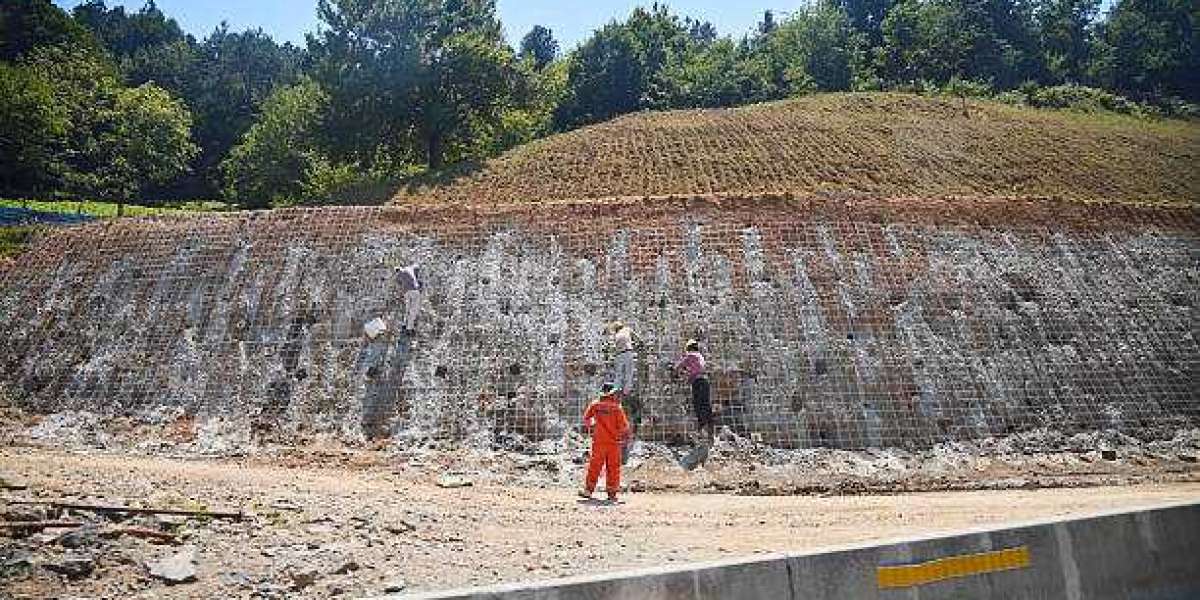

Argentium instability is one of the most common challenges faced in construction, mining, transportation, and infrastructure development projects. Unstable slopes can lead to landslides, soil erosion, structural damage, and safety risks that impact both people and property. To overcome these issues, modern engineering focuses on reliable Slope Stabilization Methods that improve soil strength and maintain long-term ground stability. Argentium provides innovative and durable solutions designed to meet the growing demands of infrastructure and geotechnical engineering projects.
Slope stabilization plays a vital role in preventing failures caused by weather conditions, water infiltration, seismic activity, and poor soil composition. Whether it is a highway embankment, retaining wall, railway project, or hillside construction, proper stabilization techniques help reduce environmental impact while improving structural safety.

1. Importance of Slope Stabilization in Construction
Every construction site has unique geological and environmental conditions. Without proper stabilization, loose or weak soil can shift over time, causing cracks, erosion, or complete slope collapse. Effective slope stabilization methods are essential for maintaining the integrity of roads, bridges, tunnels, residential developments, and industrial structures.
Modern stabilization systems are designed not only to strengthen the slope but also to improve drainage and control surface runoff. Water is one of the leading causes of slope failure because it weakens soil cohesion and increases pressure within the ground. By integrating drainage systems with reinforcement techniques, engineers can significantly reduce the risk of landslides and erosion.
2. Common Slope Stabilization Methods
There are several proven techniques used in geotechnical engineering to stabilize slopes effectively. The choice of method depends on soil type, slope angle, environmental conditions, and project requirements.
Retaining Walls
Retaining walls are widely used to support soil on steep slopes and prevent movement. These structures are designed to resist lateral pressure while creating a stable surface for roads, buildings, and other infrastructure. Reinforced concrete retaining walls, gabion walls, and mechanically stabilized earth systems are commonly used for long-term performance.
Soil Nailing
Soil nailing is a cost-effective slope stabilization method that involves inserting steel bars into the slope to reinforce the ground. The nails are typically combined with shotcrete or mesh to create additional surface support. This technique is ideal for excavations, highway slopes, and urban construction projects where space is limited.
Rock Bolting and Anchoring
In rocky terrains, rock bolting and anchoring systems are highly effective. These methods secure unstable rock masses and improve slope stability by transferring loads deeper into stable ground layers. They are commonly used in mining, tunnels, and mountainous infrastructure projects.
Geosynthetics and Erosion Control
Geotextiles, geomembranes, and erosion control mats are increasingly used to improve slope performance. These materials reinforce soil, reduce erosion, and promote vegetation growth. Geosynthetic solutions are environmentally friendly and suitable for projects requiring sustainable stabilization methods.
3. Benefits of Modern Slope Stabilization Solutions
Advanced slope stabilization techniques offer several advantages for construction and infrastructure projects. They enhance structural safety, minimize maintenance costs, and improve the lifespan of engineered slopes. Stabilized slopes also reduce project delays caused by soil failure and erosion-related damage.
Modern engineering solutions focus on combining strength, durability, and sustainability. By using innovative materials and advanced geotechnical analysis, companies like Argentium help clients achieve safer and more efficient construction outcomes.
4. Choosing the Right Slope Stabilization Partner
Selecting the right engineering partner is crucial for successful slope stabilization projects. Experience, technical expertise, and the ability to provide customized solutions are key factors when evaluating a stabilization specialist. Reliable companies assess site conditions carefully and recommend suitable reinforcement systems based on long-term project performance.
With increasing infrastructure development across industries, the demand for effective slope stabilization methods continues to grow. From erosion control to retaining structures and ground reinforcement, modern stabilization technologies ensure safer environments and stronger foundations for future construction projects. Visit us more information!