
A stroke can change a person’s life suddenly. After the emergency treatment is completed, many families feel confused about what comes next. They may ask questions like: How long will recovery take? When should physiotherapy begin? Will the patient walk or speak again? What kind of support is needed at home?
The truth is that stroke recovery is different for every patient. Some people improve quickly, while others need long-term rehabilitation. But in most cases, recovery follows a stage-wise journey. Understanding this timeline helps families plan better, avoid delays, and give the patient the right support at the right time.
Why Stroke Recovery Happens In Stages
Stroke affects the brain, and the impact depends on which part of the brain is damaged. Some patients may struggle with movement, speech, swallowing, memory, balance, or daily activities. This is why recovery cannot be treated as one simple process.
A structured rehabilitation plan usually includes physiotherapy, occupational therapy, speech therapy, nursing support, nutrition guidance, and emotional care. When these therapies are started early and continued consistently, the patient has a better chance of regaining independence.
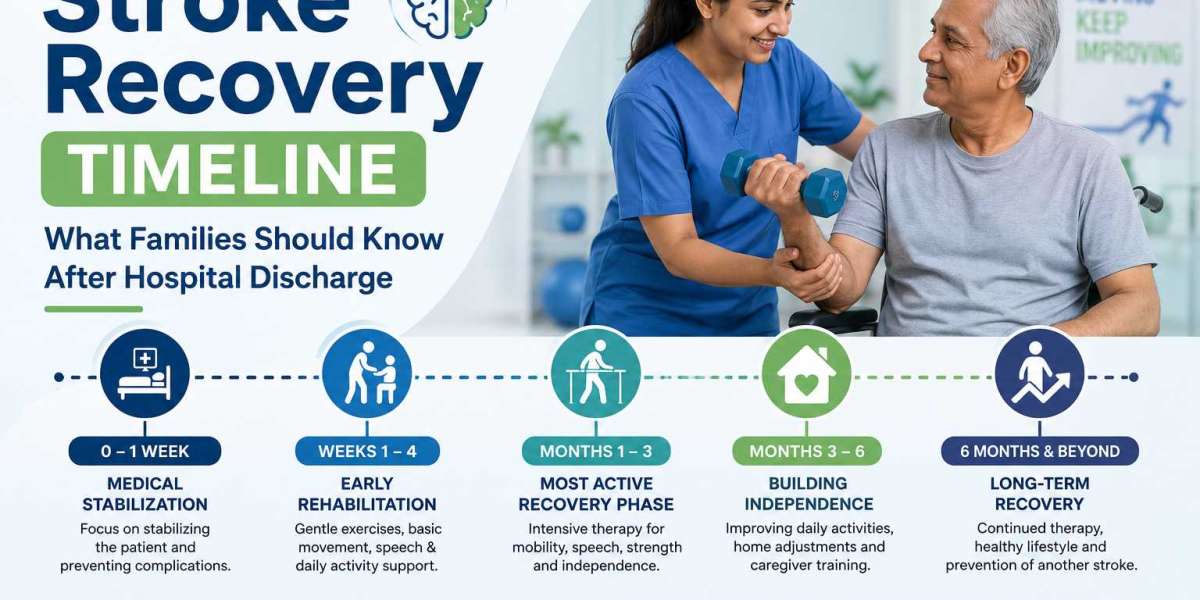
The First Week: Medical Stabilization
The first few days after stroke are usually spent in the hospital. Doctors focus on stabilizing the patient, monitoring blood pressure and oxygen levels, checking brain scans, and reducing the risk of another stroke.
At this stage, families should also start discussing rehabilitation with the medical team. Once the patient is medically stable, early rehab planning becomes important. Waiting too long after discharge can slow down progress.
Weeks 1 To 4: Early Rehabilitation Begins
Early rehabilitation may begin in the hospital or soon after discharge, depending on the patient’s condition. This stage usually focuses on gentle movement, posture correction, assisted sitting or standing, basic hand movements, swallowing support, and communication training.
Physiotherapy helps prevent stiffness and weakness. Occupational therapy helps the patient relearn daily tasks like eating, dressing, brushing, and using the bathroom. Speech therapy may be needed if the stroke has affected language or swallowing.
This stage is also emotionally difficult for families. The patient may feel frustrated, tired, or dependent. Encouragement and patience are very important.
Months 1 To 3: The Most Active Recovery Phase
The first three months are often considered one of the most important periods in stroke recovery. During this time, many patients show visible improvement with regular therapy.
The focus may include walking training, balance exercises, hand function, speech improvement, self-care activities, and confidence building. Patients who need more support may benefit from inpatient rehabilitation, where therapy, nursing care, and medical supervision are available in one place.
This is also the time when families should stay consistent. Missing therapy sessions or stopping exercises too early can affect progress.
Months 3 To 6: Building Independence
After three months, recovery may continue, but the pace can become slower. This does not mean recovery has stopped. The focus now shifts towards practical independence.
Patients may start practicing real-life tasks such as walking inside the home, using stairs safely, eating independently, moving from bed to chair, or communicating more clearly. Therapists may also guide families on home modifications such as grab bars, anti-slip mats, ramps, and safer furniture placement.
Caregiver training becomes very important during this phase. Family members should learn how to support the patient without making them fully dependent.
6 Months And Beyond: Long-Term Recovery
Stroke recovery can continue beyond six months. Some patients improve for many months or even years with regular therapy and lifestyle changes.
Long-term recovery may include outpatient physiotherapy, home exercises, speech therapy, mental health support, regular doctor follow-ups, and prevention of another stroke. Blood pressure, diabetes, cholesterol, diet, and physical activity should also be managed carefully.
A temporary recovery plateau is common. It simply means that visible progress has slowed. With the right therapy changes, many patients can continue improving.
When Should Families Look For A Stroke Recovery Center?
Families should consider a stroke recovery center when the patient needs structured therapy, daily support, nursing care, or a safe rehabilitation environment after hospital discharge.
A good stroke recovery center should have neuro-trained physiotherapists, occupational therapists, speech therapists, psychological support, nutrition guidance, and personalized rehab plans. Families who want a detailed breakdown of the stages of stroke recovery can refer to Apricot Care’s complete guide on stroke recovery stages.
Final Thoughts
Stroke recovery requires time, patience, and consistent rehabilitation. The earlier families understand the recovery timeline, the better they can support the patient.
Every small improvement matters. Sitting without support, moving a hand, taking a few steps, speaking a word clearly, or eating independently can all be major milestones. With the right rehab plan and family involvement, many stroke survivors can regain confidence, dignity, and functional independence.