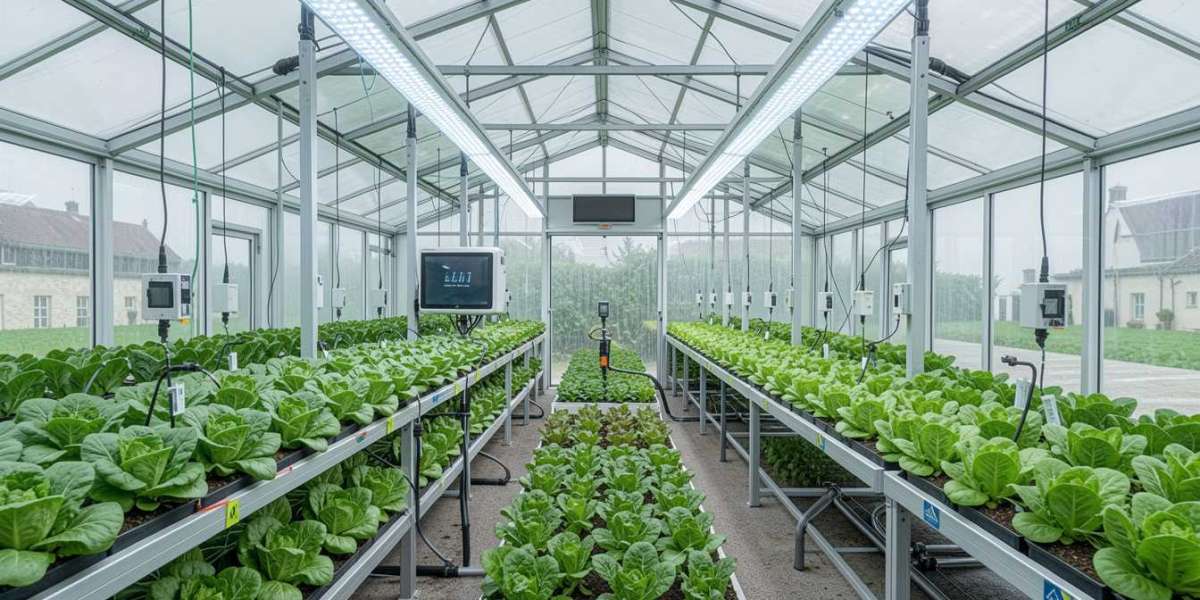

The Europe smart greenhouse market is rapidly emerging as a key pillar in modern agriculture, driven by the increasing need for sustainable food production, climate-resilient farming systems, and precision agriculture technologies. Smart greenhouses integrate advanced automation, IoT-enabled sensors, climate control systems, and data analytics to optimize crop yield, reduce resource consumption, and ensure year-round cultivation efficiency. These innovations are reshaping the agricultural landscape across Europe, where environmental regulations and food security concerns are becoming increasingly important.
The Europe smart greenhouse market is expected to expand from USD 700 million in 2025 to USD 1,840 million by 2034, reflecting an 11.4% CAGR driven by increasing adoption of controlled environment agriculture, automation technologies, smart farming systems, and data-driven greenhouse solutions across key horticulture markets in the region.
The rising demand for fresh, pesticide-free, and locally produced food is further accelerating the adoption of smart greenhouse systems. Farmers and agribusinesses are increasingly shifting from traditional farming methods to technology-driven greenhouse environments that enable precise control over temperature, humidity, irrigation, and lighting conditions. This shift is not only improving productivity but also significantly reducing operational costs and environmental impact.
Technological advancements in artificial intelligence, machine learning, and IoT-based monitoring systems are playing a crucial role in enhancing greenhouse productivity. These technologies allow real-time monitoring of plant health, predictive analytics for crop yield optimization, and automated decision-making systems that improve farming efficiency.
Key Drivers of the Europe Smart Greenhouse Market
Rising Demand for Sustainable Agriculture
Sustainability is a central focus of European agricultural policies. Governments and private stakeholders are actively promoting eco-friendly farming practices that reduce water usage, chemical fertilizers, and carbon emissions. Smart greenhouses align perfectly with these goals by enabling resource-efficient cultivation methods.
Increasing Adoption of Controlled Environment Agriculture (CEA)
Controlled Environment Agriculture is gaining significant traction across Europe. Smart greenhouses offer precise environmental control, allowing farmers to grow crops in optimal conditions regardless of external weather fluctuations. This ensures consistent crop quality and higher productivity throughout the year.
Growing Food Security Concerns
Europe is focusing on strengthening its food supply chains due to global disruptions and climate change impacts. Smart greenhouse systems provide a reliable solution by enabling local production of fruits, vegetables, and herbs, reducing dependence on imports.
Technological Advancements in Agriculture
The integration of advanced technologies such as IoT sensors, robotics, AI-driven analytics, and automated irrigation systems is transforming greenhouse operations. These innovations are improving efficiency, reducing labor dependency, and increasing crop yields.
Download a Complimentary PDF Sample Report:
https://dimensionmarketresearch.com/request-sample/europe-smart-greenhouse-market/
Core Technologies Shaping Smart Greenhouses in Europe
Internet of Things (IoT) in Agriculture
IoT plays a crucial role in smart greenhouse systems by connecting sensors, devices, and control systems. These sensors monitor key environmental parameters such as temperature, humidity, soil moisture, and CO₂ levels, enabling real-time decision-making.
Artificial Intelligence and Machine Learning
AI-powered systems analyze large volumes of agricultural data to predict crop growth patterns, detect diseases, and optimize resource usage. Machine learning algorithms help farmers make data-driven decisions to improve yield and reduce waste.
Automated Climate Control Systems
Automated systems regulate greenhouse conditions by adjusting ventilation, shading, heating, and cooling mechanisms. This ensures optimal growing conditions for crops regardless of external weather variations.
Smart Irrigation Systems
Water management is a critical aspect of greenhouse farming. Smart irrigation systems use sensors and data analytics to deliver precise water quantities, reducing water wastage and improving plant health.
LED Grow Lighting Systems
Advanced LED lighting systems provide customized light spectrums that support plant growth at different stages. These systems enhance photosynthesis efficiency and allow year-round cultivation.
Market Opportunities in Europe Smart Greenhouse Industry
Expansion of Urban Farming
Urban farming is gaining popularity in European cities due to limited agricultural land and increasing demand for fresh produce. Smart greenhouses enable vertical farming and rooftop agriculture, making efficient use of urban spaces.
Increasing Investment in AgriTech Startups
The rise of agricultural technology startups is driving innovation in smart greenhouse solutions. Investments in automation, robotics, and AI-based farming systems are accelerating market expansion.
Growing Demand for Organic Produce
Consumers are increasingly preferring organic and chemical-free food products. Smart greenhouses provide controlled environments that reduce pesticide usage, making organic farming more efficient.
Government Support and Subsidies
European governments are supporting smart agriculture initiatives through subsidies, grants, and research funding. These initiatives are encouraging farmers to adopt advanced greenhouse technologies.
Challenges in the Europe Smart Greenhouse Market
High Initial Investment Costs
Smart greenhouse systems require significant upfront investment in infrastructure, sensors, and automation technologies. This can be a barrier for small and medium-scale farmers.
Technical Complexity
The integration of advanced technologies requires technical expertise for installation, operation, and maintenance. Lack of skilled professionals can hinder adoption.
Energy Consumption Concerns
Despite being efficient, smart greenhouses rely on energy-intensive systems such as lighting, heating, and cooling, which can increase operational costs.
Cybersecurity Risks
As greenhouse systems become more connected, they are increasingly vulnerable to cyber threats and data breaches, requiring robust security measures.
Purchase the report for comprehensive details:
https://dimensionmarketresearch.com/checkout/europe-smart-greenhouse-market/
Emerging Trends in the Europe Smart Greenhouse Market
Rise of Autonomous Greenhouses
Fully automated greenhouses that operate with minimal human intervention are gaining popularity. These systems use AI, robotics, and predictive analytics to manage crop production efficiently.
Integration of Big Data Analytics
Big data is being used to analyze agricultural trends, monitor crop performance, and optimize greenhouse operations. This helps improve decision-making and productivity.
Development of Hybrid Greenhouse Models
Hybrid systems that combine traditional farming methods with smart technologies are emerging as a cost-effective solution for farmers transitioning to modern agriculture.
Expansion of Vertical Farming Systems
Vertical farming within smart greenhouses is becoming increasingly popular due to land constraints in urban areas. This method maximizes crop output using minimal space.
Focus on Energy Efficiency
Energy-efficient technologies such as solar-powered greenhouses and energy recovery systems are being adopted to reduce operational costs and environmental impact.
Regional Analysis
Leading Region in the Europe Smart Greenhouse Market
The Europe smart greenhouse market is experiencing strong growth across multiple countries, with Western Europe leading adoption due to advanced agricultural infrastructure, strong government support, and high awareness of sustainable farming practices. Countries such as the Netherlands, Germany, and Spain are at the forefront of smart greenhouse adoption due to their strong horticulture industries and technological advancements in controlled environment agriculture.
The region’s focus on reducing carbon emissions and improving food security is further driving the adoption of smart greenhouse technologies. Additionally, increasing investments in agricultural innovation and digital farming solutions are strengthening market growth.
Western Europe
Western Europe dominates the market due to its highly developed agricultural sector and early adoption of smart farming technologies. The Netherlands, in particular, is a global leader in greenhouse farming innovation.
Northern Europe
Northern European countries are increasingly adopting smart greenhouse systems to overcome harsh climatic conditions and ensure year-round crop production.
Southern Europe
Southern Europe benefits from favorable climatic conditions for agriculture, but smart greenhouse adoption is increasing to improve productivity and water efficiency.
Eastern Europe
Eastern Europe is gradually adopting smart greenhouse technologies due to rising agricultural modernization efforts and government support programs.
Competitive Landscape
The Europe smart greenhouse market is characterized by continuous innovation and strategic collaborations among key players. Companies are focusing on developing advanced automation systems, energy-efficient solutions, and AI-driven agricultural platforms.
Key strategies include:
- Development of IoT-enabled greenhouse systems
- Investment in AI and automation technologies
- Expansion into emerging European markets
- Strategic partnerships with agricultural institutions
- Focus on sustainable and energy-efficient solutions
Innovation remains a critical factor as companies aim to enhance productivity, reduce operational costs, and improve crop quality.
Future Outlook of the Europe Smart Greenhouse Market
The future of the Europe smart greenhouse market looks highly promising, driven by the increasing need for sustainable food production and technological advancements in agriculture. The market is expected to witness significant growth as automation, AI, and IoT continue to reshape farming practices.
With rising urbanization and climate change concerns, smart greenhouses will play a crucial role in ensuring food security and reducing dependency on traditional farming methods. The shift toward data-driven agriculture will further enhance productivity and resource efficiency.
Frequently Asked Questions (FAQs)
1. What is a smart greenhouse?
A smart greenhouse is an advanced agricultural system that uses automation, sensors, and digital technologies to control environmental conditions for optimal plant growth.
2. What is driving the Europe smart greenhouse market growth?
Key drivers include rising demand for sustainable agriculture, technological advancements, controlled environment farming, and food security concerns.
3. Which technologies are used in smart greenhouses?
Technologies include IoT sensors, AI, machine learning, automated climate control, smart irrigation systems, and LED grow lighting.
4. What is the market growth forecast for Europe smart greenhouse market?
The market is expected to grow from USD 700 million in 2025 to USD 1,840 million by 2034, at an 11.4% CAGR.
5. Which country leads smart greenhouse adoption in Europe?
The Netherlands is a global leader due to its advanced horticulture industry and strong focus on agricultural innovation.
Key Insights Summary
The Europe smart greenhouse market is experiencing strong growth driven by increasing adoption of controlled environment agriculture, automation technologies, and sustainable farming practices. With a projected CAGR of 11.4%, the market is set to expand significantly between 2025 and 2034.
Technological advancements in IoT, AI, and automation are transforming traditional agriculture into highly efficient and data-driven systems. Western Europe currently leads market adoption, while other regions are rapidly catching up.
Despite challenges such as high initial costs and technical complexity, the long-term benefits of smart greenhouses in improving productivity, sustainability, and food security make them a crucial component of Europe’s agricultural future.