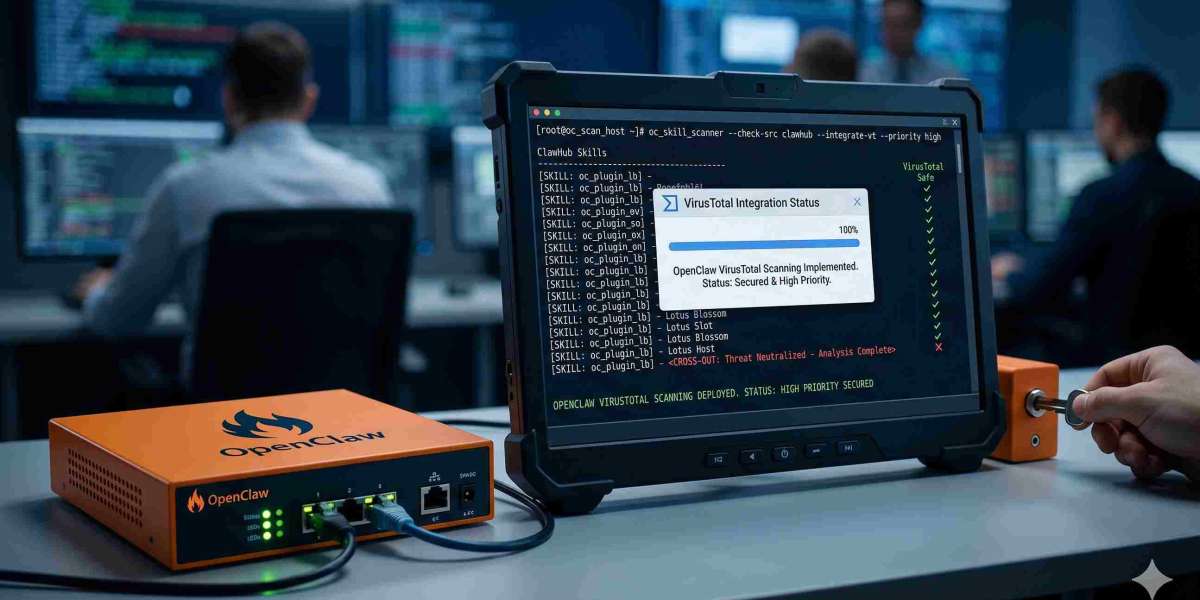

We are seeing reports of a new security integration by OpenClaw, affecting its skill marketplace as of 2026‑02‑08.
OpenClaw (formerly Moltbot and Clawd Bot) has announced that it is partnering with Google‑owned VirusTotal to scan skills that are being uploaded to ClawHub, its skill marketplace, as part of broader efforts to bolster the security of the agentic ecosystem.
The Evidence
OpenClaw has integrated VirusTotal’s threat intelligence into its skill scanning process.
First, all skills published to ClawHub are now scanned using VirusTotal's threat intelligence, including their new Code Insight capability.
Initially, this integration leverages the latest virus detection algorithms and code analysis tools from VirusTotal.
Subsequently, any detected malicious or suspicious code is flagged for review by OpenClaw’s security team.
Specifically, the scanning process covers both compiled binaries and source code submissions.
Who Should Be Concerned
Most importantly, mid‑market enterprises that use agentic ecosystems—particularly those deploying ClawHub skills in operational environments—must be vigilant.
Moreover, CIOs and CISOs responsible for ensuring secure software deployment should prioritize this integration.
In particular, organizations under GDPR or HIPAA regulations must consider the potential impact on data integrity and privacy compliance.
Therefore, any enterprise leveraging agentic skill marketplaces should monitor the scanning status and promptly address flagged issues.
Historical Context
Notably, previous incidents with ClawHub skills exposed vulnerabilities that were exploited by malware actors.
Similarly, earlier security updates in OpenClaw's predecessor, Moltbot, had integrated external threat intelligence services.
In fact, the trend of partnering with third‑party scanning tools has grown as agentic ecosystems expand.
Detailed Impact Analysis
Currently, all skills published to ClawHub are subject to VirusTotal scans, potentially affecting thousands of user deployments across multiple regions.
Once a malicious skill is detected, the attacker can exploit code execution within agents, compromising data and operational processes.
Meanwhile, the threat actor attribution remains unclear but likely involves opportunistic malware developers.
Consequently, businesses may experience downtime or unauthorized access to sensitive data.
Based on this integration, the risk of uncontrolled agentic code injection has been significantly reduced.
Immediate Actions Required
Immediately, organizations should ensure that OpenClaw’s latest version (v3.2) is installed and configured with the VirusTotal scanning feature enabled.
Specifically, patching to v3.2 must be completed within 24 hours for all deployed instances.
Next, verify that all uploaded skills are scanned by checking the audit logs in ClawHub’s dashboard.
However, if any skill fails the scan, a manual review process should be initiated promptly.
Additionally, implement monitoring alerts to detect any anomalous scanning failures or new malicious code submissions.
After confirming compliance, schedule periodic reviews every 7 days to maintain ongoing security integrity.
Additional Resources
Vendor advisories and CISA/CERT alerts are available at the following link: info@thehackernews.com
The Hacker News
https://thehackernews.com/2026/02/openclaw-integrates-virustotal-scanning.html
Get Expert Help
If you need assistance in configuring OpenClaw’s VirusTotal integration or managing security compliance, please visit https://defendmybusiness.com/cyber-security-consulting-services/ .