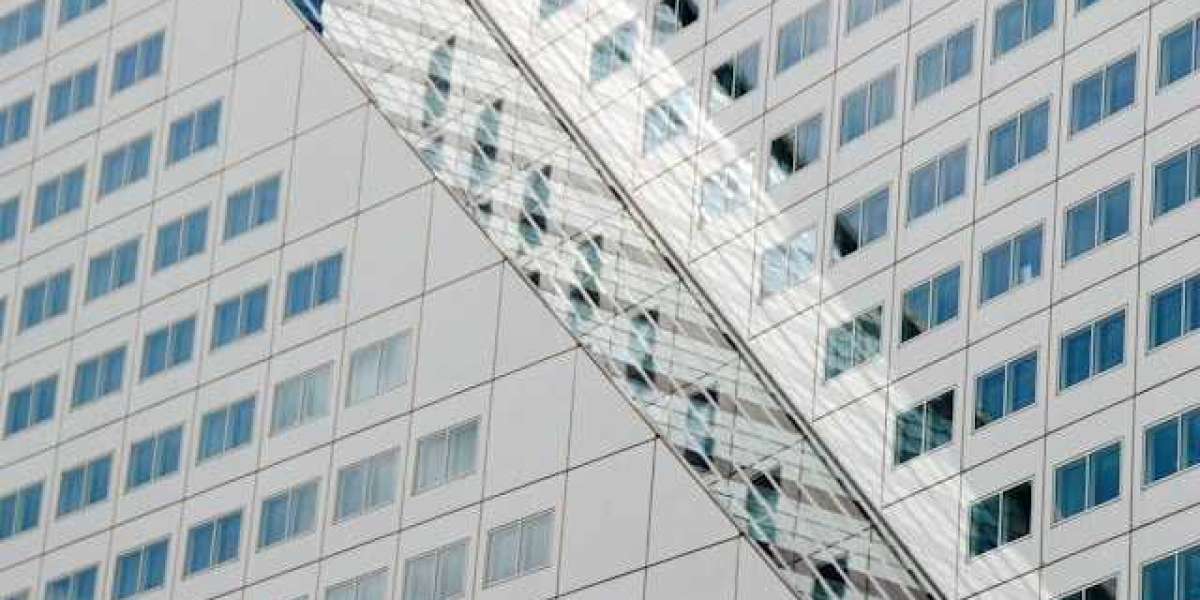

Defining a Facade
When it comes to a building, an important consideration is its appearance from the street, or its facade, becasue it is likely to grab the attention of passersby or potential visitors.
The facade is the style of the building’s front, or might include two or three other important sides. These sides often serve a purpose in that they are stylish and serve a function, like a window.
Function and form are design marks of great buildings. Facades and buildings that emphasize form often sell well. According to GMI Research, the Facade Market is expected to grow to USD 285.5 billion in 2030.
Facade Myths
The terms facade and exterior are frequently confused. At first glance, it is simple to see how a facade or a front of the building might be confused with the exterior, but a facade is often part of the building that catches the most attention, stylistically and otherwise.
The terms facade and exterior are frequently confused. At first glance, it is simple to see how a facade might be confused with the exterior, but the exterior is the total outer building and the facade is part of the total building system that catches the most attention, often the stylistically the most representative part of the building.
This distinction matters a lot more than it may seem. When it comes to design guide, inspections, and maintenance rules, it matters more. Some cities take strict measures on just facade design rules. They care for the safety and aesthetics of the city.
What Purpose Does a Facade Serve?
The common perception is that a facade only relates to design. There is more that a facade does.
To start, a facade serves as a shield. It divides the interior of the building from the exterior. This is helpful in managing the interior temperature, airflow, and moisture.
A facade also serves in energy efficiency. With a well-designed facade, for example, heat can be prevented from entering the building during summer and be retained inside the building during winter. This will lessen the dependency of a building’s heating and cooling system.
A facade also serves protection. Facades are the first point of contact for rain and wind and for the impact of the environment, especially the exterior. When built to last, a facade ensures the building is safe and durable for an extended period of time despite the environment.
Facade Types
Curtain Wall Facades
This type of facade is really common. People are often surprised to learn that curtain wall facades do not carry the building’s weight. They are suspended off of the main structure.
They are primarily composed of a lot of glass. This leads to the building appearing sleek and reflective. The interiors of the building are fostered to an abundant supply of natural light.
They are not made maintenance free. Stringent measures should be adopted in the maintenance of the glass and fittings to prevent failure of the whole facade system.
Ventilated Facades
This type of facade believes in the design sense. This system will have three layers. It has an Outer layer, an unscored gap, and the last layer is the innermost facade.
The space between the two allows the circulation of air, forming a natural system of temperature and moisture control. It is simple, and it works well.
Facades are more moisture-efficient and energy-efficient than older types. This also means they are less vulnerable to moisture, thus increasing their lifespan. This also means easier replacement of damaged parts.
Panel Facades
Panel facades offer flexibility and speed to the construction process. The installation of the panels is done off-site, ensuring quality construction and control. Various materials, such as metal, glass, concrete, or composites may be used.
Customization is also easy with them, whether the objective is to incorporate better insulation, or modules with fire resistance, or a new design.
The Bigger Picture
In the larger scheme of things, a facade serves a dual purpose. It is the first layer of building a protective barrier to safeguard everything that a building shelters.
It is more than a cosmetic or ornamental addition to the building. It is more of a façade of performance, safety and a building's identity to the occupants. It is symbolic.