
IMARC Group’s “Proton Exchange Membrane (PEM) Electrolyzer Manufacturing Plant Project Report 2026: Industry Trends, Plant Setup, Machinery, Raw Materials, Investment Opportunities, Cost and Revenue” report provides a comprehensive guide on how to set up a proton exchange membrane (PEM) electrolyzer manufacturing plant. The report offers clarifications on various aspects, such as unit operations, raw material requirements, utility supply, infrastructural needs, machinery models, labour necessities, transportation timelines, packaging costs, etc.
In addition to the operational aspects, the report also provides in-depth insights into proton exchange membrane (PEM) electrolyzer manufacturing process, project economics, encompassing vital aspects such as capital investments, project funding, operating expenses, income and expenditure projections, fixed and variable costs, direct and indirect expenses, expected ROI, net present value (NPV), profit and loss account, and thorough financial analysis, among other crucial metrics. With this comprehensive roadmap, entrepreneurs and stakeholders can make informed decisions and venture into a successful proton exchange membrane (PEM) electrolyzer manufacturing unit.
What is a Proton Exchange Membrane (PEM) Electrolyzer?
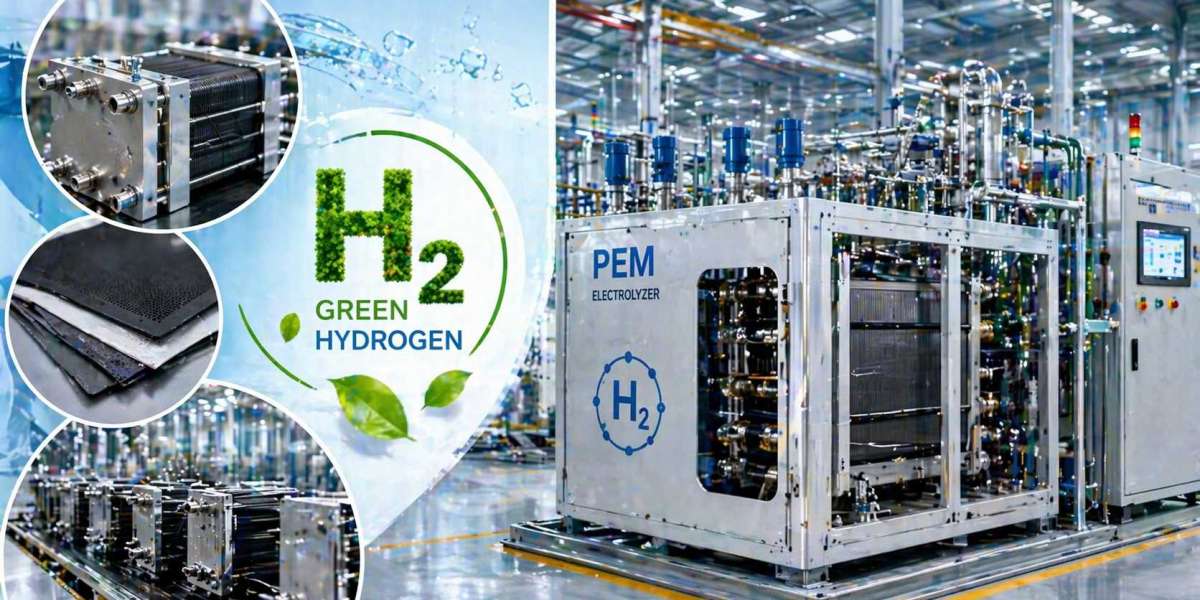
A Proton Exchange Membrane (PEM) electrolyzer is an advanced electrochemical device used to produce hydrogen by splitting water into hydrogen and oxygen using electricity. It employs a solid polymer membrane as the electrolyte, which conducts protons from the anode to the cathode while acting as a barrier to gases. When an electric current is applied, water at the anode dissociates into oxygen, protons, and electrons. The protons pass through the membrane, while electrons travel through an external circuit to the cathode, where they recombine with protons to form hydrogen gas. PEM electrolyzers are known for their high efficiency, compact design, rapid response times, and ability to operate with variable renewable energy sources such as solar and wind. Due to their flexibility and high purity hydrogen output, they are increasingly used in green hydrogen production, energy storage systems, and industrial applications.
Proton Exchange Membrane (PEM) Electrolyzer Manufacturing Plant: Market, Capacity, Cost Profitability Overview
The global proton exchange membrane (PEM) electrolyzer market was valued at USD 1.82 billion in 2025 and is projected to reach USD 19.45 billion by 2034, growing at a robust CAGR of 30.1% during 2026–2034. This strong growth trajectory is driven by increasing demand for green hydrogen and clean energy solutions. A typical PEM electrolyzer manufacturing plant is designed with an annual production capacity ranging from 100 to 1,000 MW stack capacity, allowing manufacturers to achieve economies of scale while maintaining operational flexibility. From a financial perspective, the plant offers attractive profitability, with gross profit margins generally ranging between 40–50% and net profit margins between 20–30% under standard operating conditions. The cost structure is largely influenced by raw material consumption, particularly the proton exchange membrane (PEM), which accounts for approximately 55–65% of total operating expenses (OpEx), followed by utilities contributing around 10–15%. Overall, the combination of strong market growth, scalable production capacity, and favorable profit margins makes PEM electrolyzer manufacturing a highly promising investment opportunity.
Request a Sample Report: https://www.imarcgroup.com/proton-exchange-membrane-electrolyzer-manufacturing-plant-project-report/requestsample
Key Aspects to Setup a Proton Exchange Membrane (PEM) Electrolyzer Plant:
- Location to Setup Plant
- Market Research
- Plant Layout
- Construction and Infrastructure
- Equipment/Machinery Procurement
- Documentation and Licenses
- Cost Analysis
Requirements to Setup a Facility:
- Funds
- Machinery
- Lands
Types of Costs to Setup a Factory:
- Land, Location and Site Development Cost
- Plant Layout Cost
- Machinery Requirements and Costs
- Raw Material Requirements and Costs
- Packaging Requirements and Costs
- Transportation Requirements and Costs
- Utility Requirements and Costs
- Human Resource Requirements and Costs
Project Economics:
- Capital Investments
- Operating Costs
- Expenditure Projections
- Revenue Projections
- Taxation and Depreciation
- Profit Projections
- Financial Analysis
Key Questions Answered in the Report:
- How has the proton exchange membrane (PEM) electrolyzer market performed so far and how will it perform in the coming years?
- What is the market segmentation of the global proton exchange membrane (PEM) electrolyzer market?
- What is the regional breakup of the global proton exchange membrane (PEM) electrolyzer market?
- What are the price trends of various feedstocks in the proton exchange membrane (PEM) electrolyzer industry?
- What is the structure of the proton exchange membrane (PEM) electrolyzer industry and who are the key players?
- What are the various unit operations involved in a proton exchange membrane (PEM) electrolyzer manufacturing plant?
- What is the total size of land required for setting up a proton exchange membrane (PEM) electrolyzer manufacturing plant?
- What is the layout of a proton exchange membrane (PEM) electrolyzer manufacturing plant?
- What are the machinery requirements for setting up a proton exchange membrane (PEM) electrolyzer manufacturing plant?
- What are the raw material requirements for setting up a proton exchange membrane (PEM) electrolyzer manufacturing plant?
- And more…
Key Features:
Customization Scope | The report can also be customized based on the requirement of the customer |
Post-Sale Analyst Support | 10-12 Weeks |
Report Delivery Format | PDF and Excel through email (We can also provide the editable version of the report in PPT/Word format on special request) |
Ask Analyst for Customized Report: https://www.imarcgroup.com/request?type=reportid=28026flag=C
How IMARC Can Help?
IMARC Group is a global management consulting firm that helps the world’s most ambitious changemakers to create a lasting impact. The company provide a comprehensive suite of market entry and expansion services. IMARC offerings include thorough market assessment, feasibility studies, company incorporation assistance, factory setup support, regulatory approvals and licensing navigation, branding, marketing and sales strategies, competitive landscape and benchmarking analyses, pricing and cost research, and procurement research.
Services:
- Plant Setup
- Factoring Auditing
- Regulatory Approvals, and Licensing
- Company Incorporation
- Incubation Services
- Recruitment Services
- Marketing and Sales
Contact Us:
IMARC Group
134 N 4th St. Brooklyn, NY 11249, USA
Email: sales@imarcgroup.com
Tel No:(D) +91 120 433 0800
United States: (+1-201971-6302)