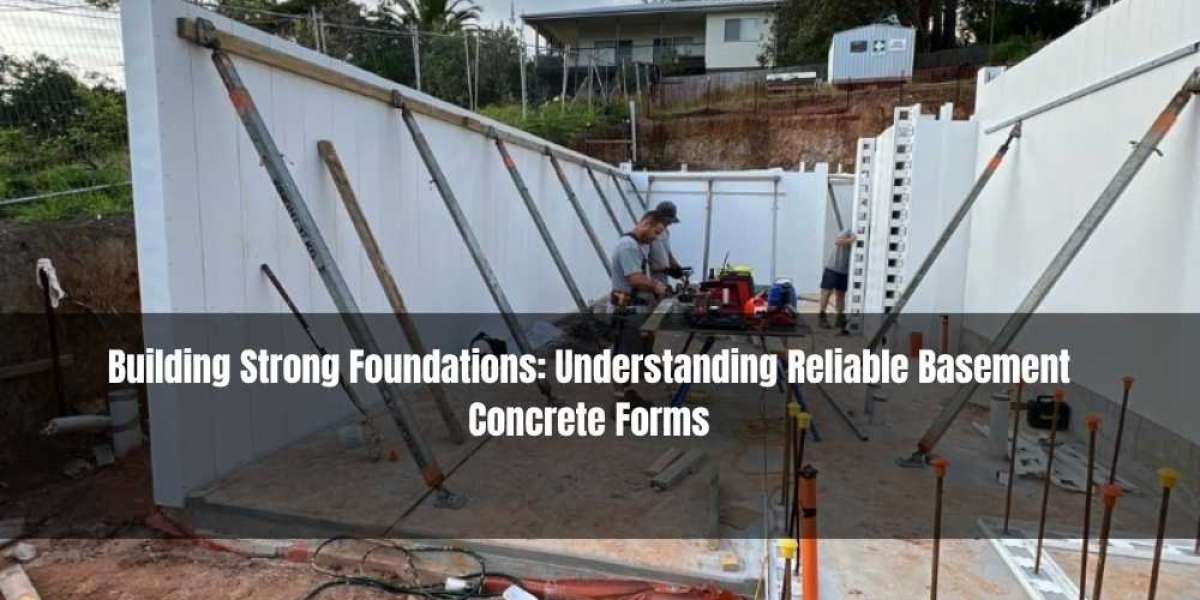

Basements play a crucial role in modern construction, providing additional living space, structural stability, and protection against environmental conditions. Whether used in residential, commercial, or infrastructure projects, the success of a basement begins with the selection of reliable basement concrete forms. These systems shape and support poured concrete, ensuring the resulting structure is durable, watertight, and built to last.
Across Australia and the United States, basement construction must address a range of challenges, including soil pressure, groundwater management, and compliance with local building standards. Choosing the right concrete formwork is therefore essential for achieving both structural integrity and long-term performance.
What Are Basement Concrete Forms?
Basement concrete forms are moulds used to shape and support wet concrete as it cures into the walls and structural elements of a basement. These forms must be strong enough to withstand the pressure exerted by the concrete while maintaining precise dimensions and alignment.
Formwork systems can be either temporary, removed after the concrete has set, or permanent, remaining in place as part of the finished structure. Permanent systems are increasingly popular due to their efficiency and potential to enhance insulation and moisture resistance.
Types of Basement Concrete Form Systems
1. Timber Formwork
Timber is one of the oldest and most adaptable formwork materials. It is particularly suitable for custom or small-scale projects where flexibility is required. However, timber forms may involve higher labour demands and can be less consistent than prefabricated alternatives.
2. Steel and Aluminium Formwork
Steel and aluminium systems provide excellent strength and durability. These reusable forms are often employed in larger or repetitive projects where precision and efficiency are essential. Aluminium, being lighter, offers easier handling while maintaining structural reliability.
3. Insulated Concrete Forms (ICFs)
ICFs are permanent formwork systems made from rigid insulation panels that remain in place after the concrete is poured. They provide thermal insulation, sound reduction, and energy efficiency, making them a popular choice for residential basements.
4. Modular and Prefabricated Systems
Prefabricated formwork systems are engineered for consistency and rapid installation. Their modular design reduces on-site labour and improves construction timelines, making them suitable for both residential and commercial applications.
5. Permanent Formwork for Retaining Structures
In some basement applications, particularly those integrated with retaining walls, permanent formwork systems provide additional structural support and durability. These systems are designed to withstand lateral soil pressures and environmental exposure over the long term.
Key Benefits of Reliable Basement Concrete Forms
Structural Integrity
High-quality formwork ensures that basement walls are constructed to precise specifications, providing the strength needed to resist soil and hydrostatic pressures. This structural reliability is essential for the longevity of the building.
Construction Efficiency
Modern formwork systems streamline the construction process by simplifying assembly and reducing the need for extensive on-site adjustments. This efficiency can help keep projects on schedule and minimise labour costs.
Moisture and Waterproofing Support
Basements are particularly vulnerable to moisture ingress. Reliable form systems facilitate the integration of waterproofing measures, helping to protect the structure and maintain indoor comfort.
Design Flexibility
Formwork systems can accommodate a variety of architectural and engineering requirements, including complex shapes, varying wall heights, and integration with other structural elements.
Sustainability
Reusable and permanent formwork systems contribute to sustainable construction practices by reducing material waste and improving energy efficiency, particularly in the case of insulated concrete forms.
Considerations When Selecting Basement Concrete Forms
1. Soil and Site Conditions
Understanding soil type, groundwater levels, and site topography is essential when selecting an appropriate formwork system. These factors influence structural design and waterproofing requirements.
2. Compliance with Building Standards
Basement construction must adhere to relevant building codes and engineering standards in both Australia and the United States. Ensuring compliance helps safeguard structural safety and long-term performance.
3. Waterproofing Integration
Effective waterproofing is critical for preventing water ingress. The chosen formwork system should allow for the seamless integration of membranes, drainage systems, and protective coatings.
4. Thermal and Energy Performance
In residential applications, insulated formwork systems can enhance energy efficiency by improving thermal performance and reducing heating and cooling demands.
5. Installation and Logistics
Ease of installation and the availability of technical support are important considerations. Prefabricated systems often provide advantages in terms of speed and consistency.
The Role of Basement Forms in Retaining Wall Applications
Many basement structures function similarly to retaining walls, as they must resist lateral earth pressures and manage groundwater. As a result, solutions designed for retaining wall construction can also be relevant to basement applications. These systems provide the structural strength and durability required for below-ground environments.
Rise Products offers educational resources on retaining wall systems that are applicable to a range of construction scenarios, including basement and below-ground structures. Access to such information can assist builders and developers in evaluating suitable options for their projects.
Sustainability and Long-Term Performance
Sustainability is an increasingly important consideration in the construction industry. Reliable basement concrete forms contribute to environmentally responsible building practices by:
- Reducing material waste through reusable or permanent systems
- Enhancing energy efficiency when insulated formwork is used
- Supporting long-term durability, which minimises the need for repairs or reconstruction
- Optimising construction efficiency, reducing overall resource consumption
These benefits align with broader efforts to create resilient and sustainable built environments.
Future Trends in Basement Construction
Advancements in construction technology continue to shape the evolution of basement formwork systems. Innovations such as modular prefabrication, digital design integration, and improved waterproofing techniques are enhancing both efficiency and structural performance. As urban development increases in density, the demand for reliable below-ground construction solutions is expected to grow.
Conclusion
Basements are foundational elements of many modern structures, and their success depends heavily on the selection of reliable basement concrete forms. By ensuring structural integrity, efficient construction, and effective moisture management, high-quality formwork systems contribute to safe and durable buildings.
Across Australia and the United States, careful consideration of site conditions, compliance with building standards, and collaboration with experienced suppliers supports the successful implementation of these systems. As construction practices continue to evolve, reliable basement formwork will remain essential to creating resilient and sustainable structures.
Key Takeaways
- Basement concrete forms shape and support poured concrete, ensuring structural stability.
- Various systems are available, including timber, steel, aluminium, insulated, and prefabricated forms.
- Reliable formwork enhances durability, waterproofing, and construction efficiency.
- Basement structures often share design principles with retaining walls.
- Selecting appropriate formwork supports long-term performance and sustainable construction outcomes.