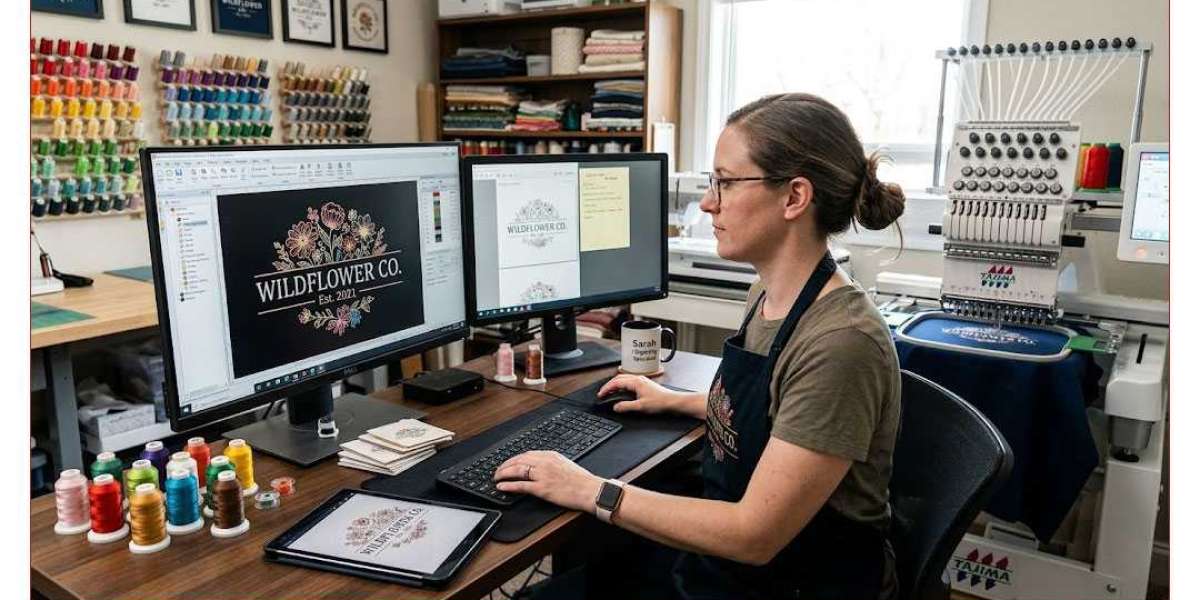

Embroidery has become a powerful tool for branding, fashion, and personalization. From custom apparel to corporate logos, embroidery adds a premium and professional touch to any product. However, behind every perfect stitch lies a crucial step—choosing the right embroidery digitizing service.
Digitizing is not just about converting an image into stitches. It requires technical expertise, creativity, and precision. This is why businesses and designers rely on a digitizing service for embroidery with humanized content. This approach ensures that each design is carefully adjusted for fabric, thread, and machine performance, resulting in flawless embroidery output.
In this comprehensive guide, we will explore how embroidery digitizing works, why humanized digitizing matters, and how to choose the best service for your needs.
What is an Embroidery Digitizing Service?
An embroidery digitizing service is a professional process that converts artwork, logos, or designs into a machine-readable file. This file contains detailed instructions that guide the embroidery machine on how to stitch the design accurately.
These instructions include:
- Stitch types (satin, fill, running stitches)
- Stitch direction and angles
- Stitch density and spacing
- Thread color sequence
- Underlay stitches for stability
Without proper digitizing, even the best embroidery machine cannot produce clean and professional results.
Why Humanized Digitizing is Essential
Automated digitizing tools can quickly convert images into stitch files, but they often fail to consider real-world embroidery challenges such as fabric behavior and thread tension.
A digitizing service for embroidery with humanized content ensures:
- Fabric Compatibility: Adjustments based on material type (cotton, polyester, denim, etc.)
- Balanced Stitch Density: Prevents puckering and thread breaks
- Accurate Stitch Angles: Ensures smooth curves and clean edges
- Efficient Stitch Sequence: Reduces machine stops and improves speed
- High-Quality Output: Produces professional and durable embroidery
Humanized digitizing brings a level of precision and quality that automated processes cannot match.
How Embroidery Digitizing Services Work
1. Artwork Analysis
The digitizer reviews your design to understand its complexity, size, and color requirements.
2. Design Optimization
Unnecessary details are removed, and the design is simplified to ensure it translates well into stitches.
3. Stitch Type Assignment
Each part of the design is assigned a suitable stitch type:
- Satin stitches for text and outlines
- Fill stitches for large areas
- Running stitches for fine details
4. Stitch Direction Density Adjustment
Proper direction and density ensure smooth stitching and prevent fabric distortion.
5. Underlay Creation
Underlay stitches provide a stable base, improving the quality of top stitches.
6. Sequence Planning
The stitch order is planned to reduce thread changes and machine stops.
7. Test Stitching
A sample is stitched to check for errors and make final adjustments.
8. File Delivery
The final file is delivered in the required format (DST, PES, EXP, JEF, etc.).
Benefits of Professional Embroidery Digitizing Services
- Precision and Accuracy – Designs are stitched exactly as intended
- Time Efficiency – Ready-to-use files save production time
- Consistency – Uniform quality across multiple products
- Reduced Errors – Fewer thread breaks and stitching issues
- Durability – Designs last longer even after washing
Common Challenges in Embroidery Digitizing
- Complex Designs: Too much detail can cause stitching problems
- Incorrect Stitch Density: Leads to puckering or loose stitching
- Fabric Variations: Different materials require different adjustments
- Thread Breaks: Caused by poor digitizing or machine settings
- Color Matching Issues: Incorrect thread selection affects final appearance
Humanized digitizing addresses these challenges by applying expert knowledge and adjustments.
How to Choose the Best Embroidery Digitizing Service
1. Check Experience and Portfolio
Look for a service provider with proven expertise in your type of design.
2. Ensure Humanized Digitizing
Avoid fully automated services. Human input is essential for quality results.
3. Confirm File Compatibility
Make sure the service provides files compatible with your embroidery machine.
4. Ask for Test Samples
Testing ensures that the design works perfectly before production.
5. Evaluate Turnaround Time
Choose a service that can meet your deadlines without compromising quality.
6. Customer Support
Reliable communication is important for revisions and troubleshooting.
Applications of Embroidery Digitizing Services
- Custom Apparel: T-shirts, hoodies, jackets
- Corporate Branding: Logos on uniforms and promotional items
- Caps and Hats: Requires precise digitizing for curved surfaces
- Patches and Badges: Durable and detailed embroidery
- Personalized Gifts: Names, monograms, and custom designs
- Home Décor: Cushions, bags, and textile art
Case Study: Impact of Humanized Digitizing
A startup clothing brand initially used automated digitizing and faced issues such as uneven stitching, thread breaks, and poor design quality.
After switching to a digitizing service for embroidery with humanized content, they achieved:
- Clean and sharp designs
- Smooth stitching with no thread breaks
- Consistent quality across all products
- Improved customer satisfaction
This demonstrates the value of investing in professional digitizing services.
Advanced Techniques in Humanized Digitizing
- Variable Stitch Density: Adjusting density in curves and corners
- Layered Stitching: Separating layers for better stability
- 3D Puff Embroidery: Creating raised designs with precision
- Fabric-Adaptive Digitizing: Customizing designs for different materials
Future Trends in Embroidery Digitizing Services
- AI-Assisted Digitizing: Faster processing with human review
- Cloud-Based Workflows: Remote collaboration for faster delivery
- Improved Color Matching Systems: Enhanced thread accuracy
- On-Demand Customization: Integration with e-commerce platforms
Despite advancements, humanized digitizing remains essential for high-quality embroidery.
Conclusion
Choosing the right embroidery digitizing service is crucial for achieving professional embroidery results. By using a digitizing service for embroidery with humanized content, you ensure:
- Accurate stitch placement
- High-quality and durable designs
- Efficient production with minimal errors
- Professional and visually appealing embroidery
Whether you are creating custom apparel, branding materials, or personalized items, investing in expert digitizing services will elevate your embroidery projects to the next level.