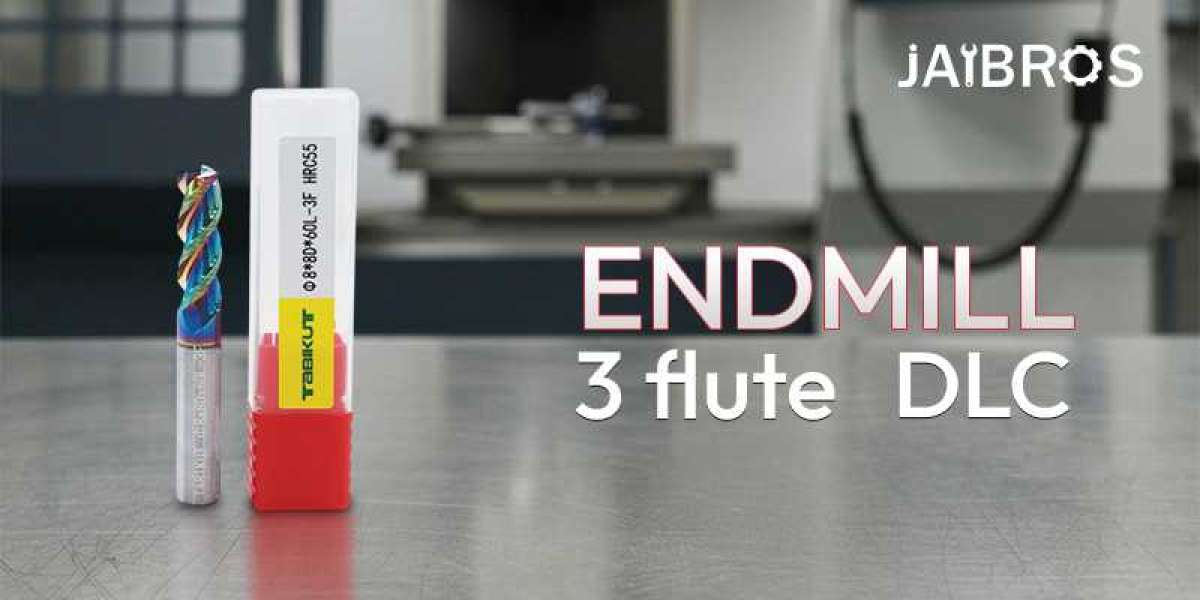

Roughing vs Finishing End Mill Cutter: Key Differences
CNC machining relies on precise cutting tools to shape materials into accurate and functional components. Among the most important tools used in milling operations is the end mill cutter, which is designed to remove material efficiently while maintaining tight tolerances. These tools are widely used in industries such as automotive, aerospace, mold manufacturing, and precision engineering.
However, not all cutting tools perform the same function during the machining process. In many milling operations, machining is divided into two main stages: roughing and finishing. Roughing removes large amounts of material quickly, while finishing refines the surface and ensures accurate dimensions.
Because these two processes have different objectives, machinists often use different tools for each stage. Roughing tools are designed for aggressive material removal, while finishing tools focus on precision and surface quality. Understanding the differences between these tools helps machinists select the correct tool for each machining operation.
Understanding Roughing and Finishing in CNC Machining
Before discussing the tools themselves, it is important to understand the role of roughing and finishing operations in machining.
Roughing is the initial stage of machining where large volumes of material are removed from the workpiece. The goal is to quickly shape the raw material into a near-final form.
Finishing, on the other hand, is the final stage where the surface quality and dimensional accuracy are improved. During this step, the machinist removes a small amount of material to produce the final shape and smooth finish.
Both operations require specialized cutting tools, and the end mill cutter used in each stage is designed differently to meet these requirements.
What Is a Roughing End Mill Cutter?
A roughing tool is designed to remove large amounts of material quickly. These tools often have serrated or wavy cutting edges that break chips into smaller pieces during machining.
The main purpose of a roughing end mill cutter is to reduce cutting resistance while allowing deeper and faster cuts. This makes roughing tools ideal for the early stages of machining when large sections of material must be removed.
Roughing tools are commonly used in heavy-duty milling operations and are capable of handling tough materials such as steel and alloy metals.
Many machining workshops use durable carbide endmills for roughing operations because carbide tools can withstand high cutting temperatures and heavy loads.
What Is a Finishing End Mill Cutter?
Finishing tools are used after the roughing stage to refine the workpiece and achieve the final dimensions. These tools typically have smoother cutting edges and are designed to produce high-quality surface finishes.
A finishing end mill cutter removes a small amount of material with greater precision. Instead of focusing on speed and heavy cuts, finishing tools prioritise accuracy and surface quality.
Finishing tools are often used in industries where surface finish and dimensional accuracy are critical, such as aerospace components, mold manufacturing, and medical device production.
High-performance carbide endmills are also commonly used for finishing operations because they provide sharp cutting edges and excellent wear resistance.
Differences in Tool Geometry
One of the biggest differences between roughing and finishing tools lies in their geometry.
Roughing tools typically feature serrated cutting edges that help break chips and reduce cutting forces. This allows the tool to remove material quickly without placing excessive stress on the machine.
In contrast, a finishing end mill cutter usually has smooth and sharp cutting edges. These edges are designed to create smooth surfaces and precise cuts.
Different types of end mills are available for specific finishing tasks, including flat end mills for general milling and ball nose tools for 3D contouring.
Because there are many types of endmills, machinists must carefully select the correct tool for each machining operation.
Differences in Cutting Performance
Roughing tools are optimized for high material removal rates. They can handle deeper cuts and higher feed rates compared to finishing tools.
A finishing end mill cutter, however, works with lighter cuts and slower feed rates to maintain accuracy and surface quality.
Using the wrong tool for either stage can result in poor machining performance. For example, using a finishing tool for roughing may cause tool wear or breakage, while using a roughing tool for finishing may produce rough surfaces.
Selecting the right tool for each stage ensures efficient machining and consistent results.
Tool Size and Precision
Precision is especially important in finishing operations. In many cases, machinists must create extremely small features or complex shapes.
For these applications, micro endmills are often used. These miniature cutting tools are designed to machine very small components with high accuracy.
Because of their small size, micro endmills require careful setup and stable machining conditions to avoid tool damage.
They are commonly used in industries such as electronics, medical device manufacturing, and precision engineering.
Role of CNC Machines in Milling Operations
Modern CNC machines allow machinists to automate roughing and finishing operations efficiently. These machines can use multiple tools during a single machining program.
By switching between tools automatically, a cnc tool system can perform roughing and finishing operations without manual intervention.
This automation improves productivity and ensures consistent machining results across multiple production cycles.
Using the correct cnc tool for each stage of machining helps manufacturers achieve better efficiency and higher-quality components.
Choosing the Right Tool for Your Application
Selecting the right milling tool depends on several factors, including:
- Workpiece material
- Required surface finish
- Cutting speed and feed rate
- Machine capabilities
Understanding the differences between roughing and finishing tools helps machinists make better decisions when choosing cutting tools.
When used correctly, the end mill cutter can significantly improve machining efficiency and product quality.
Benefits of Using the Right Milling Tool
Using the correct milling tool for roughing and finishing offers several advantages.
Higher Productivity
Roughing tools remove large amounts of material quickly, reducing machining time.
Improved Surface Finish
Finishing tools create smoother surfaces and more precise dimensions.
Longer Tool Life
Using the correct tool for each stage reduces stress on the cutting edges.
Better Machining Accuracy
Proper tool selection ensures consistent results and higher-quality components.
By understanding how roughing and finishing tools differ, machinists can improve the efficiency of their machining processes.
Conclusion
Roughing and finishing are two essential stages in CNC machining, and each stage requires a specific type of cutting tool. Roughing tools focus on removing large amounts of material quickly, while finishing tools refine the workpiece and produce the final surface quality.
Understanding the key differences between these tools helps machinists select the most suitable tool for their operations. Proper tool selection improves productivity, extends tool life, and ensures high-quality machining results.
Because of its versatility and effectiveness, the end mill cutter remains one of the most important cutting tools in CNC machining. When used correctly in both roughing and finishing stages, it enables manufacturers to achieve precise and efficient machining operations.
About Jaibros
Jaibros is a trusted supplier of industrial cutting tools and machining accessories designed for modern manufacturing industries. The company offers a wide range of reliable tooling solutions that support precision machining in CNC and VMC operations. With a strong focus on quality, durability, and performance, Jaibros provides advanced tooling products that help machinists achieve accurate and efficient manufacturing results.
FAQs
Q1. What is the difference between roughing and finishing in CNC machining?
Roughing removes large amounts of material quickly, while finishing focuses on achieving precise dimensions and smooth surface finishes.
Q2. Why are carbide cutting tools commonly used in milling?
Carbide endmills are highly durable and heat-resistant, making them ideal for high-speed machining and heavy cutting operations.
Q3. What are the different types of milling tools used in CNC machining?
Common types of endmills include flat endmills, ball nose cutters, and corner radius tools.
Q4. Where are miniature milling tools used?
Micro endmills are used in industries such as electronics, medical manufacturing, and precision engineering where small features are required.
Q5. Why is tool selection important in CNC machining?
Using the correct CNC tool ensures better machining performance, improved accuracy, and longer tool life.