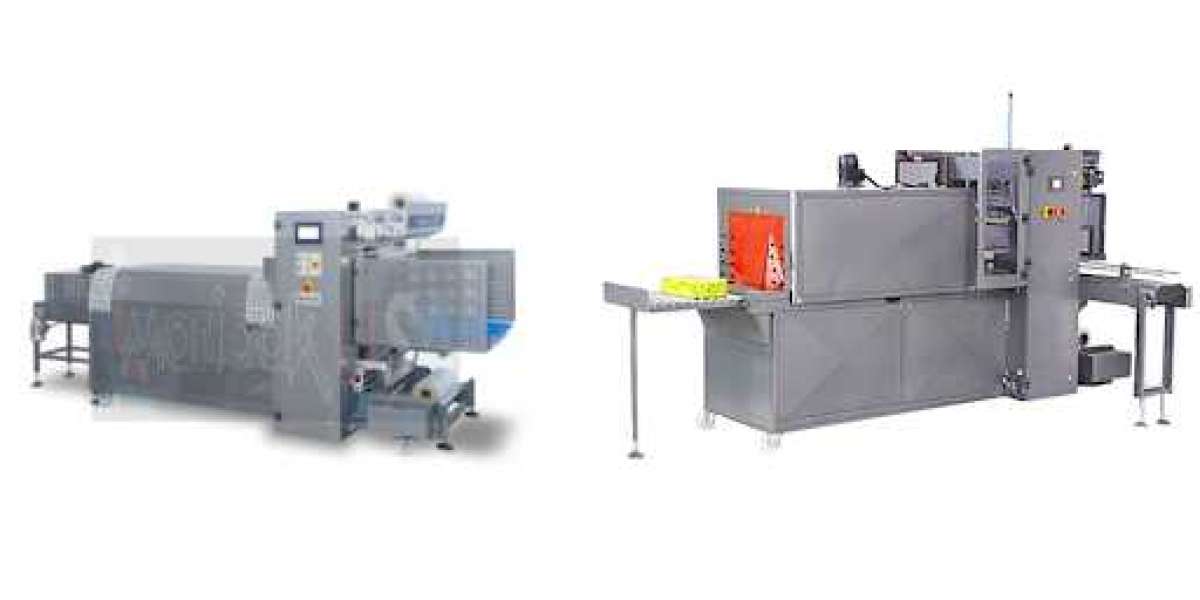

There comes a point in every growing packaging operation where hand wrapping, impulse sealers, and improvised solutions simply cannot keep pace with the volume, consistency, and presentation standards the business demands. A semi automatic L sealer machine occupies the critical middle ground between fully manual packaging and high-speed automatic systems, delivering the seal quality, throughput improvement, and operator ease that transform packaging from a daily bottleneck into a streamlined, repeatable process without the capital outlay and floor space commitment that full automation requires.
How It Works?
A semi automatic l sealer machine wraps products in shrink film using an L-shaped sealing bar that creates two perpendicular seals in a single motion, enclosing the product completely in film with one operator action:
- The operator places the product on the sealing platform, centred within the film web feeding from a roll at the rear of the machine
- The operator lowers the L-shaped sealing arm, which simultaneously creates a cross seal and a side seal while cutting the film cleanly on both axes
- The sealed product moves into a heat shrink tunnel positioned directly alongside the sealer, where the film contracts tightly around the contents to produce a clean, professional, tamper-evident package
The complete seal-and-advance cycle takes approximately three to five seconds per product, enabling a trained operator to consistently package 10 to 15 or more items per minute depending on product size and handling requirements.
Why Semi Automatic Beats Manual?
A semi automatic l sealer machine delivers measurable advantages over impulse sealers and hand-wrapping methods that become impossible to ignore as volume grows:
- Consistent seal quality on every package, eliminating the operator-dependent variation in seal strength, position, and appearance that plagues manual methods
- Significantly faster throughput allowing a single operator to handle volumes that previously required two or three workers
- Cleaner, more professional package appearance that enhances retail presentation and customer perception of product quality
- Reduced film waste through precise positioning and consistent seal placement that uses only the material each product requires
- Lower operator fatigue because the machine handles the sealing force and film tensioning that make manual wrapping physically demanding across a full shift
Industries and Applications
The versatility of a semi automatic l sealer machine makes it appropriate for packaging operations across virtually every product category:
- Printed materials including books, boxed sets, catalogues, and manuals where scuff protection and moisture resistance are essential for transit and retail display
- Food products in trays, boxes, and containers where FDA-compliant polyolefin film provides transparent, tamper-evident packaging that meets regulatory requirements
- Cosmetics, personal care, and pharmaceutical items where consistent presentation and tamper evidence are non-negotiable brand standards
- Software, media, and electronics where shrink-wrapped packaging delivers retail-ready presentation with built-in theft deterrence
- E-commerce fulfilment where mixed-product orders need quick, professional wrapping before shipping
Key Specifications to Evaluate
When selecting a semi automatic l sealer machine, the specifications that most directly impact daily performance include:
- Maximum seal area dimensions, which determine the largest product the machine can accommodate. Ensure adequate clearance beyond the product's footprint to allow for film shrinkage without pulling the seal
- Film roll compatibility, including maximum roll width and the film types the machine supports. Polyolefin, PVC, and polyethylene films each require slightly different seal temperatures and dwell times
- Seal wire type and temperature control precision, which are critical to achieving clean, strong seals across different film types and thicknesses without burning or incomplete bonding
- Conveyor integration capability, determining whether the machine feeds directly into a shrink tunnel via powered belt, gravity roller, or manual transfer
- Footprint and ergonomic height, particularly important for operations with limited floor space or where the operator will be standing at the machine for extended periods
Pairing With a Shrink Tunnel
A semi automatic l sealer machine produces sealed packages, but the tight, professional, finished appearance that customers and retailers expect requires a heat shrink tunnel to complete the process. The sealer and tunnel are typically positioned immediately adjacent to each other, with sealed products moving from the sealing platform into the tunnel entrance by powered conveyor, gravity roller, or manual push.
Matching the tunnel's belt speed, chamber temperature, and airflow specifications to the sealer's output rate ensures that each package receives adequate heat exposure for complete, uniform film contraction without creating a bottleneck that forces the operator to slow their sealing pace.
The tunnel's temperature and conveyor speed settings will vary depending on the film type and thickness being used. Polyolefin films generally shrink at lower temperatures and faster belt speeds than PVC, while thicker gauge films require more heat energy and slightly slower transit through the tunnel to achieve a wrinkle-free result.
Maintenance and Longevity
A semi automatic l sealer machine is built for daily production use and delivers years of reliable service with straightforward preventive maintenance:
- Replace seal wire and non-stick Teflon tape at regular intervals based on sealing volume rather than waiting for visible seal quality deterioration
- Clean the sealing bars and cutting blade weekly to prevent film residue buildup that causes sticking and inconsistent cuts
- Inspect the film feed rollers and tension mechanism monthly to ensure smooth, consistent film delivery without wrinkling or misalignment
- Verify temperature controller accuracy periodically using a contact thermometer to ensure the sealing temperature remains within the optimal range for your film type
The Bottom Line
A semi automatic l sealer machine is the ideal equipment step-up for packaging operations that have outgrown manual methods but do not yet need the speed and investment of fully automatic systems. For operations running polyolefin shrink film as their primary packaging material, investing in a complete polyolefin shrink machine setup that pairs a quality semi automatic l sealer with a matched shrink tunnel delivers the professional finish, operational efficiency, and per-package cost reduction that growing businesses need to scale with confidence.