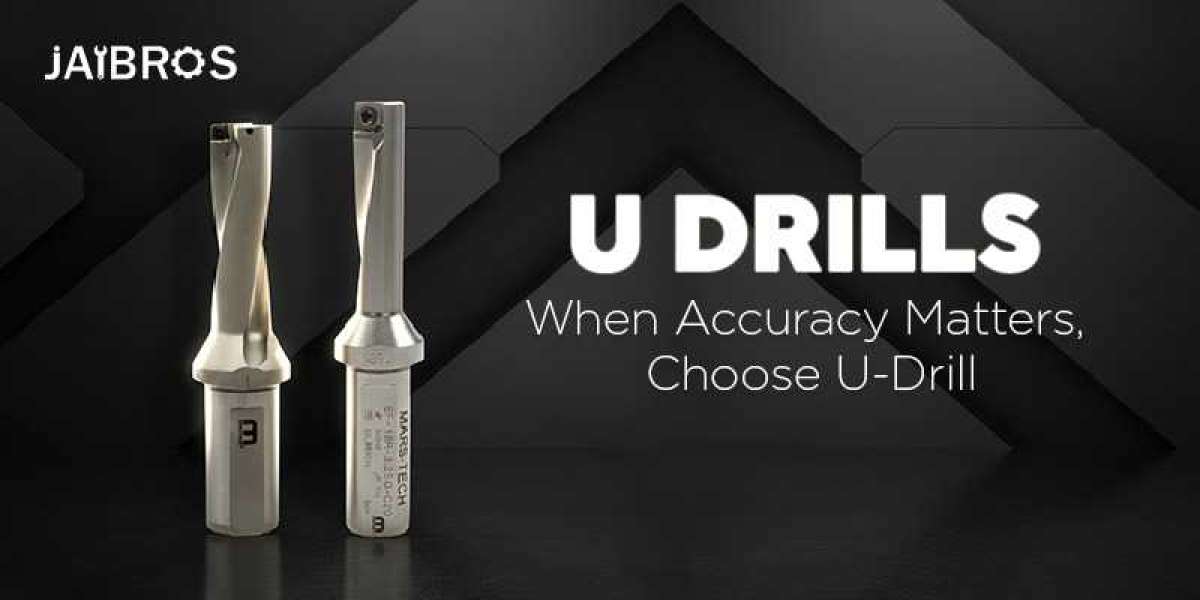

Common Mistakes to Avoid When Using a U Drill
U drills are widely used in modern machining for their ability to deliver fast and accurate hole-making results. They are designed to improve productivity, reduce cycle time, and maintain consistency across operations. However, even with advanced tooling, mistakes in handling and application can lead to poor performance and increased costs. Many machinists often overlook small but critical factors like insert selection, cutting parameters, and tool alignment. Paying attention to details such as choosing the right u drill insert, checking the proper u drill size chart, and understanding the true value behind u drill price can make a big difference in performance.
Whether you are new to machining or have years of experience, avoiding common errors is essential for achieving better results. Incorrect practices not only affect tool life but also compromise hole quality and machine efficiency. By focusing on correct methods like selecting the appropriate u drill insert, referring to a standard u drill size chart, and making smart decisions regarding u drill price, you can ensure smoother operations. In this blog, we will explore key mistakes and how to avoid them effectively.
1. Choosing the Wrong Insert Type
One of the biggest mistakes in U drilling is using the wrong insert type for the material.
- Different materials require specific insert grades
- Wrong selection leads to poor surface finish
- Tool wear increases significantly
- It can cause sudden tool failure
Selecting the correct u drill insert ensures better cutting performance and durability. Many operators skip this step and face frequent breakdowns. Referring to a proper u drill size chart also helps ensure compatibility. Instead of focusing only on low u drill price, it is important to prioritize quality and performance.
2. Ignoring Proper Speed and Feed
Incorrect cutting parameters can reduce efficiency and damage tools.
- High speed causes overheating
- Low feed leads to rubbing instead of cutting
- Poor balance affects accuracy
- Reduces productivity
Using the right combination of speed and feed improves tool life and output. A reliable u drill insert performs best when used within recommended limits. Always refer to a u drill size chart for correct parameters. While comparing u drill price, also consider performance at different cutting conditions.
3. Poor Tool Setup and Alignment
Improper setup can lead to major machining errors.
- Misalignment causes inaccurate holes
- Increases vibration
- Leads to uneven wear
- Affects final product quality
Correct alignment ensures smooth operation and better results. Even the best u drill insert cannot perform well under poor setup conditions. Checking dimensions with a u drill size chart helps maintain accuracy. Investing in tools based only on u drill price without considering precision can lead to losses.
4. Lack of Coolant Usage
Coolant is often underestimated in drilling operations.
- Helps control temperature
- Improves tool life
- Assists in chip removal
- Prevents damage
Without proper cooling, tool efficiency drops quickly. A high-quality u drill insert performs better with adequate coolant flow. Following guidelines from a u drill size chart ensures proper usage. While evaluating u drill price, tools with better cooling support offer long-term benefits.
5. Ignoring Tool Wear
Tool wear is natural but ignoring it can cause serious issues.
- Reduces hole accuracy
- Increases machine load
- Can damage the workpiece
- Leads to unexpected failure
Regular inspection is necessary to maintain consistency. Replacing a worn u drill insert at the right time improves performance. A standard u drill size chart can guide proper usage and replacement. Instead of saving on U drill price, focus on maintenance to reduce overall cost.
6. Selecting the Wrong Drill Size
Choosing the incorrect drill size affects the entire operation.
- Produces incorrect hole dimensions
- Leads to rework
- Wastes time and material
- Impacts productivity
Always verify size before starting work. Referring to a u drill size chart ensures proper selection. Even with a good u drill insert, incorrect sizing will create issues. Comparing U drill price without checking specifications can lead to wrong purchases.
7. Ignoring Machine Capability
Machine limitations are often overlooked.
- Low rigidity affects accuracy
- Insufficient power reduces efficiency
- Causes vibration
- Damages tools
A compatible machine setup is essential for effective drilling. The performance of a u drill insert depends on machine stability. Matching machine capacity with a u drill size chart improves results. Sometimes a slightly higher u drill price ensures better compatibility.
Conclusion
Avoiding these common mistakes can greatly improve your machining performance and reduce unnecessary costs. From proper insert selection to correct setup and maintenance, every step plays an important role in achieving accurate and efficient results. Skilled machinists understand that success depends on both the tool and how it is used.
In many cases, focusing on long-term value rather than short-term savings leads to better outcomes. Paying attention to quality, compatibility, and proper usage techniques ensures consistent performance. Companies like jaibros have quietly emphasized reliability and precision, helping users achieve better results without compromising efficiency.
FAQ
Q1. What is the most common mistake when using a U drill?
Using the wrong insert type for the material is the most common mistake.
Q2. Why is coolant important in drilling?
It helps reduce heat, improves tool life, and supports chip removal.
Q3. How often should inserts be replaced?
Inserts should be replaced as soon as wear starts affecting performance.
Q4. Why is tool alignment important?
Proper alignment ensures accurate holes and reduces vibration.
Q5. Should I always choose the lowest price tool?
No, always focus on quality and performance rather than just cost.