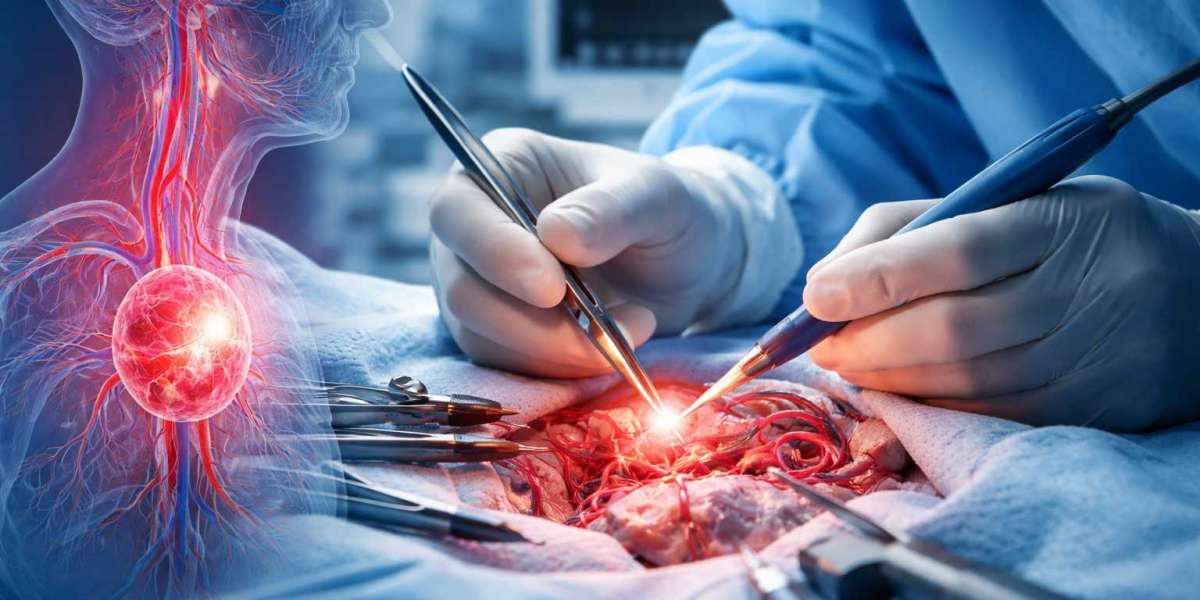

Vascular tumours are a group of abnormal growths that arise from blood vessels or lymphatic vessels. These tumours can range from benign (non-cancerous) to malignant (cancerous), and their behavior, symptoms, and treatment options vary significantly depending on the type and location. Understanding the different types of vascular tumours is essential for early diagnosis and effective management, especially when they occur in sensitive areas like the head and neck.
This article provides a comprehensive overview of vascular tumours, their types, symptoms, diagnosis, and the role of vascular tumor surgery in treatment.
What Are Vascular Tumours?
Vascular tumours are caused by the abnormal proliferation of cells that form blood vessels or lymphatic vessels. They can appear anywhere in the body, including the skin, internal organs, and soft tissues. While many vascular tumours are harmless and may resolve on their own, others may require medical intervention due to their size, location, or aggressive nature.
Classification of Vascular Tumours
Vascular tumours are broadly classified into three main categories:
1. Benign Vascular Tumours
These are the most common types and are generally non-cancerous. They grow slowly and rarely spread to other parts of the body.
Hemangioma
Hemangiomas are the most frequently seen vascular tumours, especially in infants. They appear as red or purple birthmarks and are commonly found on the skin or just beneath it. Most infantile hemangiomas grow rapidly in the first few months and then gradually shrink over time without treatment.
Cherry Angioma
Cherry angiomas are small, red skin growths often seen in adults. They are harmless and usually do not require treatment unless they bleed or cause cosmetic concerns.
Pyogenic Granuloma
This type of vascular tumour appears as a small, red, bleeding bump on the skin or mucous membranes. It grows rapidly but is benign. Minor trauma or hormonal changes can trigger its development.
2. Intermediate (Locally Aggressive) Vascular Tumours
These tumours are not entirely benign and may grow aggressively in the surrounding tissues but rarely spread to distant organs.
Kaposiform Hemangioendothelioma
This rare tumour typically occurs in infants and young children. It can invade nearby tissues and is sometimes associated with a serious condition known as Kasabach-Merritt phenomenon, which affects blood clotting.
Hemangioendothelioma
Hemangioendotheliomas are a group of vascular tumours that fall between benign and malignant categories. Their behavior varies, and some types may recur after treatment.
3. Malignant Vascular Tumours
Malignant vascular tumours are cancerous and have the potential to spread to other parts of the body. Early detection and treatment are crucial.
Angiosarcoma
Angiosarcoma is a rare but aggressive cancer that originates in the lining of blood vessels. It can occur in the skin, liver, breast, or deep tissues. It often appears as a bruise-like lesion that does not heal and may grow rapidly.
Epithelioid Hemangioendothelioma
This is a rare cancer that can develop in blood vessels throughout the body. Its behavior varies from slow-growing to aggressive, making proper diagnosis and monitoring essential.
Common Symptoms of Vascular Tumours
The symptoms of vascular tumours depend on their type, size, and location. Some common signs include:
- Visible red, blue, or purple skin lesions
- Swelling or a lump under the skin
- Pain or tenderness in the affected area
- Bleeding from the tumour
- Ulceration or infection in advanced cases
- Difficulty swallowing or breathing (in head and neck tumours)
In many cases, benign tumours may not cause any symptoms and are discovered incidentally.
Causes and Risk Factors
The exact cause of vascular tumours is not always known, but several factors may contribute to their development:
- Genetic mutations affecting blood vessel formation
- Hormonal influences (especially in infants and pregnant women)
- Trauma or injury to the skin
- Chronic lymphedema
- Exposure to radiation or certain chemicals (linked to malignant tumours)
Diagnosis of Vascular Tumours
Accurate diagnosis is crucial for determining the appropriate treatment approach. Doctors typically use a combination of the following methods:
Clinical Examination
A physical examination helps assess the size, color, and characteristics of the tumour.
Imaging Tests
Techniques such as ultrasound, MRI, or CT scans provide detailed images of the tumour and its extent.
Biopsy
A small sample of the tumour is removed and examined under a microscope to confirm the diagnosis and determine whether it is benign or malignant.
Treatment Options
Treatment depends on the type, size, location, and severity of the vascular tumour.
Observation
Many benign tumours, especially in children, may not require immediate treatment and can be monitored over time.
Medications
Certain medications, such as beta-blockers or corticosteroids, may be used to shrink specific types of vascular tumours like hemangiomas.
Laser Therapy
Laser treatment is often used for superficial vascular lesions to reduce their appearance and prevent complications.
Vascular Tumor Surgery
In cases where the tumour is large, symptomatic, or potentially dangerous, vascular tumor surgery becomes an important treatment option. Surgical removal aims to eliminate the tumour while preserving surrounding healthy tissues. This is particularly critical in complex areas like the head and neck, where vital structures are involved.
For patients seeking advanced care, consulting the best head and neck cancer surgeon in Ahmedabad can help ensure precise diagnosis and effective surgical management, especially for malignant or high-risk tumours.
Radiation and Chemotherapy
These treatments are generally reserved for malignant vascular tumours such as angiosarcoma. They may be used alone or in combination with surgery to control tumour growth and prevent recurrence.
Vascular Tumours in the Head and Neck Region
Vascular tumours in the head and neck require special attention due to the complexity of this area. Even benign tumours can cause functional problems such as difficulty speaking, swallowing, or breathing.
Treatment planning in such cases often involves a multidisciplinary approach, including surgeons, radiologists, and oncologists. Vascular tumor surgery in this region demands high precision to avoid damage to nerves and vital structures.
When to See a Doctor
It is important to seek medical advice if you notice:
- A rapidly growing lump or lesion
- Persistent pain or swelling
- Unexplained bleeding
- Skin changes that do not heal
- Symptoms affecting breathing, swallowing, or speech
Early evaluation can help identify the type of tumour and prevent complications.
Conclusion
Vascular tumours encompass a wide spectrum of conditions, from harmless skin lesions to aggressive cancers. Understanding their types and characteristics is essential for timely diagnosis and appropriate treatment. While many vascular tumours are benign and self-limiting, others may require medical intervention, including vascular tumor surgery, to ensure optimal outcomes.
With advancements in medical technology and surgical techniques, the management of vascular tumours has become more effective and safer than ever. If diagnosed early and treated appropriately, most patients can achieve good results and maintain a high quality of life.