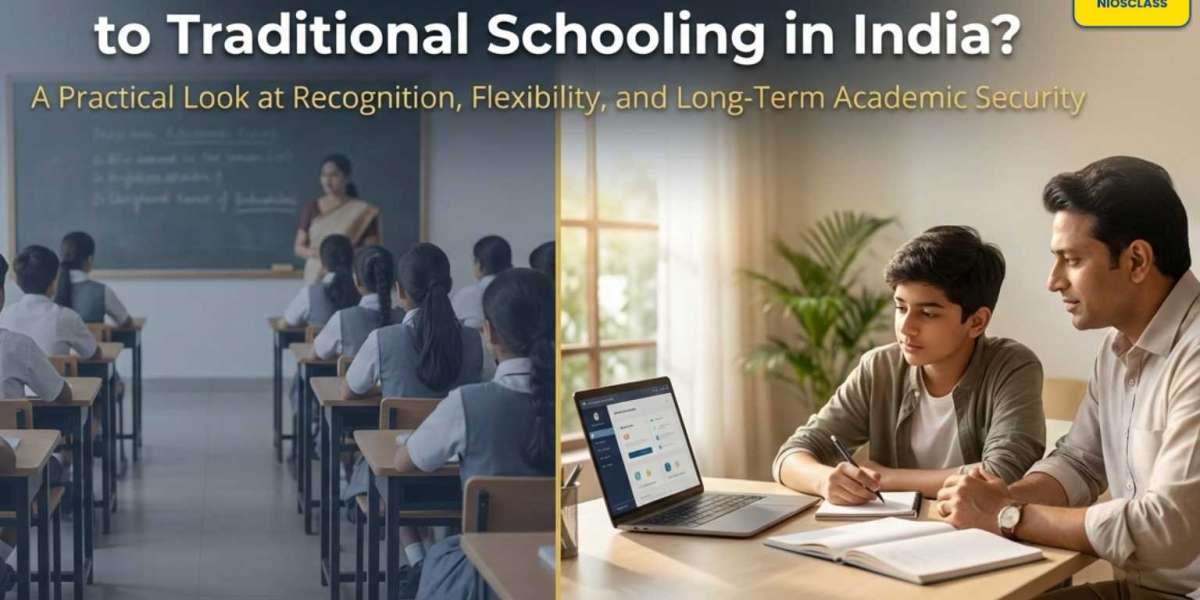

In recent years, many parents exploring options like nios class 12 have begun asking a serious question: Is NIOS truly a safe and reliable alternative to traditional schooling in India?
This question is not about convenience. It is about long-term academic stability, college admissions, career eligibility, and social acceptance. When families consider alternative pathways, the concern is not whether the system exists - it is whether it is secure.
To answer this properly, we must evaluate NIOS logically - not emotionally.
Understanding What NIOS Is
National Institute of Open Schooling is a government-recognized board under the Ministry of Education, Government of India. It was established to provide flexible education to students who are unable to continue in the traditional school system due to various reasons.
It offers:
Secondary level (equivalent to Class 10)
Senior secondary level (equivalent to Class 12)
Vocational and skill-based programs
The structure differs from conventional schooling, but its certification is officially recognized.
What Does “Safe” Mean in Academic Terms?
When parents ask if NIOS is safe, they usually mean:
Is it recognized nationwide?
Will colleges accept it?
Is it valid for competitive exams?
Does it reduce future career options?
Will my child lose academic credibility?
These concerns are valid. Safety in education is about long-term opportunity, not short-term flexibility.
Academic Recognition and Legitimacy
One of the strongest NIOS board benefits is its government recognition. NIOS certificates are valid for:
Higher education admissions (subject to eligibility criteria)
Competitive exams
Government job applications
This recognition ensures that students completing the nios senior secondary course are not automatically excluded from mainstream academic pathways.
Therefore, from a regulatory standpoint, NIOS is a legitimate academic system.
Why Families Consider NIOS
Parents and students usually explore nios courses for practical reasons:
Health-related interruptions
Competitive exam preparation
Sports or arts commitments
Family relocation
Academic setbacks
For students seeking 10th distance education or those exploring nios class 10th admission after challenges in traditional schools, flexibility becomes important.
The question then becomes whether flexibility compromises academic quality.
Flexibility vs Structure: The Core Difference
Traditional schooling provides:
Fixed attendance requirements
Daily classroom interaction
Strict academic timelines
Limited exam attempts
NIOS offers:
Flexible study schedules
Multiple exam opportunities
Custom subject selection
Self-paced preparation
Neither system is inherently superior. They simply serve different needs.
The risk factor depends largely on how the student manages responsibility.
Potential Risks of Choosing NIOS
While NIOS is recognized, certain risks may arise if planning is weak:
1. Lack of Discipline
Because there is no daily school attendance, self-motivation becomes critical.
2. Poor Subject Selection
If subjects are chosen without long-term planning, college eligibility may be affected.
3. Limited Supervision
Students who depend heavily on structured classroom environments may struggle.
These risks are not unique to NIOS - they relate to management and guidance.
How Families Reduce Risk
Many parents combine flexibility with structured academic support such as:
Organized nios coaching classes
Guided nios tuition
A professional nios coaching institute
Digital nios coaching online
Scheduled nios online classes
These systems help maintain academic discipline and structured preparation.
When guidance is consistent, the safety level increases significantly.
Is NIOS Accepted for College Admissions?
Generally, yes - provided eligibility criteria are met.
Students completing secondary or senior secondary education under NIOS can apply to universities and institutions across India. However, subject requirements must align with the chosen course.
The board itself does not limit opportunity. Planning errors might.
Comparing Long-Term Academic Security
| Factor | Traditional School | NIOS |
|---|---|---|
| Government Recognition | Yes | Yes |
| Fixed Attendance | Mandatory | Flexible |
| Exam Attempts | Limited | Multiple |
| Subject Flexibility | Stream-Based | Customizable |
| Recovery from Failure | Often Year Loss | Improvement Attempts |
Traditional schooling offers structural safety.
NIOS offers recovery flexibility.
The safer option depends on the student’s needs.
When NIOS May Be a Safe Choice
NIOS can be particularly suitable when:
A student prepares for competitive exams and requires schedule flexibility
Sports or performing arts demand travel
Health issues disrupt attendance
A student needs an academic reset
In such cases, forcing traditional schooling may create more stress than stability.
When Traditional Schooling May Be Safer
For students who:
Thrive under daily supervision
Need classroom competition for motivation
Prefer fixed schedules
Rely on direct teacher interaction
Traditional schooling may offer more structure and accountability.
Social Perception and Changing Trends
In the past, open schooling carried stigma. Today, academic flexibility is increasingly accepted.
Career paths are no longer linear. Students pursue skill-based learning, entrepreneurship, digital careers, and competitive exams alongside formal education.
The perception of safety now depends more on performance and planning than on board type.
The Importance of Long-Term Planning
Safety in academic planning comes from:
Clear career direction
Proper subject selection
Consistent study discipline
Emotional and parental support
Access to structured guidance
Many families choose to strengthen preparation through a reliable nios coaching centre, ensuring that flexibility does not compromise academic consistency.
Final Perspective
So, is NIOS a safe alternative to traditional schooling in India?
From a recognition and regulatory standpoint, yes - it is legitimate and valid.
From a planning perspective, safety depends on how thoughtfully the decision is executed.
Traditional schooling offers structured discipline.
NIOS offers flexible discipline.
Neither system guarantees success on its own.
Academic safety ultimately comes from informed decisions, realistic goal setting, and consistent preparation. When approached strategically, NIOS can serve as a stable and credible pathway within India’s evolving education landscape.