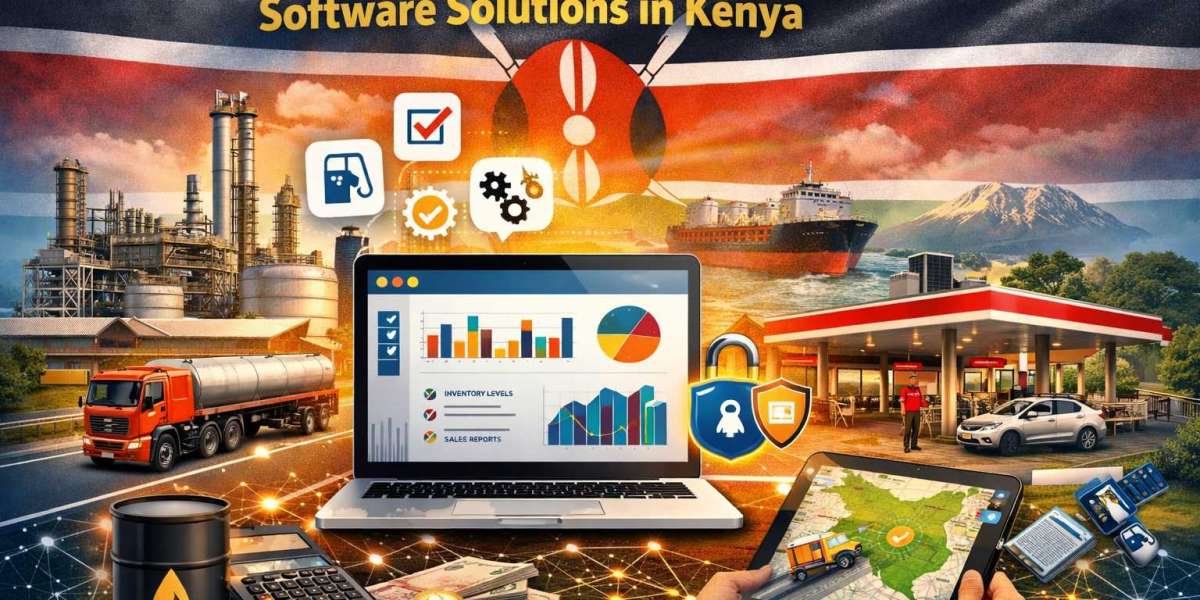

The oil and gas sector in Kenya has experienced significant transformation over the past decade. With increased regulatory oversight, price controls, supply chain complexities, and growing competition, Oil Marketing Companies (OMCs) are under immense pressure to operate efficiently and transparently. In this evolving landscape, Downstream Oil and Gas Software Solutions In Kenya have become critical for operational success.
However, despite the availability of digital tools, many OMCs still face serious software-related challenges that hinder efficiency, profitability, and compliance. In this blog, we explore the top software challenges facing OMCs in Kenya and how modern digital solutions can address them.
1. Regulatory Compliance and Reporting Complexities
Kenya’s downstream petroleum sector is tightly regulated by the Energy and Petroleum Regulatory Authority (EPRA). OMCs must comply with strict reporting standards, pricing regulations, tax submissions, and fuel quality controls.
The Challenge
Many OMCs rely on fragmented systems or manual reporting processes, which increases the risk of:
Errors in regulatory submissions
Delays in compliance reporting
Penalties due to inaccurate data
Manual systems also struggle to adapt quickly to policy changes, such as fuel price adjustments or tax revisions.
The Solution
Modern Downstream Oil and Gas Software Solutions In Kenya integrate regulatory reporting modules that automate:
EPRA compliance submissions
Tax calculations
Real-time pricing updates
Audit trail management
With automated compliance tools, OMCs can reduce human error and maintain full regulatory transparency.
2. Fuel Inventory and Loss Management
Fuel losses due to evaporation, theft, inaccurate dip readings, and reconciliation errors remain a major concern for Kenyan OMCs.
The Challenge
Many OMCs operate multiple retail stations across counties, making real-time stock monitoring difficult. Traditional systems fail to provide:
Centralized tank monitoring
Real-time inventory reconciliation
Automated variance detection
Stock discrepancies directly impact profitability and can lead to significant financial losses.
The Solution
Advanced Downstream Oil and Gas Software Solutions In Kenya integrate:
Automated Tank Gauging (ATG) systems
Real-time stock reconciliation
Variance alerts
Loss prevention analytics
These systems provide complete visibility from depot to retail pump, reducing shrinkage and improving accountability.
3. Complex Supply Chain Management
Kenya’s fuel supply chain involves imports, depots, transporters, and retail outlets. Disruptions at any stage can impact availability and pricing.
The Challenge
OMCs often struggle with:
Poor coordination between depots and retail outlets
Manual dispatch scheduling
Limited visibility into fuel transit
Inefficient route planning
Without integrated systems, supply chain inefficiencies can cause fuel shortages or overstocking.
The Solution
Integrated Downstream Oil and Gas Software Solutions In Kenya provide:
Fleet tracking integration
Depot-to-station stock visibility
Automated dispatch planning
Supply chain forecasting tools
With real-time dashboards, management teams can make data-driven decisions to optimize fuel distribution.
4. Financial Management and Pricing Control
Fuel pricing in Kenya is regulated and adjusted monthly. OMCs must quickly update pump prices and manage thin margins.
The Challenge
Disconnected accounting systems create:
Delays in price updates
Revenue leakages
Inaccurate margin analysis
Reconciliation challenges between sales and bank deposits
Additionally, OMCs must manage credit sales, loyalty programs, and dealer commissions effectively.
The Solution
Modern downstream ERP systems integrate:
Real-time price updates
Automated margin calculations
Dealer commission management
Financial reconciliation tools
By adopting Downstream Oil and Gas Software Solutions In Kenya, OMCs can enhance financial transparency and improve profit tracking.
5. Integration with Point of Sale (POS) Systems
Retail fuel stations depend heavily on Point of Sale (POS) systems for daily operations.
The Challenge
Many Kenyan OMCs use outdated POS systems that:
Do not integrate with head office systems
Lack centralized reporting
Operate offline without cloud backup
Create discrepancies in pump-to-POS reconciliation
This results in revenue leakage and inconsistent reporting.
The Solution
Cloud-based POS systems integrated with downstream ERP platforms ensure:
Real-time pump sales monitoring
Centralized reporting
Automated reconciliation
Secure cloud backups
Such integrated ecosystems are essential components of effective Downstream Oil and Gas Software Solutions In Kenya.
6. Data Silos and Lack of Centralized Reporting
Many OMCs operate with separate systems for inventory, finance, HR, and operations.
The Challenge
Siloed systems lead to:
Duplicate data entry
Inconsistent reporting
Limited business intelligence
Slow decision-making
Management teams often lack a unified dashboard that gives a clear overview of company performance.
The Solution
Enterprise-level downstream oil and gas software consolidates data across departments into a single platform, offering:
Executive dashboards
KPI tracking
Real-time analytics
Predictive insights
With centralized reporting, OMCs can improve operational visibility and strategic planning.
7. Cybersecurity Risks and Data Protection
As OMCs digitize operations, cybersecurity risks increase.
The Challenge
Common risks include:
Unauthorized access to financial data
POS hacking
Ransomware attacks
Data breaches
Kenyan businesses must also comply with data protection regulations, including requirements under the Office of the Data Protection Commissioner.
The Solution
Modern downstream oil and gas software incorporates:
Multi-factor authentication
Role-based access controls
Encrypted databases
Secure cloud hosting
Robust cybersecurity frameworks protect sensitive business and customer data.
8. Scalability and Multi-Branch Management
As OMCs expand across Kenya, managing multiple branches becomes increasingly complex.
The Challenge
Without scalable systems, companies face:
Difficulty onboarding new stations
Inconsistent reporting across branches
Delayed consolidation of financial reports
Manual expansion often results in operational inefficiencies.
The Solution
Cloud-based Downstream Oil and Gas Software Solutions In Kenya are designed for scalability. They allow OMCs to:
Add new stations seamlessly
Monitor multi-branch performance
Centralize operations
Standardize processes across regions
This ensures smooth growth without operational bottlenecks.
9. Limited Business Intelligence and Predictive Analytics
The future of downstream oil and gas lies in data-driven decision-making.
The Challenge
Many OMCs lack:
Demand forecasting tools
Predictive analytics
Market trend analysis
Performance benchmarking
Without analytics, strategic decisions rely on guesswork rather than actionable insights.
The Solution
Advanced Downstream Oil and Gas Software Solutions In Kenya incorporate:
AI-powered forecasting
Sales trend analysis
Inventory optimization models
Customer behavior analytics
This empowers OMCs to anticipate market shifts and optimize operations proactively.
Final Thoughts
The downstream petroleum sector in Kenya is becoming increasingly competitive and regulated. Oil Marketing Companies that continue relying on outdated, fragmented systems risk falling behind.
From regulatory compliance and inventory management to cybersecurity and analytics, the software challenges facing OMCs are complex but solvable. By investing in comprehensive Downstream Oil and Gas Software Solutions In Kenya, companies can streamline operations, enhance compliance, reduce losses, and improve profitability.
Digital transformation is no longer optional — it is essential for sustainable growth in Kenya’s oil and gas industry. OMCs that embrace modern ERP systems, cloud-based POS integration, supply chain automation, and advanced analytics will position themselves as leaders in the evolving energy landscape.






