
You know the moment.
You open the door to a bathroom or a back corridor, and your brain decides what the place is like before you’ve even looked around.
That’s not being picky — it’s just how people work.
Smell is instant, emotional, and unfairly powerful.
The tricky part is that odour control is one of those “small” issues that can quietly become a big one.
Too little effort and people think the whole building is neglected; too much fragrance and someone’s eyes water, a staff member complains, or a customer makes a comment that sticks in everyone’s head.
Most teams don’t need a dramatic solution.
They need a calm, repeatable one — the kind that holds up when the building is busy, the weather turns sticky, or the cleaner is covering three sites in a row.
Why “smells clean” and “is clean” are two different conversations
A space can be spotless and still smell wrong.
A space can also smell “nice” and be hiding problems that will show up later — drains, damp, bin juice, old spills, stale air.
Odours are basically your building’s way of tapping you on the shoulder.
Sometimes it’s a gentle tap (“the bins are full”), and sometimes it’s a shove (“something is wet where it shouldn’t be”).
If you only treat odour with fragrance, you end up in a loop:
spray, feel better for five minutes, smell returns, spray again, stronger this time, and now you’ve got two issues — the original odour plus a perfume cloud.
A practical approach has three layers, and it’s boring in the best way:
- Remove the source (what’s actually causing the smell).
- Help the air move (so the smell doesn’t hang around).
- Use scenting or neutralising as a light finishing touch — not a cover-up.
When those layers are in the right order, odour control stops being a daily drama.
It becomes something you only think about when it’s time to check refills.
Decision factors that actually matter when choosing an odour-control setup
If you’ve ever tried to standardise products across a few different sites, you’ll know why this gets messy fast.
An office manager wants something “fresh”; a cleaner wants something that doesn’t run out mid-week; a venue manager wants bathrooms that survive a Saturday night; a clinic wants nothing that could trigger sensitivity.
So here’s the way to make it easier: stop thinking “what product should we buy?” and start thinking “what situation are we dealing with?”
1) What kind of space is it — and how sensitive is it?
Group areas into zones instead of treating the whole building the same.
- Low-fuss zones: Open office floors, meeting rooms, corridors
- High-traffic zones: Bathrooms, lift lobbies, reception, change rooms
- High-sensitivity zones: Medical centres, treatment rooms, aged care, food-prep-adjacent spaces
High-sensitivity zones are where people feel odours the strongest and complain the fastest — not because they’re difficult, but because the stakes are different.
In those areas, the safest default is minimal scent, clear routines, and strong source control.
2) Is the smell constant, spiky, or seasonal?
This one sounds technical, but it’s just pattern-spotting.
- Constant smells are usually a “something isn’t being fixed” problem: damp, stale air, bins, drains.
- Spiky smells are timing problems: bathroom rushes, lunch periods, after-hours cleaning.
- Seasonal smells show up when humidity changes, rain hits, or heat turns waste rooms into a science experiment.
Spiky smells often do well with small, consistent dosing — the kind you don’t notice, but you’d notice if it wasn’t there.
Constant smells are the ones that will embarrass you if you try to perfume your way out of them.
3) How do you want it delivered — and who’s responsible for it?
This is where a lot of well-meaning plans collapse.
- Manual sprays are cheap and immediate, but they depend on people making the same decision every time.
- Metered dispensers create consistency, which is gold when multiple staff rotate through a site.
- Passive options can work in quieter areas, but they’re easy to forget unless they’re on a checklist.
If the product is easy to overuse, it will be overused during a complaint.
That’s not a character flaw — it’s just humans trying to solve a problem quickly.
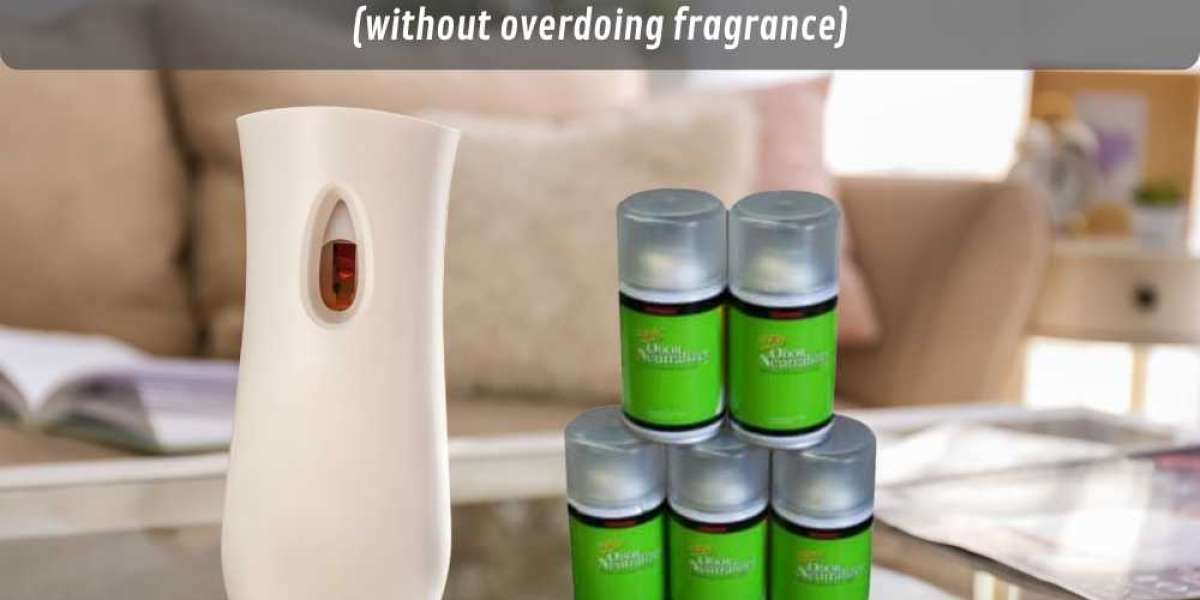
If standardising dispenser styles and refill formats across multiple rooms is the priority, the AC Cleaning Supplies air fresheners range is a useful reference point for comparing options before locking in a site-wide approach.
4) What’s your workplace tolerance for fragrance — realistically?
This isn’t about being overly cautious.
It’s about avoiding the “why does the whole floor smell like a shopping centre bathroom?” moment.
A sensible approach is to set a baseline that’s lighter than your instincts, then adjust only if you still have odour issues after the basics are fixed.
If people are divided — some love it, some hate it — the right move is usually to go lighter and rely more on source control.
If you manage multiple tenants or customer-facing sites, it’s worth having a simple internal rule like:
“Fragrance is optional; complaints are not.”
5) Can it survive real-world servicing?
Ask two unglamorous questions:
- Who checks it?
- When do they check it?
If the answer is “whoever notices” or “when someone has time,” the system won’t last.
Refills don’t run out politely — they run out on the busiest day, in the busiest bathroom.
The winning strategy is almost always a fixed rhythm: weekly checks, a small spare stock onsite, and one person accountable for the tick.
Common mistakes that make odours worse (and why they happen)
Masking a damp issue with fragrance.
Damp smells don’t like being ignored; they just get louder.
If mops and cloths aren’t drying properly, or there’s a persistent wet corner, fragrance can make the air feel heavy and stale instead of clean.
Over-spraying during panic moments.
Someone complains, someone reaches for the spray, someone goes a bit too hard, and now people are complaining about that instead.
Missing the hidden sources.
Desk bins, staff fridges, floor drains, upholstery, and “that spill from last week” are classic.
The building looks fine, but the smell keeps tapping you on the shoulder.
Not matching the plan to the ventilation.
In a tight bathroom with weak extraction, even a mild product can build up.
It’s not the product’s fault — it’s the room’s physics.
Changing products too often.
Switching scents every week doesn’t solve anything.
It just makes it impossible to tell whether the routine is working.
Treating every room the same.
If the office smells like the bathroom, people notice — and not in a good way.
A simple 7–14 day plan that actually fits how businesses run
Days 1–2: Find the pattern without overthinking it
List the top three “hot spots.”
Write down when they’re worst: mornings, mid-afternoon, after lunch, after cleaning, after rain.
Then do a walk-through with someone who spends a lot of time near those spots.
They’ll tell you things your schedule doesn’t: “it’s always worse on Tuesdays,” “it’s the bin near the lift,” “it’s when the kitchen door stays closed.”
Days 3–5: Fix sources first (the boring wins)
This is the bit that feels like it shouldn’t matter — and then it matters the most.
- Increase bin emptying where needed (or change bin size/lids).
- Check drains and add a simple maintenance routine.
- Replace old mop heads, review cloth storage, and make sure gear is actually drying.
- Look for moisture: leaks, condensation, and bathrooms that never properly dry.
Do a ventilation sanity check.
If extraction is weak or blocked, odour will hang around like it owns the place.
Days 6–8: Choose a light-touch method and standardise it
Pick the method per zone, not per building.
- Mild and consistent for bathrooms
- Minimal or fragrance-free where sensitivity is likely
- Passive or nothing at all in areas that don’t need it
Set a baseline that’s gentle.
If you can “taste” the fragrance from the corridor, it’s probably too much.
Then write one sentence that turns the plan into reality:
“Refills checked every Friday close-down,” or “Checked every Monday morning,” or whatever matches your servicing rhythm.
Days 9–14: Monitor like a human, not a lab
Ask two simple questions of staff:
- “Is it better?”
- “Is it too strong?”
If you get mixed feedback, go lighter and tighten routines.
The goal isn’t to make everyone love the smell — it’s to make the space feel stable and cared for.
Document the setup in a one-page checklist.
If the plan lives only in someone’s memory, it will disappear the first time the roster changes.
Operator experience moment
Odour control gets easier the second you stop trying to “win” with a stronger scent.
The best sites I’ve seen aren’t the ones that smell the nicest — they’re the ones that smell the most consistent.
When bins, drains, and airflow are under control, even a modest dispenser program feels intentional instead of reactive.
And the minute the routine becomes predictable, people stop talking about it — which is usually the highest compliment in facilities work.
Local SMB mini-walkthrough (Australia)
A suburban hospitality venue has great reviews, but the bathrooms cop it on weekend nights.
They split the plan into zones: subtle dosing in bathrooms, nothing scented near the dining area, and extra focus on bins and drains.
They add a simple drain routine twice a week and increase bin checks during peak trading.
They standardise one dispenser format so staff aren’t guessing which refill fits what.
They set a fixed refill check to match the weekly deep clean.
They keep a small spare refill stash onsite so a busy week doesn’t break the plan.
Practical opinions
Start with “less fragrance than you think” and earn the right to increase it.
Make the routine easy enough that it still happens during a chaotic week.
If you can’t explain the plan in two sentences, it’s probably too complicated.
Key Takeaways
- Treat odours as a signal: fix sources and airflow before adding fragrance.
- Choose different approaches by zone, especially for food and healthcare-adjacent spaces.
- Consistency beats intensity; avoid panic spraying and constant product switching.
- Tie checks and refills to a real servicing rhythm with clear ownership.
Common questions we hear from Australian businesses
How do you manage fragrance sensitivity without making bathrooms feel “stale”?
Usually, the answer is to make the basics bulletproof — bins, drains, and airflow — and then use the lightest possible finishing layer only where it’s needed.
Next step: trial a two-week “low-scent baseline” and ask staff nearest the bathrooms whether it’s better and whether it feels too strong.
In most cases in Australia’s mixed workplaces, starting gently avoids complaints escalating through tenants, HR, or front-of-house teams.
Are metered dispensers actually worth it, or is that just extra hassle?
It depends on how consistent servicing is and how often a site relies on whoever is closest to “fix” a smell with a spray.
Next step: pilot one dispenser in the highest-traffic bathroom and track two things for a fortnight — refill usage and complaints — compared to the current approach.
Usually, in Australian venues and public-facing offices, consistency is the biggest win because peak times are predictable and the spikes are sharp.
What’s the fastest way to diagnose a smell that keeps coming back?
In most cases, it’s something that stays wet, stays trapped, or gets missed on the roster — floor drains, mop gear, hidden spills, or a bin that’s “not anyone’s job.”
Next step: do the same walk-through at the same time for five days and write down what you notice; patterns show up quickly when you stop relying on memory.
It depends on local conditions too — humid weeks and summer heat can make minor issues suddenly obvious.
How often should refills be checked so you’re not constantly caught out?
Usually, weekly checks are enough for stable offices, but high-traffic bathrooms and venues need a tighter rhythm during busy periods.
Next step: pick a fixed check day and log refill use for a month so ordering matches reality, not hope.
In most cases across Australian commercial sites, the problem isn’t the product — it’s that the check schedule doesn’t match how the building is used.