
Market Overview:
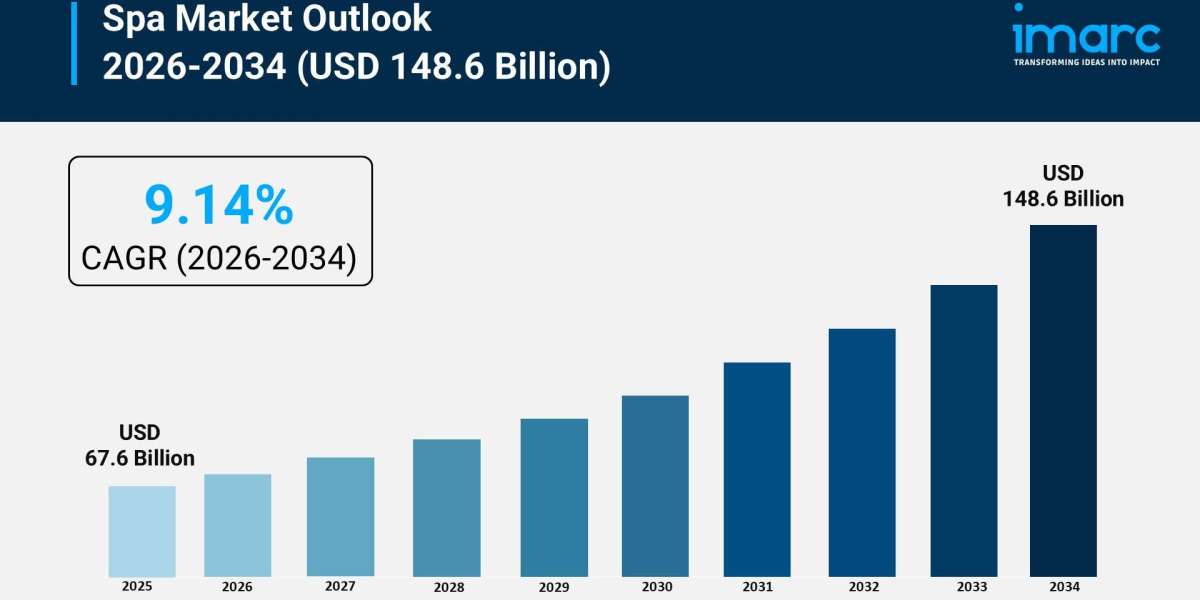
The spa market is experiencing rapid growth, driven by rise of wellness tourism and experiential travel, expansion of medical and preventative healthcare, and urbanization and the integration of corporate wellness. According to IMARC Group's latest research publication, "Spa Market Size, Share, Trends and Forecast by Type, End User, and Region, 2026-2034", the global spa market size was valued at USD 67.6 Billion in 2025. Looking forward, IMARC Group estimates the market to reach USD 148.6 Billion by 2034, exhibiting a CAGR of 9.14% during 2026-2034.
This detailed analysis primarily encompasses industry size, business trends, market share, key growth factors, and regional forecasts. The report offers a comprehensive overview and integrates research findings, market assessments, and data from different sources. It also includes pivotal market dynamics like drivers and challenges, while also highlighting growth opportunities, financial insights, technological improvements, emerging trends, and innovations. Besides this, the report provides regional market evaluation, along with a competitive landscape analysis.
Download a sample PDF of this report: https://www.imarcgroup.com/spa-market/requestsample
Our report includes:
- Market Dynamics
- Market Trends and Market Outlook
- Competitive Analysis
- Industry Segmentation
- Strategic Recommendations
Growth Factors in the Spa Market
- Rise of Wellness Tourism and Experiential Travel
The global shift from discretionary luxury to wellness-focused travel is a primary catalyst for the expansion of the spa industry. Modern travelers increasingly view spa sessions as a foundational component of their itineraries rather than an optional add-on. Statistical data indicates that approximately 90% of wellness travelers now integrate spa treatments into their trips, contributing to an average per-trip expenditure of 1,764 USD. This spending represents a significant 41% premium over standard international tourists. Governments are actively capitalizing on this trend; for instance, India has introduced the "Ayush Visa" to facilitate international visitors seeking traditional treatments like Ayurveda and Yoga. Major hospitality brands are responding by integrating comprehensive wellness facilities into their properties. Currently, the hotel and resort spa segment commands a leading 30.3% share of the total market revenue, reflecting the deep integration of therapeutic services within the broader global tourism infrastructure.
- Expansion of Medical and Preventative Healthcare
The spa sector is undergoing a significant transformation as it merges with clinical healthcare to meet the rising demand for preventative wellness. Medical spas, or "medi-spas," are the fastest-growing facility type, as consumers increasingly seek non-surgical aesthetic treatments and regenerative therapies. Research shows that 46% of consumers have increased their spending on cosmetic procedures recently, with a particular emphasis on "tweakments" such as laser resurfacing and IV nutrient therapy. This growth is supported by government-backed quality frameworks, such as the "Ayush Quality Mark" launched in late 2025, which provides an internationally aligned assurance for wellness services. Companies like Kohler are expanding their portfolios to include advanced hydrothermal and steam expertise to cater to this medicalized demand. The shift is further evidenced by the fact that medical spa treatments are growing at an annual rate of 9.22%, outpacing traditional relaxation services as people prioritize long-term health and functional longevity.
- Urbanization and the Integration of Corporate Wellness
Rapid urban development and high-stress lifestyles in metropolitan areas have repositioned spa services as essential tools for mental health and work-life balance. In dense urban cores, the emergence of subscription-based "micro-spas" allows professionals to fit 30-minute recovery sessions into busy schedules. These membership-based models are highly effective, generating threefold the revenue of traditional pay-as-you-go outlets. Corporate wellness programs are also a major driver, with businesses increasingly partnering with spa providers to offer on-site facilities or mobile services to mitigate employee burnout. Data shows that younger demographics, specifically those aged 18–34, are the most frequent users of these services for stress relief and emotional regulation. Furthermore, the rise of e-commerce has boosted the spa products market to 38.8 billion USD, as urban consumers seek to replicate professional treatments at home. This systematic integration of wellness into daily life ensures a steady, high-frequency demand for spa services globally.
Key Trends in the Spa Market
- The Rise of Neurowellness and Nervous System Regulation
A significant shift is occurring as the industry moves beyond physical aesthetics to prioritize "neurowellness," focusing on the regulation and recovery of the nervous system. With modern lifestyles keeping many individuals in a state of constant physiological stress, spas are introducing somatic release classes, vagus nerve stimulation, and "acoustic wellness" zones. These environments utilize sound-absorbing architecture, such as undulating ceiling fins and felt partitions, to achieve specific decibel ratings that foster deep mental clarity. Emerging practices like "scream circles" and touch therapy are being reframed as nervous-system medicine rather than simple relaxation. Real-world applications include the use of biofeedback wearables that sync with spa environments to adjust lighting and sound frequencies in real-time. This trend reflects a broader "over-optimization backlash," where consumers are choosing sensory experiences and emotional repair over traditional data-tracking and performance-based wellness metrics, seeking a feeling of safety and connection.
- Skin Longevity and Regenerative Bio-Aesthetics
The traditional "anti-aging" narrative is being replaced by the concept of "skin longevity," which focuses on optimizing the skin's biological function over the long term. This trend leverages cutting-edge biotechnology and AI-driven diagnostics to offer personalized, preventative care. For example, brands are implementing tools like L’Oréal’s Cell BioPrint to analyze skin health at a cellular level before recommending regenerative treatments. Numerical insights show that younger Gen Z consumers are adopting these preventative treatments much earlier than previous generations, viewing skin as a primary diagnostic tool for overall health. This shift is also expanding into "hair longevity," where scalp health and regenerative hair therapies are becoming standard spa offerings. By treating the skin as the body's largest organ rather than just a cosmetic surface, the industry is aligning itself with the broader longevity movement, which now features dedicated "longevity residences" and clinics focused on extending a healthy human life span.
- The Festivalization of Wellness
Wellness is becoming increasingly social and inclusive through a trend known as the "festivalization of wellness." This movement replaces the solitary, quiet spa experience with group-based events like wellness raves, sober morning dance parties, and multi-day immersive retreats. These gatherings respond to social fragmentation and digital overload by emphasizing human connection and collective emotional release. Examples include "social saunas," where communal bathing is treated as a cultural ritual rather than a private endurance test. Hospitality providers are adapting by designing larger, flexible spaces that can host "somatic dance" or large-scale sound baths. This trend prioritizes participation over performance, creating judgment-free environments that appeal to younger demographics who value identity-driven and experiential well-being. By making wellness playful and culturally relevant, spas are transforming into community hubs where the focus is on sustainable joy and belonging rather than clinical perfection.
Our comprehensive spa market outlook reflects both short-term tactical and long-term strategic planning. This analysis is essential for stakeholders aiming to navigate the complexities of the spa market and capitalize on emerging opportunities.
Leading Companies Operating in the Spa Industry:
- Canyon Ranch Inc.
- Emirates Palace
- Four Seasons Hotels Limited
- Grand Resort Bad Ragaz AG
- Harrison Hot Springs Resort Spa Corp.
- Lanserhof GmbH
- Marriott International Inc.
- Massage Envy Franchising LLC
- Planet Beach Franchising Corporation
- Rancho La Puerta Inc.
- Six Senses Hotels Resorts Spas (InterContinental Hotels Group)
Spa Market Report Segmentation:
By Type:
- Salon Spa
- Hotel and Resort Spa
- Medical Spa
- Destination Spa
- Thermal Spring Spa
- Others
Hotel and resort spa represents the largest segment as it offers luxurious experiences that attract travelers seeking relaxation and rejuvenation.
By End User:
- Male
- Female
Female accounts for the majority of the market share due to the growing focus on wellness and self-care tailored to their specific preferences.
By Region:
- North America (United States, Canada)
- Asia Pacific (China, Japan, India, South Korea, Australia, Indonesia, Others)
- Europe (Germany, France, United Kingdom, Italy, Spain, Russia, Others)
- Latin America (Brazil, Mexico, Others)
- Middle East and Africa
Asia Pacific enjoys the leading position in the spa market, which can be attributed to its rich tradition of wellness practices and a thriving tourism sector.
Note: If you require specific details, data, or insights that are not currently included in the scope of this report, we are happy to accommodate your request. As part of our customization service, we will gather and provide the additional information you need, tailored to your specific requirements. Please let us know your exact needs, and we will ensure the report is updated accordingly to meet your expectations.
About Us:
IMARC Group is a global management consulting firm that helps the world’s most ambitious changemakers to create a lasting impact. The company provide a comprehensive suite of market entry and expansion services. IMARC offerings include thorough market assessment, feasibility studies, company incorporation assistance, factory setup support, regulatory approvals and licensing navigation, branding, marketing and sales strategies, competitive landscape and benchmarking analyses, pricing and cost research, and procurement research.
Contact Us:
IMARC Group
134 N 4th St. Brooklyn, NY 11249, USA
Email: sales@imarcgroup.com
Tel No:(D) +91 120 433 0800
United States: +1-201971-6302