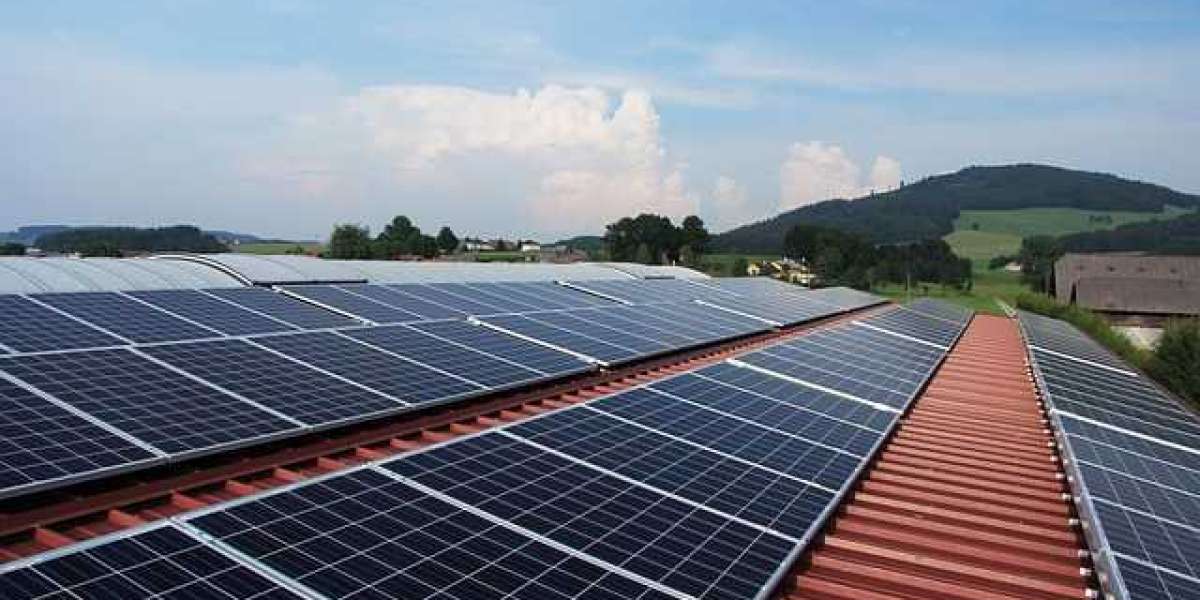

How Solar Panel Work?
There are many things to appreciate when it comes to solar panels. I mean, it’s an incredible science to be able to place some flat, shiny, electrical devices on a roof, let some sunlight hit them and boom! The house has electricity. No noise, no hassle, no fuel deliveries. Simple.
But as it turns out, it actually isn’t that simple.
There has been a recent boost in the adoption of solar energy systems in the regions of Nigeria where there are no reliable electricity systems. As per the estimates of GMI Research, The Nigeria Solar Panel Market is expected to grow at a significant compound annual growth rates (CAGR) in the time period of 2025-2032. The growth is an indication on the increasing significance of solar energy for the households, businesses and communities in Nigeria.
In this article, we explore the operations of a solar panel.
Components of a solar panel
The core component of a solar panel is its solar cells. These cells, typically made of silicon, are units that are capable of performing the conversion of sunlight into electrical energy via a process called the photo-voltaic effect.
The cells generate energy when the sun's rays hit and excite some of the silicon atoms. Electron movement leads to the generation of electric current.
Most modern solar panels use:
- Monocrystalline silicon, which is more efficient at converting sunlight to electricity, taking up less space.
- Polycrystalline silicon, which is slightly less efficient (still high performing) and is often less expensive.
Solar panels will also have metal conductors on both the front and the back of the photovoltaic cells to carry the current, as well as an anti-reflective coating to absorb more sunlight rather than bouncing it away.
A single panel is made up dozens of photovoltaic cells. Many panels are interconnected to form an array, which is mounted on rooftops or on the ground to optimally harness sunlight.
How Solar Energy is Converted to Electricity
When sunlight strikes a solar panel, the following sequence of events will occur.
Sunlight then passes through the protective glass and anti-reflective coating, which is meant to trap as much of the light as possible.
When light strikes a solar cell, the photons emitted by the light will knock electrons from atoms.
Those electrons will flow (and) the flow will generate electricity (in the form of) direct current.
Inside the solar panel, metal plates will deliver that flow of electricity to wires. From this point on the electricity may be used immediately, or the electricity is stored in batteries, or the electricity is converted from direct current to alternating current for residential appliances.
It all happens silently. It all happens in a moment. Over and over and over again.
How Efficient Are Solar Panels Today?
Modern commercial solar panels have manufacturer rated efficiencies of 15% to 22%. Meaning, 15% to 22% of the sunlight that hits the panel is converted to usable electricity.
Efficiency is dependent on:
- Type of panel material
- Temperature
- Shading
- Dust and dirt buildup
- Age of the panel
It is impressive how quickly the technology is advancing. Panels today are several times better than the panels developed in the 1950’s.
You can also meet your energy needs by installing more panels, even if you have a panel that is not ultra-high efficiency.
How Much Energy Can Solar Panels Produce?
Energy production is dependent on: location of the panels, size of the solar power system, and the efficiency of the solar panels.
Take for example, a commercial grade solar system rated at 5kW. It can produce between 6,500 and 8,500 kilowatt-hours of energy in a year if it is in a location that is good for solar energy production.
This is enough energy to power:
- The lighting in a house
- Refrigerators
- Washing machines
- Small appliances
- Electronics
In many instances, a solar power system that is sized correctly will provide all the energy needs of a household for one year.
Solar energy also has the added benefit of producing no emissions when it is operational. This means, no smoke, no toxic by-products, and no emissions.
The Continuously Expanding Market of Solar Energy
There are many reasons why the use of solar is on the rise. People are starting to take more control over their energy usage instead of relying on energy grids. People also are becoming more eco-conscious and looking to the use of renewable energy sources to power their homes.
With the government subsidies on solar panels and the falling cost to install the panels, people are starting to install panels on their homes. The ease of use of technology and the improvement in technology year after year makes use of solar panels more attractive.
Solar energy technology is still in its early stages and people are still learning more about it. The technology is built of silicon cells that are able to capture sunlight. As more and more people around the world use solar power, the more important it will be in the world to use solar power.