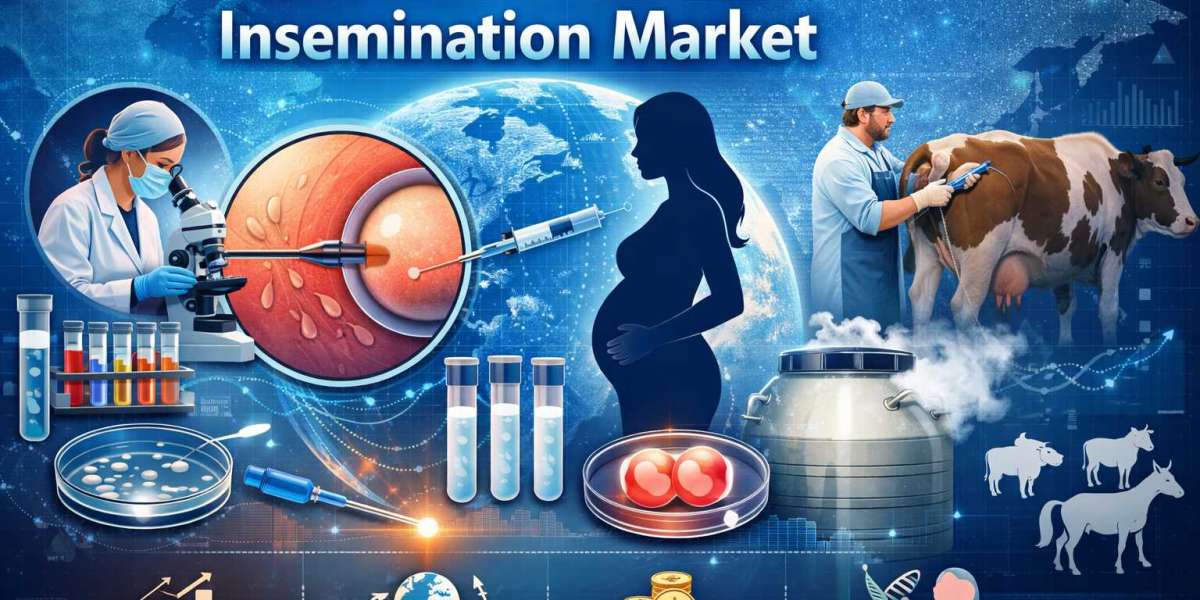

Artificial insemination has grown to be a niche method of fertility to a mainstream medical intervention to human infertility and livestock productivity issues. Due to increased awareness of reproductive health and delayed parenthood patterns, as well as innovation in the technology of assisted reproductive technologies (ART), the artificial insemination market is gaining a long-term trend globally.
A Science-Crafted and Socially Transforming Market
Artificial insemination is a medical process that entails intentional insertion of the male reproductive material into the female reproductive system so as to result in pregnancy, but without sexual intercourse. Although it was used initially in agricultural breeding, it has increased its use in human fertility treatment in the past decade.
Healthcare research shows that infertility is known to occur in almost 15-17 percent of couples all over the world, which is why the market is in need of affordable and a low-invasive fertility intervention. Artificial insemination, particularly intrauterine insemination (IUI) remains one of the first-line treatment options prior to other sophisticated treatment methods like IVF.
The market estimates in the recent past have shown that the artificial insemination market has a value of more than USD 2.9 billion, and it is expected to experience a compound annual growth rate of approximately 9 percent up to the forecast period. These figures are a sign of increasing acceptance, increased success rates, and increased access, both in developed and emerging economies.
Major Growth Enablers that are facilitating the market growth
The growing maternal age among urban populations is one of the greatest forces. The low natural fertility rates, especially in North America, Europe, and some of the Asian regions have been influenced by career prioritization, lifestyle changes and late marriages.
Simultaneously, the advancement in technologies has enhanced the methods of sperm preparation, the efficiency of sperm cryopreservation, and the use of catheters based insemination techniques- all of it has made the processes safer and more effective. Clinics have been reporting an increase in the rate of conception particularly when the procedures are accompanied with ovulation-inducing drugs.
The other important aspect is government support and insurance coverage. Some nations have also adopted the partial reimbursement on fertility treatments that motivate couples to seek medical treatments early. The penetration of service in emerging markets is also increasing with the growth of the number of private fertility clinics.
Segment Literature: In which Demand Is Concentrated
Procedurally, intrauterine insemination (IUI) is the most dominant method in the market because of its low cost, non-complexity and low-invasiveness. Even vaginal and intracervical methods of insemination are still in use but their adoption is restricted to special clinical conditions.
The human artificial insemination segment has the greatest market share based on application due to the increasing awareness about infertility and the growing fertility tourism. In the meantime, the animal artificial insemination section is steadily expanding, especially in those areas that are concerned with genetic enhancement of animals, maximizing dairy production, and prevention of diseases.
The clinics and fertility centers are the main end users, but hospitals with specialized reproductive units are also adding insemination services to the wider women health services.
Industry participation and Competitive Landscape
The market of artificial insemination involves a blend of well-established manufacturers of medical devices, infertility solutions, and biotechnological innovators. CooperSurgical, Vitrolife, Hamilton Thorne, Merck KGaA and Cook Medical are among the companies that are actively investing in product innovation, sperm handling technologies and clinic partnerships.
Fertility clinics and device manufacturers are increasingly adopting strategic partnerships that allow them to offer bundled services and provide better patient outcomes. Clinician training programs are also trending among player in the market to normalise the rate of procedural success in different regions.
The publications of Markntel Advisors show that investing in the emerging markets and online fertility services will probably bring long-term competitive advantages to companies as the level of patient awareness keeps increasing.
The Local Trends That have shown market potential
The highest artificial insemination market is found in North America as it is backed by excellent healthcare systems, a high rate of adoption of ART and reimbursement systems. Europe is not far behind and such nations as Denmark, Spain and Germany become fertility tourism centres.
Asia-Pacific region will experience the highest growth due to high numbers of patients, rising disposable income and better access to fertility clinics in India, China and Thailand. In Latin America and Africa, market penetration is still quite low, although slow regulatory changes and the investments of the companies are creating new opportunities.
Obstacles that may affect the direction of the market
Although the market shows positive growth signs, it has challenges such as social stigma, moral issues and inconsistency of regulations across nations. The success rates also may be different based on the age of patients and underlying conditions and this may influence the adoption of treatment.
Also, the lack of rural awareness and high out-of-pocket expenses in some regions both hinder penetration on a large scale.
Prospects: A Market, which is ready to grow steadily
In the future, AI-based fertility testing, better sperm selection protocols, and better patient education programs are likely to improve the artificial insemination business. With the future growth of healthcare systems in appreciating infertility as an ailment instead of a life-style, the demand of fertility treatments at early stages is bound to grow.
As per the analysis conducted by Markntel Advisors, the issue of constant innovation, growth in the clinic network, and non-deterrent policy frameworks will continue to be key in the coming years, as far as pursuing the full potential of the market is concerned.