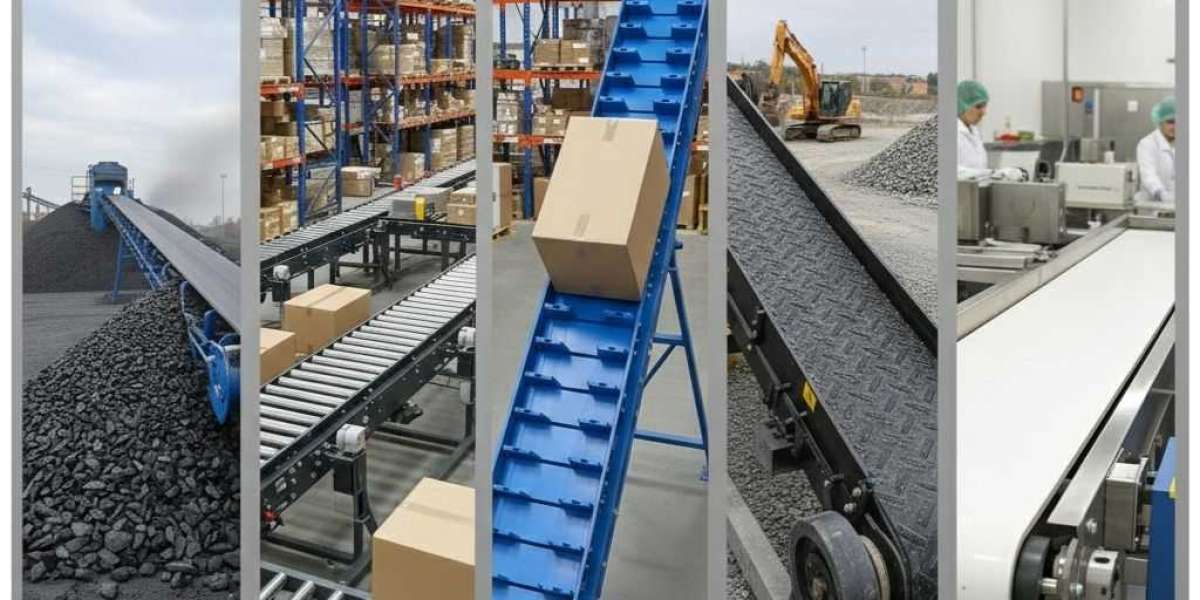

Conveyor belts are what make modern material handling systems work—allowing products, parts, and materials to flow rapidly and smoothly from one process to another. Conveyor belts are used in all kinds of places these days, from factories and warehouses to distribution centres and food processing plants, helping to simplify work, reduce human labour, and speed up throughput. Conveyor technology has a vital role to play in packaging, pharmaceuticals, automotive assembly, textiles, and agribusiness in India’s rapidly expanding manufacturing sector. Selecting the correct belt style is not just a matter of technical choice - it can influence the productivity, safety, and cost of operation.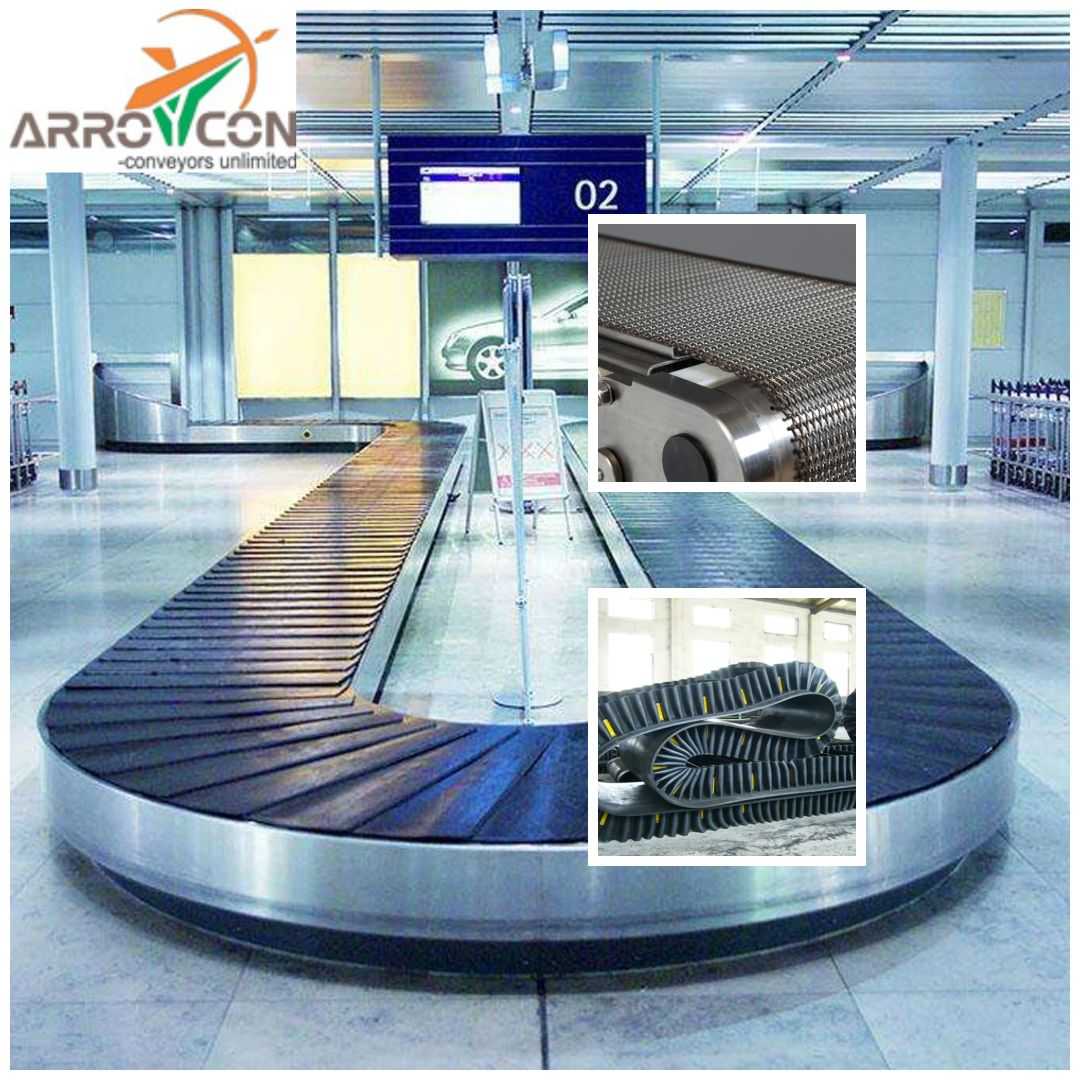
PVC Conveyor Belts: What They Are and Why They Matter
The PVC Conveyor Belts are formed by bonding a woven or non-woven fabric in layers with a layer of polyvinyl chloride ( PVC) on one or both sides of the fabric. These are more or less light-duty belts which are very popular for that reason – the perfect compromise of durability, price and usability in so many environments. Their smooth and textured surfaces are designed to help the material being conveyed adhere to the belt, and PVC’s natural properties — such as being somewhat resistant to oils, chemicals, and wear and tear — enable these belts use in a variety of applications. Typical temperatures for using standard PVC conveyor belts are from -10°C to 80°C, which covers most of the requirements in general industry.
Why Choose PVC Belts?
- Cost-Effective: Less expensive than a lot of other belt materials.
- Versatile: Able to work in small parts assembly, airport baggage systems, packaging, and logistics.
- Customizable: Available in multiple ply structures, thicknesses, and surface finishes.
- Lightweight and Easy to Install: Lowers power consumption and streamlines upkeep.
How PVC Conveyor Belts Are Constructed
PVC conveyor belts are designed with multiple layers, which give the belts sufficient strength and flexibility to meet the demands of industrial applications. The top layer, called the cover, is a PVC compound and can be smooth, rough or have a pattern that depends on the application or the need of grip. Just below it are the layers that support the fabric reinforcement layer, which is generally polyester or nylon, and which provides tensile strength and prevents the belt from extending or breaking when subjected to loads. The underside of the fabric, or the bottom layer of the PVC material, is also usually coated with UV resin to make for easy rolling, stability and alignment on the rollers. As a result, these layers provide a stable conveyor belt construction for material handling, packaging, food processing and many other sectors.
Top Cover: The surface that comes in contact with materials.
Fabric Layer: Adds strength and durability in the dimensions between.
Bottom Layer: Improves traction or wear resistance.
Types of PVC Conveyor Belts You Should Know
In India’s conveyor manufacturing industry, especially with leading producers tailoring solutions for specific needs, multiple belt types exist.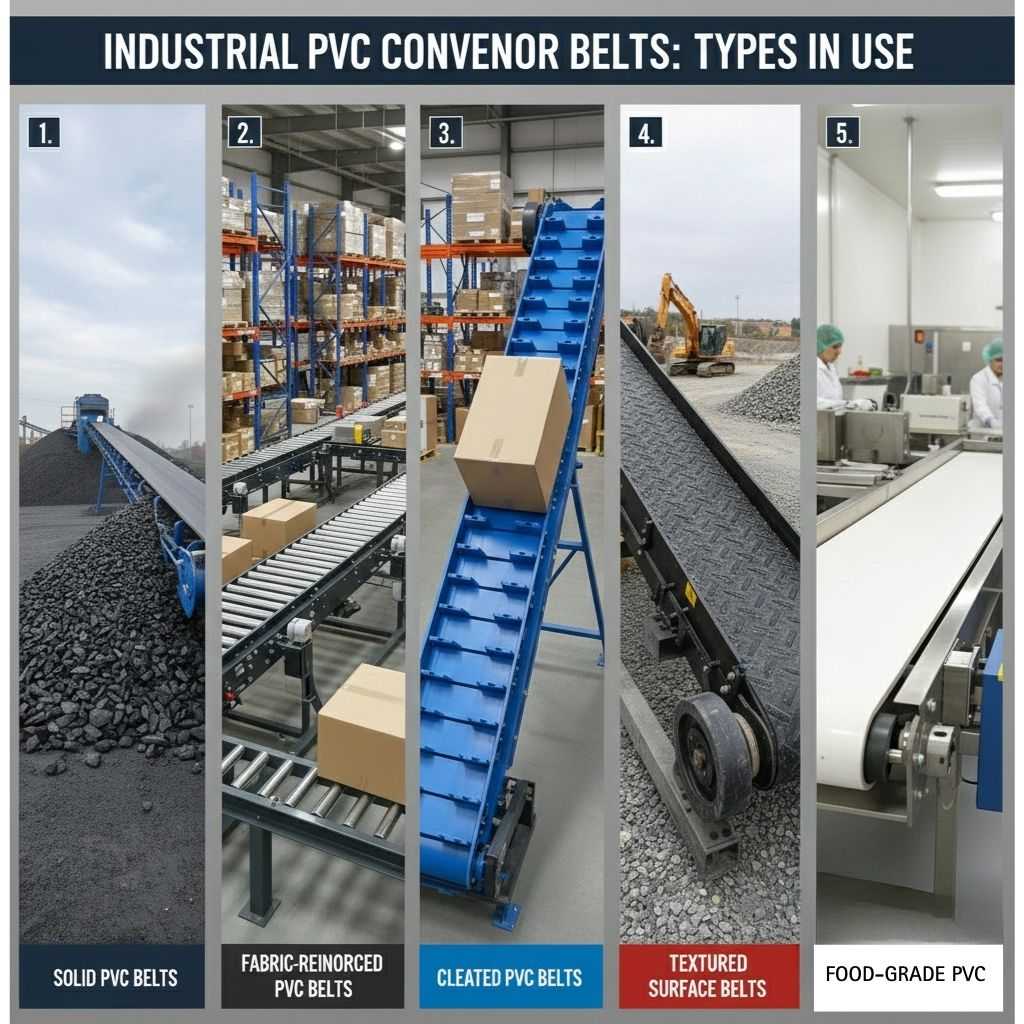
Below are the most common, including simple examples and their key strengths:
1. Solid PVC Conveyor Belts
Example: Smooth flat belt used on a bakery assembly line.
- Single-piece PVC surface.
- Best for general, horizontal conveying of boxed or packaged goods.
- PVC Coated Cloth Belts
Include materials with a PVC coating, together with a strong cloth core (polyester or nylon). Example: Heavy small articles for example in a textile mill.
- More tensile strength, more stable.
3. Food Grade PVC Belts
Normally, belts suitable for hygienic applications would be FDA or EC compliant. Example: Conveyor in dairy or snack food packing.
- Smooth, easy to clean, not toxic.
4. Rough Top Patterned PVC Belts
These feature textured surfaces like diamond, rough, or grip patterns. Example: Inclined conveyors carrying boxes up an incline.
- Better traction prevents slippage.
5. PVC Cleated Belts
Raised cleats or ridges help move materials on steeper angles. Example: Conveying grain up to a higher level in a mill.
- Used when goods go in angled directions.
6. Solid Woven PVC Conveyor Belts
These feature a tightly woven fabric impregnated with PVC — very strong and flame-resistant.
Example: Heavy components or materials in a warehousing environment.
Each type serves a distinct niche: smooth belts for stable surfaces, patterned belts for grip, fabric reinforcement for strength, and food-grade belts for hygiene.
Meet a Leading Manufacturer: Dynamic Industrials
Among the prominent players in the Indian conveyor belt manufacturing market is the Dynamic Industrials - a national leader in conveyor belting supply. The tiered conveyor belts are available in PVC, PU, food grade, cleated, solid woven and more types and are suitable for light to medium duty industrial applications. Their systems of quality focus on the performance of the material, reliable delivery and satisfaction of the customers, which made them a source-of-choice for OEMs and factories in India.
Choosing the Right Belt - Advice Checklist
- Understand your material: weight, size, shape, and surface finish.
- Level of Duty: light, medium, heavy – select your plies and reinforcements accordingly.
- Climatic Conditions: Temperature, humidity and chemical exposure.
- Safety Compliance: In particular for food or hygiene sensitive applications.
Thoughts on PVC Conveyor Belts
Within the conveyor belts manufacturing industry in India, PVC belts remain a reliable, adaptable choice for many applications. From smooth general-purpose belts to specialised patterned or food-grade options, manufacturers have fine-tuned designs to match exact needs. Whether you’re upgrading a plant line or specifying a new system, understanding these types helps you choose the best solution — and the right PVC Conveyor Belts for your operation.