
In today’s competitive digital environment, brands are constantly searching for creative ways to capture attention and leave a lasting impression. Traditional flat visuals often struggle to stand out, especially in crowded public spaces. This is where 3D Anamorphic technology is redefining visual communication by turning ordinary screens into extraordinary experiences.
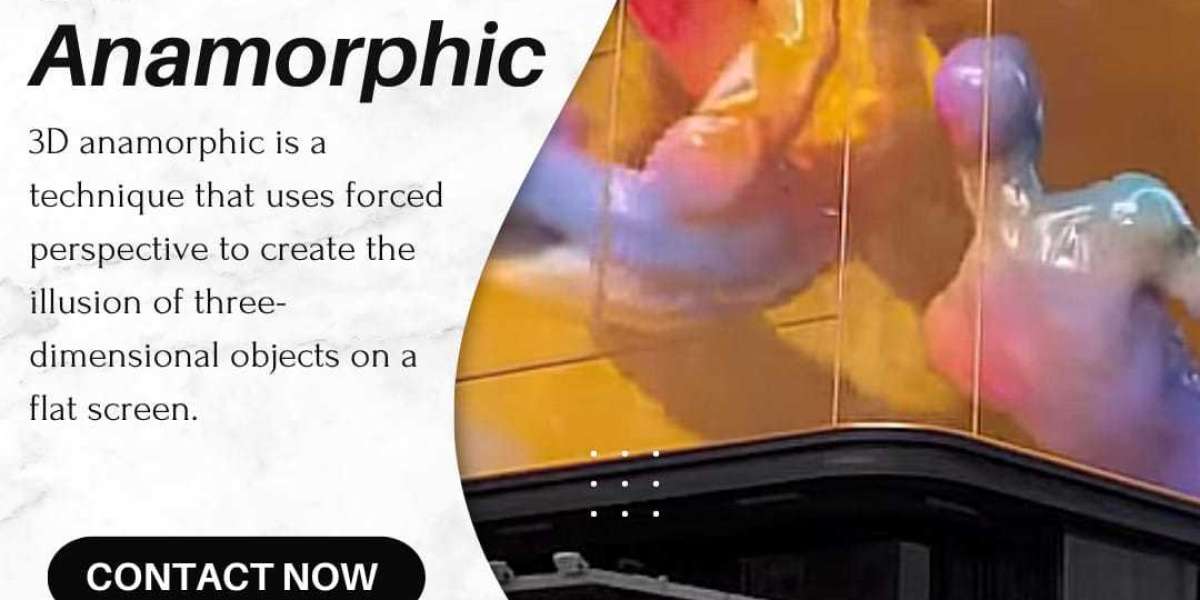
3D anamorphic visuals use advanced perspective design and depth illusion techniques to create realistic three-dimensional effects on LED and digital screens. When viewed from the correct angle, the content appears to extend beyond the screen, making objects look as if they are floating or moving in real space. The most impressive part is that this immersive experience requires no special glasses, making it instantly accessible to everyone.
One of the key reasons brands are adopting 3D anamorphic visuals is their ability to stop people in their tracks. Human eyes are naturally drawn to depth and motion, and these visuals deliver both. As a result, viewers spend more time watching, engaging, and remembering the message. This makes anamorphic content far more effective than traditional 2D advertising.
The applications of 3D anamorphic technology are wide-ranging. Outdoor LED billboards in busy city locations use it to create landmark advertising moments. Shopping malls and retail stores use it to attract foot traffic and enhance customer experience. Events, exhibitions, and product launches rely on anamorphic visuals to create buzz, excitement, and share-worthy moments that spread quickly on social media.
From a branding perspective, 3D anamorphic visuals position companies as innovative and forward-thinking. They allow brands to tell stories in a more engaging and emotional way, turning advertisements into experiences. By combining creativity, storytelling, and cutting-edge technology, businesses can significantly improve brand recall and audience connection.
As digital display technology continues to advance, 3D anamorphic visuals are expected to become a core part of future advertising strategies. Brands that invest in this immersive approach today gain a strong competitive advantage and set themselves apart in an increasingly visual world.