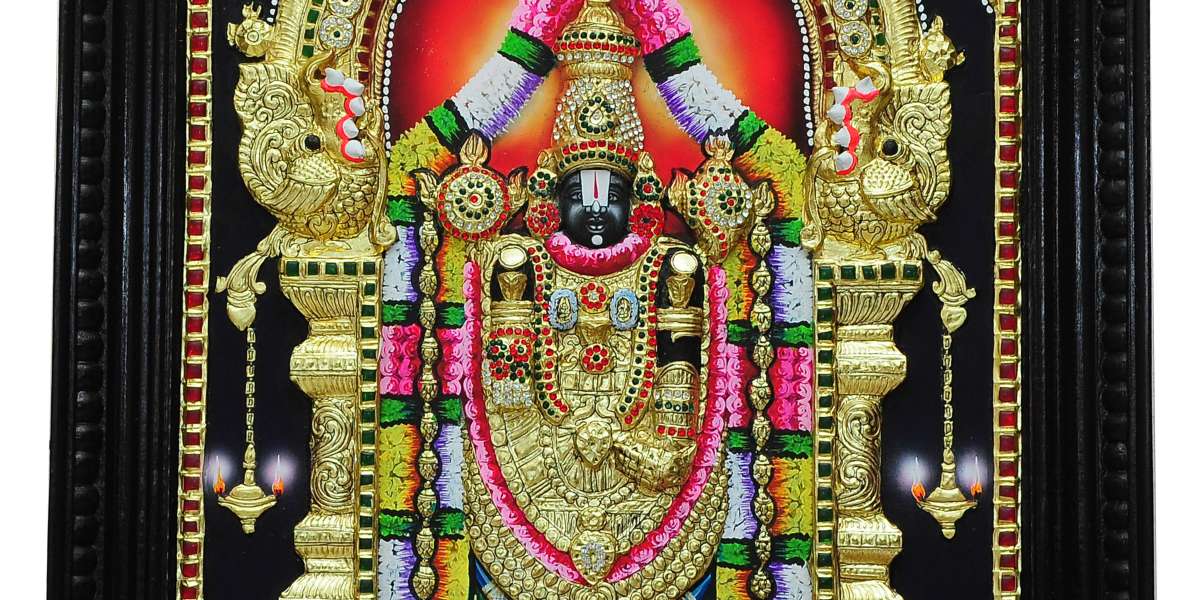

Indian traditional art holds a timeless charm, and among its most treasured forms stands the Balaji Tanjore Painting. Rich in devotion, craftsmanship, and cultural meaning, this art form is more than just a visual delight—it is a spiritual experience. Loved by art collectors, devotees, and interior décor enthusiasts alike, Balaji Tanjore Painting continues to shine as a symbol of divine grace and artistic excellence.
Let’s explore its fascinating history, deep symbolism, and lasting artistic significance.
History of Balaji Tanjore Painting
The origins of Balaji Tanjore Painting trace back to the 16th century during the reign of the Chola dynasty in Tamil Nadu. The art form flourished later under the patronage of the Maratha rulers of Thanjavur (Tanjore), from which it gets its name. These paintings were traditionally created to adorn temples and palaces, reflecting devotion and royal grandeur.
Balaji, also known as Lord Venkateswara or Tirupati Balaji, became a popular subject due to his association with prosperity, protection, and fulfillment of wishes. Artists used natural colors, gold foil, and semi-precious stones to create a glowing, three-dimensional effect that made the deity appear majestic and alive.
Even today, artisans follow age-old techniques passed down through generations, keeping the legacy of Balaji Tanjore Painting alive.
Unique Features of Balaji Tanjore Painting
What makes Balaji Tanjore Painting truly special is its unmistakable style. These paintings immediately stand out due to:
Rich gold foil work that gives a radiant, divine glow
Bold outlines and vibrant colors
Embossed effect created using chalk powder and adhesive
Intricate detailing in jewelry, crowns, and ornaments
Unlike flat paintings, Balaji Tanjore Painting has a sculptural quality that adds depth and elegance. The use of gold is not merely decorative—it symbolizes purity, prosperity, and the eternal presence of the divine.
Symbolism in Balaji Tanjore Painting
Every element in a Balaji Tanjore Painting carries deep symbolic meaning. Lord Balaji is usually depicted standing in a frontal posture, signifying his direct blessing to devotees.
Key symbolic elements include:
Tilak (Namam) on Balaji’s forehead represents spiritual awakening
Conch (Shankha) symbolizes the sacred sound of creation
Chakra (Sudarshan) represents protection and the destruction of negativity
Ornaments and crown signify divine kingship and abundance
The rich colors also play an important role. Red symbolizes energy and devotion, green represents harmony, and gold reflects divine light and prosperity. Together, these elements turn Balaji Tanjore Painting into a powerful spiritual symbol for homes and sacred spaces.
Artistic Significance and Craftsmanship
The artistic value of Balaji Tanjore Painting lies in the patience, precision, and devotion involved in its creation. Artists begin with a wooden base, sketch the deity, and then carefully build embossed areas using traditional materials. Gold foil is applied last, followed by hand-painted details that bring the artwork to life.
Each painting can take several weeks to complete, making every Balaji Tanjore Painting a labor of love. No two pieces are exactly alike, which adds to their exclusivity and charm.
This art form beautifully blends painting and relief work, making it one of the most distinctive classical art styles of India.
Why Balaji Tanjore Painting Is Popular Today
Despite its ancient roots, Balaji Tanjore Painting remains highly relevant today. Many people choose these paintings for:
Home temples and prayer rooms
Vastu and spiritual décor
Wedding and housewarming gifts
Art collections and heritage interiors
Believers consider Balaji Tanjore Painting auspicious, as Lord Balaji is associated with wealth, well-being, and success. At the same time, art lovers admire its royal aesthetic and timeless beauty.
Modern artists also experiment with sizes and backgrounds while preserving traditional techniques, making these paintings suitable for contemporary homes.
How to Care for Balaji Tanjore Painting
To maintain the beauty of your Balaji Tanjore Painting, simple care goes a long way:
Keep it away from direct sunlight and moisture
Clean gently with a dry, soft cloth
Avoid using water or chemical cleaners
Frame it properly to protect the gold foil
With proper care, a Balaji Tanjore Painting can remain radiant for generations.
Conclusion
Balaji Tanjore Painting is more than an art form—it is a divine expression of faith, heritage, and skilled craftsmanship. Its rich history, symbolic depth, and artistic brilliance make it a treasured possession for devotees and art enthusiasts alike.
Whether you seek spiritual energy, cultural elegance, or a meaningful piece of traditional art, Balaji Tanjore Painting offers all of it in one timeless masterpiece. Bringing one into your space is not just about décor—it’s about inviting devotion, prosperity, and tradition into your life.