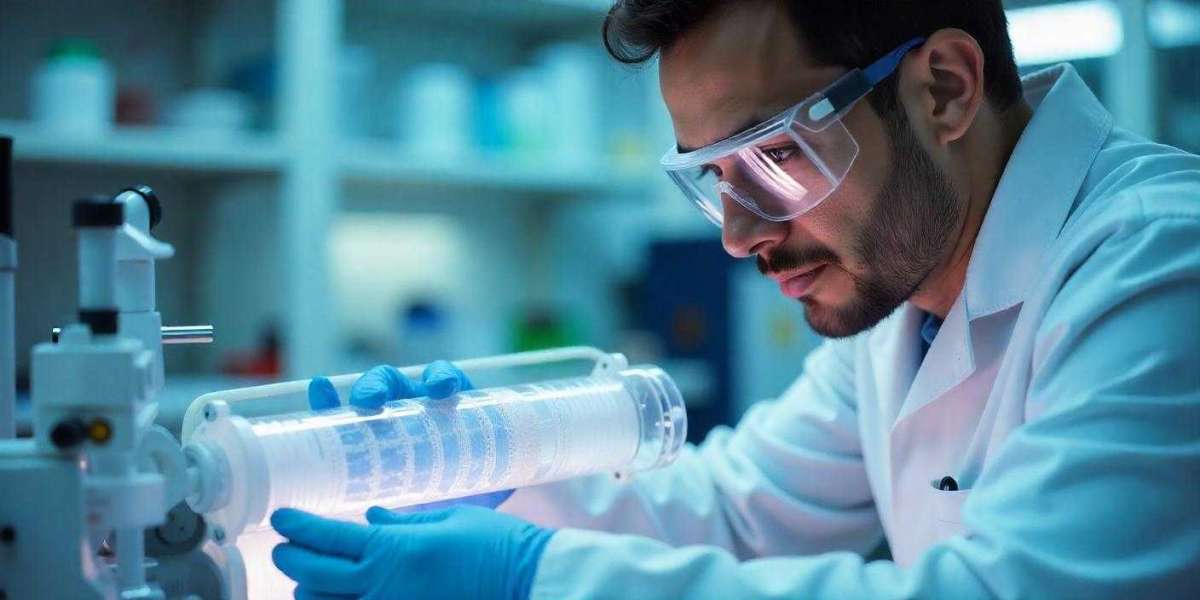

Why Membrane Filtration Has Become a Quiet Game Changer in Processing
In the modern industries worldwide, processing liquids and separating the components using membrane filtration should be winning the most accolades. While the majority of the public does not even know the technology exists, it is one of the most efficient ways to be employed in the production processes of countless production lines. It is able to carry out separations at low or even ambient temperatures, thus saving energy, protecting sensitive ingredients, and most importantly enhancing profit margins by avoiding the use of older, more expensive technologies.
The increasing presence of membrane technology in modern industries is also an important driver of demand, and it is even leading to rapid growth in the Membranes Market, expected to reach USD 13.9 billion by 2032 as published by GMI Research.
Choosing the Right Membrane Matters
Membranes are not uniform, and each type of membrane is a one trick pony; it performs a specific job, to a specific level of filtration. Some are narrow or wide, spiral or tubular, and can be made of ceramic, stainless steel or hollow fibers, and the choice of a membrane depends on what is to be separated, and to what level the filtration should be.
To begin with the basics of membrane filtration, pressure is applied to the membranes to separate the components of the mixtures, with each technique serving a particular separation purpose. Microfiltration traps the bigger particles, ultrafiltration separates proteins and some suspended solids, nanofiltration removes specific salts and color, and reverse osmosis completes the list by accomplishing the utmost level of separation.
Filtration Process
Reverse osmosis is typically the last step of a filtration process to concentrate and purify the desired liquid. It causes the water to lose some of its dissolved solids and to retain a stream that contains almost no dissolved solids, making it a suitable for applications in dewatering and for treating wastewater.
The separation of larger molecules is the objective of ultrafiltration, and its applications in the industry are in the processing of milk, whey, and proteins. Valuable components are concentrated, with the smaller solutes and salts able to pass freely.
Nanofiltration is the technique that is best at carrying out the demineralization and the desalination of a liquid, as well as the removal of color.
Microfiltration is useful in fermentation, stock clarification, and the recovery of biomass. It operates at a lower pressure, and its purpose is to retain suspended solids and colloids.
The combination of each of the techniques is what makes the processing systems so versatile.
Application of Membrane Filtration in an Industry
The application of membrane filtration crosses multiple industries: food and beverages, dairy, sugar, pharmaceuticals and biotech, chemicals, and any industry that needs liquid separation.
Membranes assist in food processing by concentrating egg whites, clarifying juices, recovering gelatin, cleaning and reusing meat brine, concentrating plant proteins (e.g., soy, oat), and removing alcohol from wines and beers.
In dairy production, membranes assist in processing milk and whey; they produce dairy ingredients of consistent quality and purity.
In the manufacture of starch and sweeteners, membranes clarify syrups, enrich ax, concentrate rinse water, and improve overall product performance.
In sugar refinement, membranes clarify raw juices and concentrate sugar solutions while improving sustainability.
In the chemical industry, membranes and their systems purify dyes and pigments; manage wastewater; concentrate and clarify caustic minerals; assist in the production of polymers; and recover precious metals.
Membrane filtration is an unsung hero of modern industry; it enables cleaner processes, better product quality, and increased efficiency in production. As industry continues to transform and modernize, membranes will remain central to this evolution.