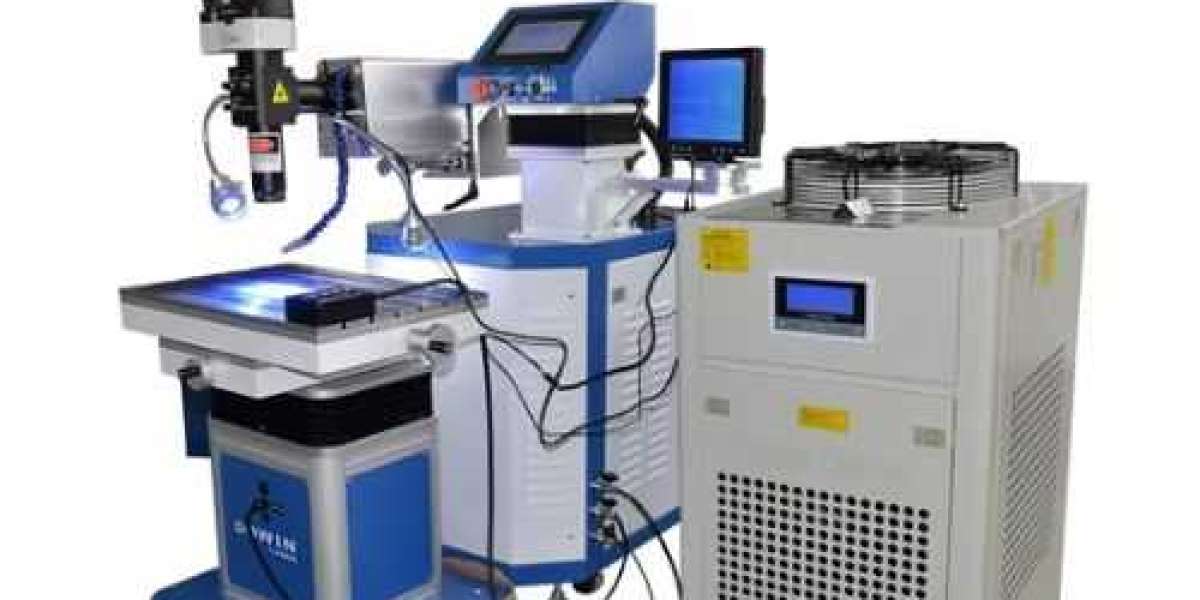

Laser welding machine stainless steel are widely used in industrial manufacturing, precision engineering, and commercial production. Stainless steel, known for its corrosion resistance, durability, and aesthetic finish, requires precise welding techniques to maintain structural integrity. Laser welding machines provide the energy, precision, and control necessary to process stainless steel in a variety of shapes, sizes, and thicknesses, enabling manufacturers to meet stringent standards for quality and performance.
The process of laser welding stainless steel involves directing a concentrated beam of light onto the workpiece, melting the metal at the point of contact. This creates a seamless and strong joint that can withstand mechanical stress and environmental factors. Unlike traditional welding methods, laser welding minimizes heat-affected zones, preserving the material's inherent properties while delivering high accuracy. In stainless steel applications, this precision is essential because even minor deviations can affect corrosion resistance and aesthetic appeal.
In industrial environments, laser welding machines for stainless steel are used to assemble components in automotive manufacturing, aerospace, medical devices, kitchen equipment, and electronics. The ability to produce consistent welds makes these machines suitable for both mass production and custom fabrication. Engineers can program laser welding systems to follow complex geometries, ensuring repeatability and minimizing the risk of human error. Stainless steel, often alloyed with elements such as chromium, nickel, and molybdenum, can present challenges due to variations in thermal conductivity and reflectivity, but advanced laser systems are capable of adjusting parameters to accommodate these properties.
The technology behind laser welding machines for stainless steel has evolved significantly over the past decades. Modern systems incorporate fiber laser sources, solid-state lasers, and diode lasers, each offering specific capabilities for different industrial needs. Fiber laser systems, for example, provide high beam quality and focusability, allowing fine and precise welds even on thin stainless steel sheets. Solid-state lasers, on the other hand, are suitable for medium to thick material welding, offering deep penetration with controlled heat input. Diode lasers are compact and energy-efficient, ideal for localized welds or integration into automated production lines.
Laser welding machines operate under strict safety and quality controls. Operators typically work in enclosed environments with protective shielding to prevent exposure to intense light and heat. Modern machines also integrate advanced monitoring systems that track weld quality in real-time. Sensors detect deviations in energy input, temperature, or focus, allowing corrective adjustments to be made immediately. This ensures that stainless steel components meet exact specifications, reducing waste and increasing overall production efficiency.
One of the critical applications of laser welding machines for stainless steel is in the fabrication of medical instruments and surgical tools. Stainless steel is a preferred material in the medical industry because of its corrosion resistance, sterilization compatibility, and biocompatibility. Laser welding enables manufacturers to create small, precise joints required for surgical instruments without altering the metal’s surface finish. Similarly, in the electronics industry, laser welding is employed to assemble components such as connectors, sensors, and casings made from stainless steel. The precision of laser welding ensures electrical conductivity and mechanical stability in delicate assemblies.
Automotive manufacturing is another field where laser welding machines for stainless steel are indispensable. Stainless steel is commonly used in exhaust systems, chassis components, and decorative trim. Laser welding allows manufacturers to produce smooth, visually appealing weld seams while maintaining the material’s strength. The speed and automation capability of laser systems also enable high-volume production, which is crucial for meeting industry demands. In aerospace applications, laser welding of stainless steel ensures lightweight, strong, and corrosion-resistant structures for aircraft components, where both performance and safety are critical.
The versatility of laser welding machines extends to stainless steel processing of different thicknesses. Thin sheets, commonly used in consumer appliances, require precise energy control to prevent warping or burn-through. Thicker plates, found in industrial machinery or heavy equipment, demand high-power lasers capable of deep penetration while maintaining narrow weld seams. The flexibility of laser welding machines allows manufacturers to handle a wide variety of stainless steel grades, from austenitic to ferritic and duplex alloys, adjusting parameters such as pulse duration, power density, and beam focus to match specific material requirements.
Laser welding also supports automation in manufacturing, integrating seamlessly with robotic systems and CNC machinery. Automated laser welding cells can handle repetitive tasks with high precision, reducing human labor and ensuring uniform quality. In industries where consistent weld quality is essential, such as food processing equipment or pharmaceutical manufacturing, automated laser welding ensures compliance with strict standards and minimizes the risk of contamination.
Stainless steel components created using laser welding machines can be further processed or finished without compromising the integrity of the weld. Post-weld treatments such as polishing, passivation, or coating maintain the metal’s resistance to corrosion and improve aesthetic appeal. The controlled heat input of laser welding reduces residual stresses and minimizes distortion, which is particularly important in high-precision applications like medical instruments or aerospace assemblies.
Laser welding machines continue to evolve with technological innovations. High-speed scanning systems, adaptive optics, and real-time process monitoring enable manufacturers to achieve even higher levels of efficiency and quality in stainless steel welding. The development of compact and portable laser welding units has also expanded their use in field repairs, custom fabrication, and maintenance operations. These portable systems allow welders to bring precision laser welding capabilities directly to the site of work, offering flexibility and convenience without sacrificing performance.
In commercial and industrial contexts, investing in a laser welding machine for stainless steel provides long-term value by enhancing production capabilities. These machines streamline workflows, reduce material waste, and maintain high standards of weld consistency. Industries that rely on stainless steel for structural, decorative, or functional purposes benefit from the precision, speed, and adaptability of laser welding technology.
Overall, laser welding machine stainless steel represent a convergence of advanced laser physics, material science, and industrial automation. By combining controlled energy delivery with precision motion systems, these machines enable manufacturers to meet increasingly demanding standards in multiple industries. The ability to weld stainless steel efficiently, accurately, and reliably opens opportunities for innovative product design, high-volume production, and specialized fabrication, making laser welding an essential tool in modern manufacturing environments.