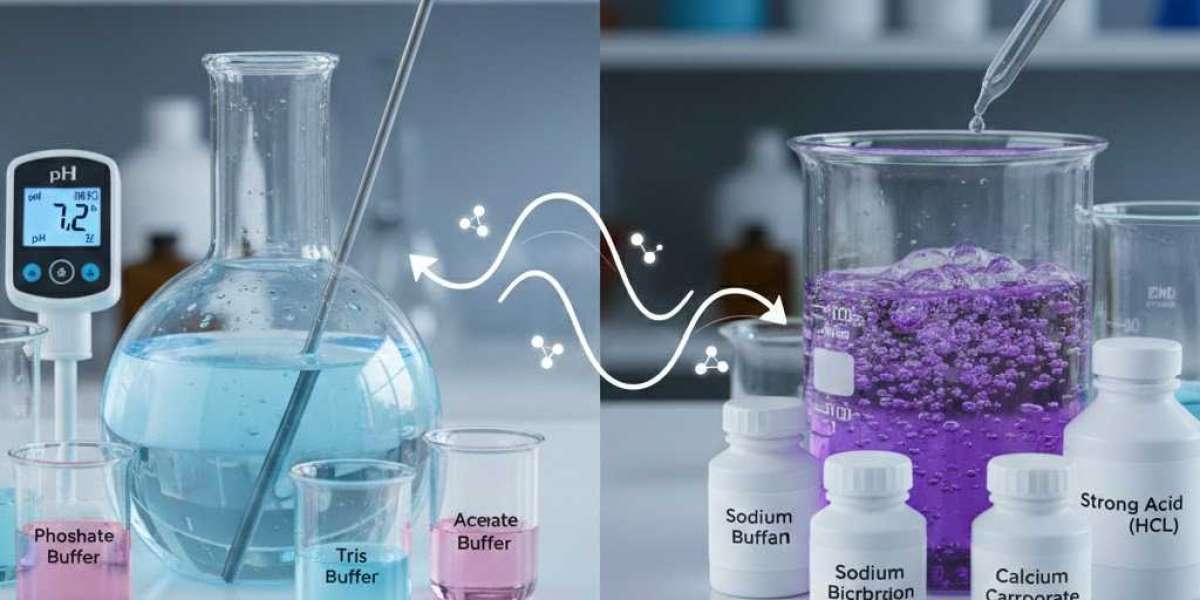

The global Buffering Neutralizing Agents Market is entering a decisive growth phase, driven by the rapid evolution of personal care, haircare, and dermocosmetic formulations worldwide. According to the latest industry outlook, the market is projected to grow from USD 1,602.1 million in 2025 to USD 3,402.1 million by 2035, registering a robust CAGR of 7.8% and delivering more than a 2X expansion over the decade.
Access the Full Report for Thorough Market Intelligence = https://www.futuremarketinsights.com/reports/sample/rep-gb-26340
Market Growth Outlook: From Stability to Strategic Innovation
Between 2025 and 2030, the market is expected to add USD 732.5 million, accounting for nearly 41% of total decade growth. This phase is characterized by steady adoption of buffering and neutralizing agents in skin cleansers, haircare products, and daily personal care formulations, where pH stabilization is essential for product safety and efficacy. pH stabilizers dominate this period with a 46.1% market share, underlining their foundational role in cosmetic manufacturing.
From 2030 to 2035, growth accelerates sharply, contributing USD 1,067.5 million, or 59% of total expansion. This surge is fueled by advanced dermocosmetic products, color cosmetics, and bath formulations, where multifunctional buffering systems and amino acid derivatives gain prominence. Rapid expansion in Asia-Pacific, especially China (13.7% CAGR) and India (15.4% CAGR), further amplifies global demand.
Why the Buffering Neutralizing Agents Market Is Growing
The market’s upward trajectory is closely tied to the global shift toward sensitive-skin, dermatologist-tested, and clean-label personal care products. Modern formulations rely on buffering agents not only to neutralize acidity or alkalinity, but also to enhance compatibility with active ingredients such as niacinamide, AHAs, peptides, and hyaluronic acid.
The rise of multifunctional and hybrid products—including 2-in-1 cleansers, treatment shampoos, and hybrid toners—has further elevated the importance of precise pH control. Buffering agents ensure formulation stability, prevent irritation, and support performance claims, making them indispensable to both established cosmetic brands and emerging innovators.
Established Leaders and Emerging Innovators Shaping the Market
Historically, multinational chemical leaders such as BASF, Solvay, Clariant, Dow, and Evonik have dominated the market, leveraging integrated production, global distribution networks, and regulatory expertise. Together, large players controlled nearly 70% of supply during 2020–2024, competing on consistency, compliance, and scale.
Looking ahead, competitive dynamics are shifting. Mid-sized and specialty ingredient manufacturers such as Ashland, Croda, and Lubrizol are gaining traction by focusing on bio-based, amino acid-derived, and multifunctional buffering systems tailored for premium skincare and dermocosmetic brands. At the same time, DSM-Firmenich and Brenntag are playing a critical role in helping new and regional manufacturers expand globally through distribution strength and technical support.
This evolving landscape creates strong opportunities for new manufacturers seeking to expand their businesses, especially those investing in clean-label technologies, organic-certified inputs, and customized buffering solutions.
Key Segment Insights
By Functional Role
- pH stabilizers lead with 46.1% share in 2025, forming the backbone of cosmetic formulations
- Acid neutralizers and alkalinity regulators support specialized and hybrid applications
By Ingredient Type
- Organic acids salts dominate with 42.3% share, favored for clean-label and vegan positioning
- Amino acid derivatives emerge as high-growth solutions for dermocosmetics and sensitive skin
By Delivery System
- Free form delivery systems capture 53.6% share, offering flexibility and cost efficiency
- Blended solutions and powder concentrates support customized and large-scale manufacturing
By Application
- Skin cleansers toners
- Hair treatments
- Color cosmetics
- Bath products
By End Use
- Personal care manufacturing
- Haircare products
- Dermocosmetic formulations
By Region
- Asia-Pacific leads growth momentum
- Europe driven by regulatory compliance and sustainability
- North America remains a mature yet innovation-focused market
Regional Highlights: Asia-Pacific Leads, Europe Sets Standards
- Asia-Pacific stands out as the fastest-growing region, with India and China leading adoption. India’s growth is powered by expanding mass-market personal care brands and dermocosmetic startups in tier-2 and tier-3 cities. China’s market benefits from premium skincare demand, clean beauty regulations, and consumer awareness around pH balance.
- In Europe, countries such as the UK and Germany maintain steady growth supported by stringent safety, labeling, and sustainability regulations. These standards are accelerating the adoption of certified buffering systems and bio-based ingredients.
- The United States, while mature, continues to grow at 7% CAGR, driven by dermatologist-tested skincare, fragrance-free formulations, and premium haircare innovations.
Sustainability and Clean-Label Trends Redefining Competition
One of the most defining trends in the Buffering Neutralizing Agents Market is the shift toward bio-based, organic-certified, and clean-label solutions. Manufacturers are increasingly developing buffering agents derived from organic acids, amino acids, and even upcycled agricultural by-products, aligning performance with sustainability narratives.
Recent developments highlight this direction. In February 2025, BASF launched bio-based buffering agents supporting COSMOS certification, while in May 2025, Solvay partnered with an Asian personal care brand to supply amino acid-based neutralizing systems for sensitive-skin products.
Outlook for Manufacturers and Investors
As the market moves toward USD 3.4 billion by 2035, growth opportunities will favor companies that combine technical performance with sustainability, regulatory compliance, and end-user collaboration. Established players are expanding portfolios, while new entrants are carving niches through innovation and clean-label positioning.
For manufacturers aiming to expand globally, the Buffering Neutralizing Agents Market offers a compelling pathway—where pH stability, multifunctionality, and consumer trust define the next decade of competitive success.