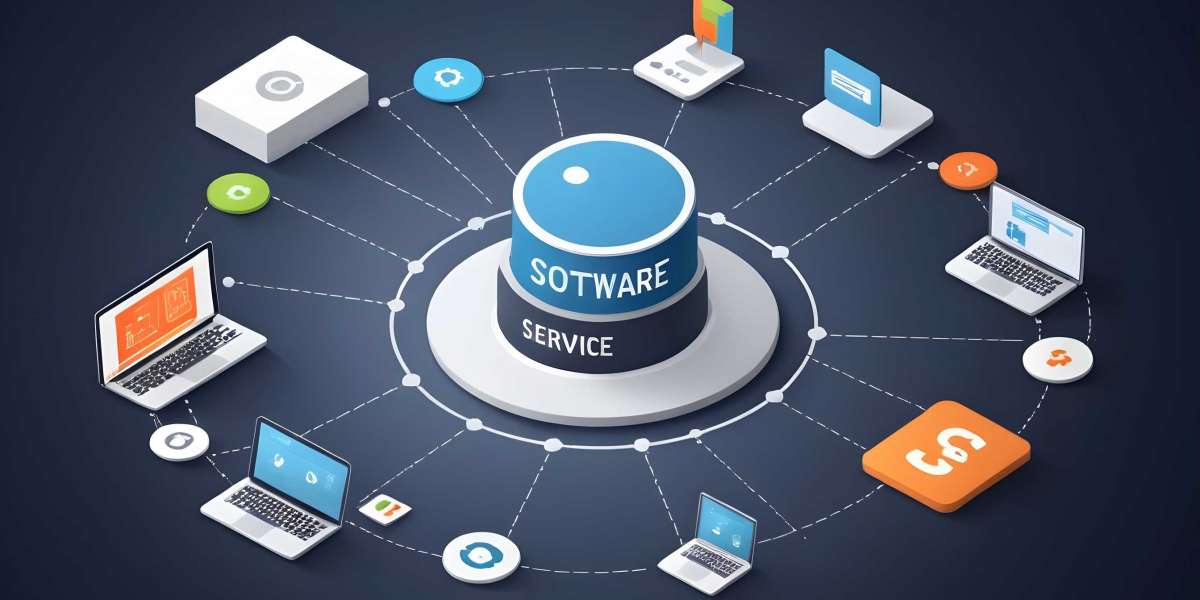

Why has Software as a Service been so widely adopted? To me, the answer is pretty obvious. It is simply the most convenient way to utilize a program. Instead of having to go through long and complicated installations, all that needs to be done to use the software is open a browser and log in. The only additional requirement is an active internet connection.
The adoption of SaaS is becoming widespread as a result of the growing simplicity that is offered by SaaS applications. It is because of this reason that a large amount of businesses, as well as emerging businesses, prefer this solution. The Saudi Arabian SaaS industry is in a rapid growth stage, according to GMI Research; the Saudi Arabia Software as a Service Market is predicted to expand at a remarkable CAGR during the forecast period from 2023–2030. It is obvious that businesses, large and small, have increasing confidence to use software that is hosted and managed by a third party.
What Does SaaS Mean in Real Life?
Constant internet connection, a PC and a WEB browser, the Software as a Service (SaaS) model is simply the accessible solution to the use of remote applications.
Having the responsibility of dealing with hosting, maintaining, and managing the software is one of the biggest benefits of the service provider. This allows customers to pay more attention to their software, rather than managing it. This is especially useful for teams who may not have experts in IT.
Some service providers may host their own platforms, while others may use a larger cloud service provider. Either way, the end experience remains consistent.
Why Businesses Are Choosing SaaS So Quickly
Companies require effective software and SaaS offers that. It is flexible. Businesses can try a service for a limited time, and then decide to stop using it without getting tied into a full contract.
Flexibility in software is a reason for the rapid growth in SaaS. This allows teams to quickly adopt necessary tools, and increase or decrease use in a way that has not been possible with other software.
How SaaS Is Built Behind the Scenes
Most SaaS platforms use multi-tenant architecture. This allows a provider to have multiple customers on the same infrastructure and software version while keeping data separate.
This type of structure is also advantageous for service providers, as it allows for little to no downtime with updates, bug fixes, and new features. Overall, everyone using the service can benefit from improvements without making a massive change.
The Day-to-Day of SaaS Operations
SaaS services use cloud services as a framework. They communicate through a browser, while the provider keeps the software, data, and servers.
There’s nothing to install or maintain, and updates will happen automatically. Security patches happen in the background, and for most businesses, this hands-off experience is a huge win.
SaaS and Security
There is always a need of address the issue of security in SaaS, as the application run in the cloud, and there’s a need to address the gaps, breaches, and data leak in the cloud.
However, there is also an end-user responsibility. Weak passwords and unsecured networks present their own risk. Often, cloud servers are safer than in-house servers, as cloud manufacturers invest heavily in security and keeping their services compliant.
Simple Explanation of SaaS vs IaaS vs PaaS
All three offer cloud services, but there are distinctions in levels of control.
IaaS provides you with servers, storage, and networking.
PaaS brings in operating systems, development tools, and databases.
SaaS provides complete and ready-to-use applications.
With SaaS, users are not in control of managing the infrastructure or the platforms. They just use the software.SaaS Benefits for Small and Growing Companies
SaaS solutions are typically subscription based, and do not require costly hardware investments. Companies can steer clear of expensive and cumbersome hardware requirements, so they truly lower barriers to entry. Most small businesses and startups can handle these kinds of fixed costs.
As a team members increase, you can add features and increase the number of users based on plan. These kinds of flexible strategies can modernize businesses.
Software Changes That Happen Without Annoying Update Reminders
I like that updates are automatic and happen quietly. These updates are manual, and do not require company-wide Mulligan's to address.
Updates happening in the background gives everyone access to new features, and streamlines overall efficiency.
Understanding the Ownership of Your Software and Using a SaaS Face
Oftentimes, the data stays on the other company’s servers, and for the employee using the software, that feels like a risk. Employees fear the data being put on other company's serves a lot, and the fear of service agreements is real.
Employees especially appreciate the» data will be revenant to you, though, and backups are permitted for and even shielding yields from data-variable status even if the software company goes out of business. Reviewing service agreements with your colleagues is productive.
Only Cloud Data Being
No system is without flaws, however done is a good for them. Still, the trust is invaluable and is what brought them the analytics, with all the analytics, with all the data security certifications, the analytics tracking, the data safety monitoring.
It is worth noting that many breaches occur due to user errors instead of provider errors. Making smart vendor selections and practicing basic security hygiene can avoid a lot of problems.
Concluding Comments About the Adoption of SaaS
SaaS has revolutionized the way companies approach software. It streamlines processes, reduces expenses, and empowers teams to prioritize what is most important.
With the rapid digital transformation in Saudi Arabia, SaaS has become a critical part of doing business. It is an integral part of modern business processes and functions.