
Surgical wound closure plays a fundamental role in successful outcomes across veterinary surgery. The choice of suture material directly affects healing time, tissue response, infection risk, and long-term structural support. For this reason, understanding the practical differences between absorbable vs non absorbable sutures is essential for veterinarians working with a wide range of tissues and surgical scenarios.
From routine skin closures to complex internal repairs, sutures must provide the right balance of strength, biocompatibility, and durability. This article explores how absorbable and non-absorbable sutures function, where each type is best applied, and how factors such as filament structure and tissue type influence decision-making in veterinary surgery.
Understanding Surgical Suture Materials
Veterinary sutures are commonly categorized by their absorption behavior, filament structure, and material origin. These characteristics determine how the suture interacts with tissue and how long it provides mechanical support during healing.
Sutures may be absorbable or non-absorbable, natural or synthetic, and manufactured as either monofilament sutures or multifilament designs. Each combination serves a distinct purpose depending on the anatomical site and expected healing timeline. Selecting the appropriate material helps minimize tissue trauma while ensuring stable wound approximation throughout recovery.
Absorbable Sutures: Characteristics and Clinical Use
Absorbable sutures are designed to gradually break down within the body after fulfilling their support function. This controlled degradation allows healing tissues to assume strength naturally without leaving permanent foreign material behind.
How Absorbable Sutures Work
In veterinary surgery, absorbable sutures are most often used in tissues that heal relatively quickly, such as muscle, subcutaneous layers, and internal organs. As these sutures lose tensile strength over time through hydrolysis or enzymatic processes, collagen deposition and tissue remodeling take over wound stability. This makes them particularly useful in areas where long-term reinforcement is unnecessary or suture removal would be impractical.
Common Absorbable Sutures in Veterinary Practice
Synthetic absorbable sutures, such as polyglactin (PGA) and polydioxanone (PDO), are widely used due to their predictable absorption profiles and consistent strength retention. Multifilament PGA sutures are often chosen for soft tissue closures because of their flexibility and reliable knot security, while monofilament PDO sutures provide extended tensile support for fascia and tendon repairs.
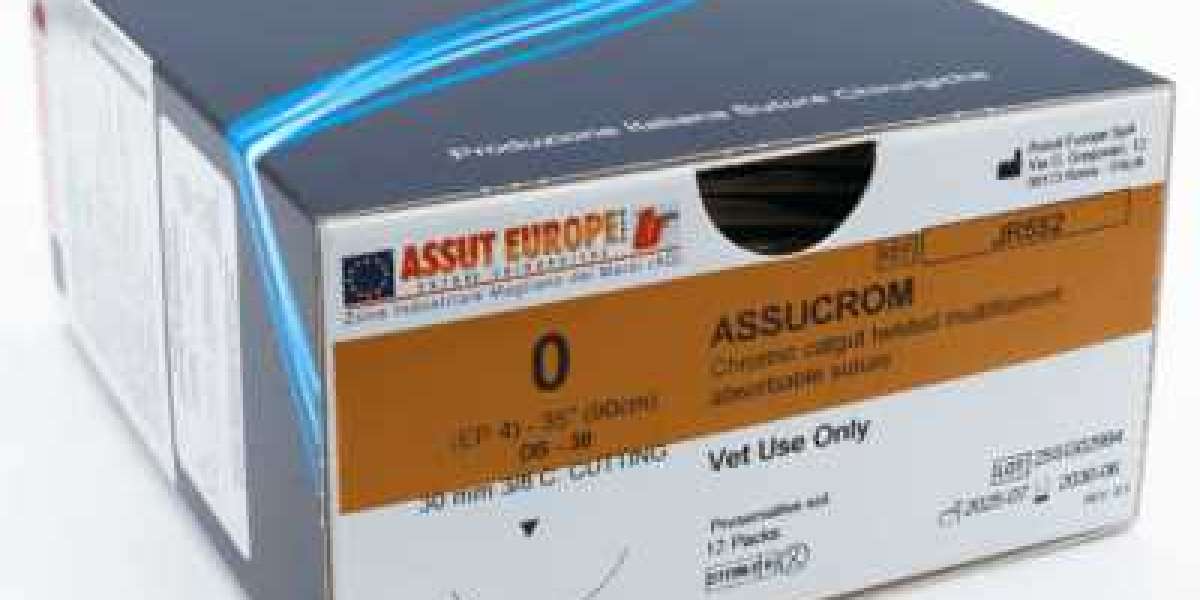
In addition, natural sutures like chromic catgut continue to be used in selected applications. Derived from purified collagen, chromic catgut undergoes enzymatic absorption and is typically reserved for internal ligatures or subcutaneous closures where temporary support is sufficient.
Veterinarians looking for a broader overview of available materials can refer to this complete guide to different types of veterinary surgical sutures for additional context on absorption profiles and material selection.
When Absorbable Sutures Are Preferred
Absorbable sutures are commonly selected when tissues are expected to regain strength quickly and do not require prolonged mechanical reinforcement. Typical applications include internal organ closures, abdominal wall layers beneath fascia, and ligatures used to secure blood vessels.
They are also beneficial in cases where follow-up visits for suture removal may be challenging, such as with anxious animals, wildlife patients, or pediatric veterinary cases. By eliminating the need for removal, absorbable sutures can simplify postoperative care while supporting predictable healing.
Non-Absorbable Sutures: Characteristics and Clinical Use
Non-absorbable sutures are designed to retain tensile strength indefinitely. They remain in place until manually removed or intentionally left within the tissue to provide ongoing support.
How Non-Absorbable Sutures Work
Because non-absorbable sutures are not broken down by the body, they are ideal for areas exposed to sustained tension or movement. In veterinary surgery, they are commonly used for skin closures, orthopedic repairs, fascia reinforcement, and procedures involving vascular prosthesis placement.
Comparing Absorbable vs Non Absorbable Sutures
Understanding the practical differences between absorbable vs non absorbable sutures helps veterinarians tailor suture selection to each procedure.
Tensile Strength
Absorbable sutures gradually lose strength as healing progresses, while non-absorbable sutures maintain long-term stability for high-tension areas such as skin and orthopedic repairs.
Tissue Reaction
Absorbable materials may cause mild inflammatory responses during degradation, whereas non-absorbable sutures typically provoke minimal reaction but may increase granuloma risk if left in sensitive tissues.
Duration of Support
Absorbable sutures provide temporary reinforcement during the healing phase, while non-absorbable sutures offer permanent or semi-permanent support depending on whether removal is planned.
Postoperative Care
Absorbable sutures reduce the need for follow-up removal, whereas non-absorbable sutures require monitoring and timely extraction in most external applications.
Choosing Suture Size and Structure
Suture size and filament design significantly influence handling, knot security, and tissue trauma. Smaller diameters are preferred for delicate tissues in feline or avian patients, while larger sizes are reserved for orthopedic or high-tension closures. Monofilament sutures are often selected in contaminated or infection-prone areas due to their lower bacterial adherence.
Veterinary professionals sourcing a range of suture sizes and materials often rely on established suppliers such as Strouden, which carries multiple absorbable and non-absorbable options to suit varied clinical requirements.
Matching Sutures to Tissue Type
- Muscle and subcutaneous tissue: Absorbable sutures provide sufficient short-term support.
- Skin: Non-absorbable nylon sutures offer reliable edge approximation.
- Fascia and tendons: Slow-absorbing monofilament sutures maintain strength during prolonged healing.
- Internal organs: Absorbable sutures reduce long-term foreign material presence.
- Prosthetic or vascular repairs: Non-absorbable sutures ensure permanent structural stability.
Conclusion
Selecting the appropriate suture material is a critical decision in veterinary surgery. A clear understanding of absorbable vs non absorbable sutures allows veterinarians to balance healing efficiency, tissue response, and long-term stability across a wide range of procedures. Absorbable sutures support internal healing with controlled degradation, while non-absorbable sutures provide durable reinforcement where sustained strength is required.
By aligning suture choice with tissue type, tension level, and postoperative considerations, veterinary professionals can improve surgical outcomes and support consistent, complication-free healing.