Introduction
Hospital procurement teams carry a deep responsibility.
Every decision directly affects patient safety, clinical efficiency, and long-term financial stability.
Within this responsibility, Syringe Pump standardisation has become a critical focus for modern healthcare systems.
Syringe Pump usage spans intensive care units, operating theatres, neonatal wards, and emergency departments.
When different models, interfaces, and performance standards exist across departments, complexity increases quietly.
Standardisation brings clarity, consistency, and confidence to procurement decisions.
This approach is not about limiting choice.
It is about protecting care quality while supporting sustainable hospital operations.
For procurement teams, Syringe Pump standardisation creates a foundation for safer and smarter healthcare delivery.
Understanding Syringe Pump Standardisation in Hospitals
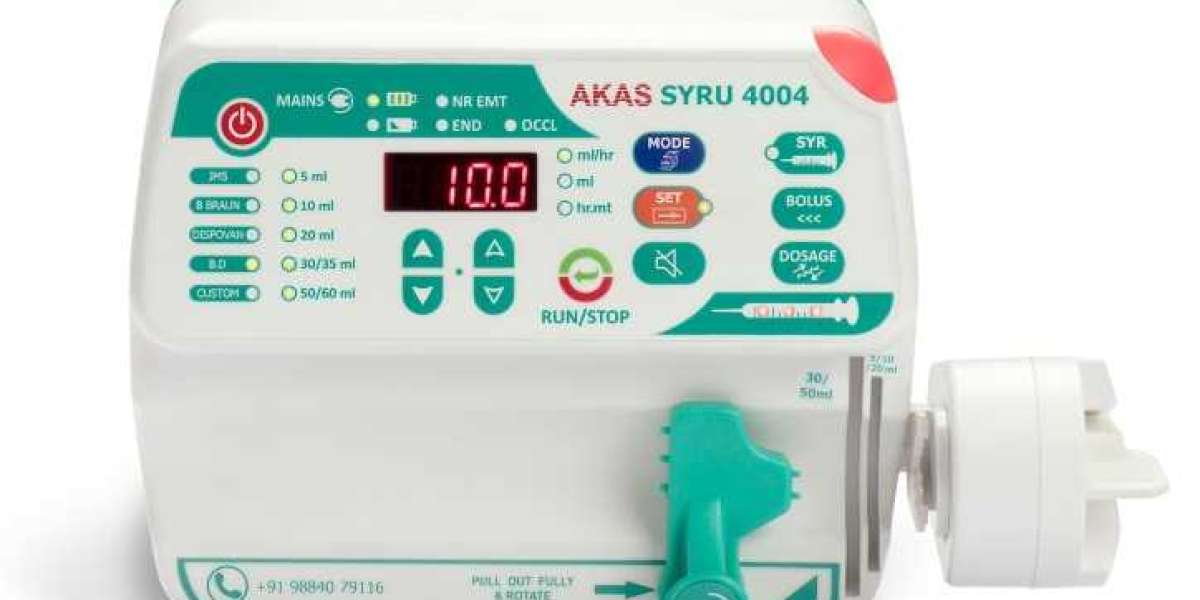
Syringe Pump standardisation refers to selecting consistent device platforms across departments and facilities.
This alignment ensures uniform performance, training, and maintenance practices.
Hospitals increasingly view this as a strategic necessity rather than an operational preference.
Standardised Syringe Pump systems reduce variability in medication delivery.
They support predictable workflows and reduce the likelihood of preventable errors.
For procurement teams, this means fewer uncertainties during purchasing and lifecycle management.
Standardisation also strengthens collaboration between clinical, biomedical, and administrative teams.
When everyone works with familiar systems, communication improves naturally.
The result is a calmer, safer environment for patients and caregivers alike.
Why Procurement Teams Prioritise Standardisation
Procurement teams balance clinical expectations with budget accountability.
Syringe Pump standardisation helps meet both priorities without compromise.
It simplifies evaluation, tendering, and long-term supplier relationships.
A unified Syringe Pump platform allows clearer comparison of quality and performance.
It reduces time spent resolving compatibility or training concerns.
This efficiency enables procurement teams to focus on value rather than complexity.
Standardisation also supports evidence-based purchasing decisions.
Performance data becomes easier to track across departments.
These insights strengthen procurement confidence and accountability.
Clinical Safety and Consistency in Care Delivery
Patient safety remains the heart of every hospital decision.
Syringe Pump standardisation directly supports this goal.
Consistent devices reduce variation in dosing accuracy and alarm management.
Clinical teams benefit from familiarity.
Standardised Syringe Pump interfaces reduce cognitive load during critical moments.
This consistency supports faster response times and clearer decision-making.
Over time, consistent usage builds trust between clinicians and technology.
This trust contributes to improved care outcomes.
Procurement teams play a quiet but vital role in enabling this consistency.
Operational Efficiency Across Hospital Departments
Operational efficiency is often shaped by small decisions.
Syringe Pump standardisation is one such decision with far-reaching impact.
It streamlines daily workflows across departments.
When devices share common features, staff move between units with confidence.
Training requirements become simpler and more effective.
This reduces onboarding time for new clinicians and temporary staff.
Maintenance schedules also become more predictable.
Biomedical teams can manage fewer spare parts and service protocols.
This consistency supports higher device uptime and reduced disruption to care.
Financial Control and Long-Term Cost Management
Healthcare budgets face constant pressure.
Procurement teams must justify every investment carefully.
Syringe Pump standardisation supports responsible financial planning.
Standardised purchasing often leads to better pricing structures.
Bulk procurement becomes more achievable and transparent.
This helps hospitals manage costs without sacrificing quality.
Lifecycle costs also become easier to forecast.
Maintenance, training, and replacement planning align more smoothly.
This clarity supports sustainable budgeting across financial cycles.
Brief Insight: How Standardisation Supports Procurement Goals
Syringe Pump standardisation influences procurement success in several meaningful ways.
These benefits are not always immediate but grow steadily over time.
Each area strengthens the hospital’s overall resilience.
Key areas where standardisation supports procurement teams include:
- Improved safety through consistent device performance and usage
- Reduced training complexity for clinical and support staff
- Simplified maintenance and service management
- Stronger negotiating position during supplier discussions
- Clearer evaluation of device performance and lifecycle value
These benefits work together rather than independently.
They create a stable procurement environment that supports patient care.
Over time, this stability becomes a competitive advantage for healthcare institutions.
Supporting Compliance and Quality Assurance
Hospitals operate within strict regulatory frameworks.
Procurement decisions must support ongoing compliance and audit readiness.
Syringe Pump standardisation simplifies this responsibility.
Standardised devices make documentation and traceability easier.
Inspection processes become smoother and less disruptive.
This consistency supports confidence during audits and accreditation reviews.
Quality assurance teams also benefit.
Performance benchmarks can be applied more consistently.
This alignment strengthens hospital-wide quality initiatives.
Strengthening Supplier Relationships Through Standardisation
Procurement teams increasingly value long-term partnerships.
Syringe Pump standardisation supports more collaborative supplier relationships.
It encourages shared responsibility for performance and improvement.
When hospitals standardise, manufacturers gain clearer insight into clinical needs.
This understanding supports better product development and service planning.
The relationship evolves beyond transactional purchasing.
Trusted manufacturers become strategic partners in care delivery.
They support training, service continuity, and innovation.
This partnership approach aligns with the values of modern healthcare institutions.
Finding the Right Syringe Pump Manufacturers
Selecting the right manufacturers remains a crucial step.
Standardisation works best when built on quality, reliability, and trust.
Procurement teams must look beyond technical specifications alone.
Manufacturers should demonstrate clinical understanding and long-term commitment.
Their Syringe Pump solutions should support safety, consistency, and scalability.
Strong service networks and transparent communication matter greatly.
Evaluating manufacturers through a caring and patient-focused lens ensures alignment.
This approach supports not only procurement goals but also clinical excellence.
Ultimately, the right partnerships strengthen the entire care ecosystem.
Conclusion
Syringe Pump standardisation matters because it protects what matters most.
It supports patient safety, clinical confidence, and operational stability.
For hospital procurement teams, it creates a foundation for responsible decision-making.
By reducing complexity and variability, standardisation allows hospitals to focus on care.
It strengthens financial control while supporting long-term quality goals.
These benefits extend quietly across departments and patient journeys.
In this evolving healthcare landscape, manufacturers such as Akasinfusion continue to contribute by manufacturing world-class drug delivery devices like volumetric pumps.
Such commitment supports hospitals in building safer, more reliable care environments.
Thoughtful procurement partnerships remain essential to delivering trusted medical care every day.