
Multiple categories of heavy machines are employed in construction, earthmoving and similar work. The chosen type directly correlates to the scale and technical conditions of the assigned project. Leveraging such mechanical support matters greatly, giving a positive boost to productivity and enabling tighter schedules.
We now examine five classes of heavy construction machines provided in the courses, their applications and the tasks they support. Be sure to review the previous section before continuing.
Bulldozer
A bulldozer is a powerful tractor fitted with a thick metal plate known as a blade. The blade enables the machine to shift soil, sand, gravel, and similar materials in preparation for roads, buildings, or other projects. Mounted on its rear is a claw-like ripper that breaks up tightly packed gravel or frozen soil, allowing the blade to function more efficiently. By ripping and pushing in a single pass, operational productivity on tight schedules is vastly improved.
Tracked undercarriages afford the bulldozer excellent stability on steep slopes. The continuous metal tracks spread the machine's weight, helping it float on soft ground rather than sink, and enabling the dozer to walk across mud, sand, or snow. The combination of blade, ripper, and wide tracks makes it a versatile and unstoppable force on any construction site.
GMI Research Projects Robust Growth of 5.5% in Indonesia Construction Equipment Market Through 2032
Excavator
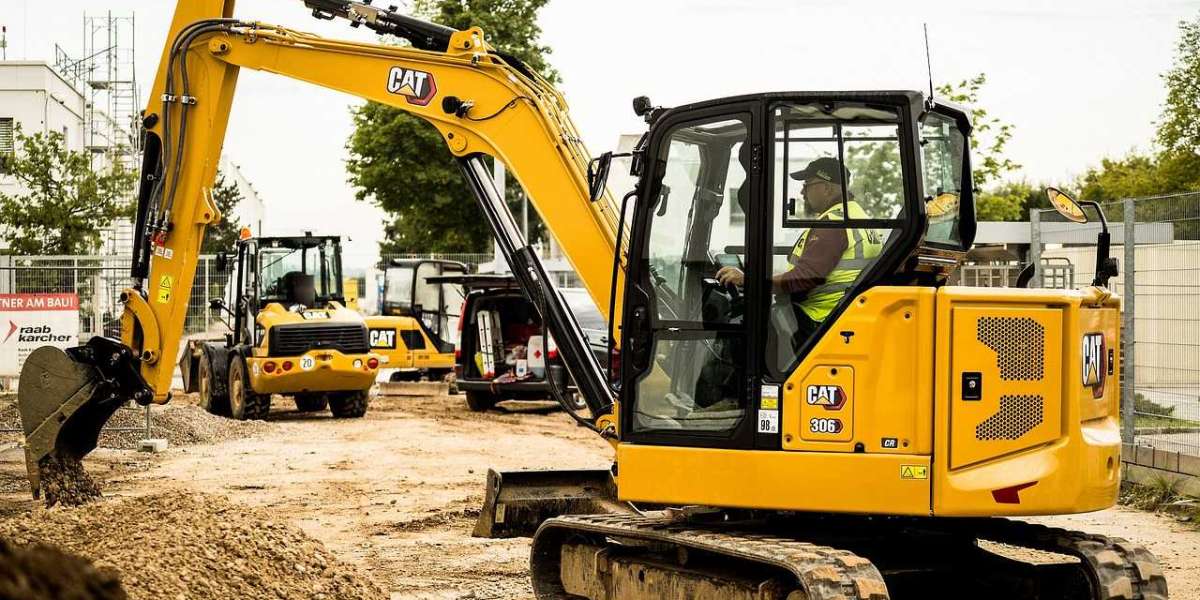
The excavator is a distinct, multi-task platform with four main structural elements: a horizontal arm known as the boom, a jointed extension called the dipper, a cup-like attachment called the bucket, and a rotating cab that houses the operator. Below the house, a stout undercarriage of steel tracks or wheels permits easy relocation from site to site. The entire upper structure can swing 360 degrees, allowing operators to dig, lift, and scoop without repositioning the undercarriage.
Excavators excel in a myriad of tasks. They can dig precise trenches for pipes or foundations, curl the bucket to scoop away rocky spoil, or attach specialized grapples and augers for material handling and site preparation. Their tight turning radii and articulated booms grant them the versatility needed for construction, demolition, and utility work in tight corridors and open sites alike.
Motor Grader
A motor grader is a vital piece of heavy machinery equipped with a long blade that helps to produce a smooth, level surface during the grading phase. This step is critical for establishing a solid, flat foundation for most construction projects. Early graders were horse-drawn beams pulled by animals or small engines, but with modernization, engines were integrated into the design, leading to the motor grader we recognize today.
Graders are most often deployed in the construction and ongoing upkeep of dirt and gravel roads. In these situations, they fine-grade the surface to improve drainage and ride quality. When laying down a paved road, graders are responsible for shaping the base course to provide a clean, uniformly wide platform that can carry the subsequent asphalt or concrete layers.
Loader
A loader is a versatile piece of construction equipment commonly equipped with wheels, though some versions run on continuous tracks. It features a wide, flat bucket mounted on the front and leveled by a pair of hydraulic arms. The machine is primarily tasked with excavating and transporting a variety of materials, including asphalt, demolition rubble, dirt, snow, and gravel. The loader scoops this material from the ground, lifts it up, and then either tips it into a waiting dump truck or drops it into an open trench for further grading or compaction, making it an essential tool on most job sites.
A wheel loader’s bucket can be swapped out for forks, a clamshell, or another attachment depending on the task. Since loaders lift material mostly from surface level, they can’t trench deeper the way backhoes or excavators can, making them less effective for digging when depth is critical.
Scraper
The scraper is a heavy-duty machine that moves material in industries from mining to agriculture. The rear-mounted hopper can be raised or lowered on vertical arms; its front edge has a cutting knife that slices into the ground, allowing the scoop to fill. Once loaded, the hopper lifts, the gate closes, and the scraper travels to the dump area, depositing the material.
Scrapers excel in short haul distances where the material is being cut from one area and mostly placed in an adjacent fill. The one-pass loading, hauling, and dumping cycle keeps cycle times fast on relatively level sites.





