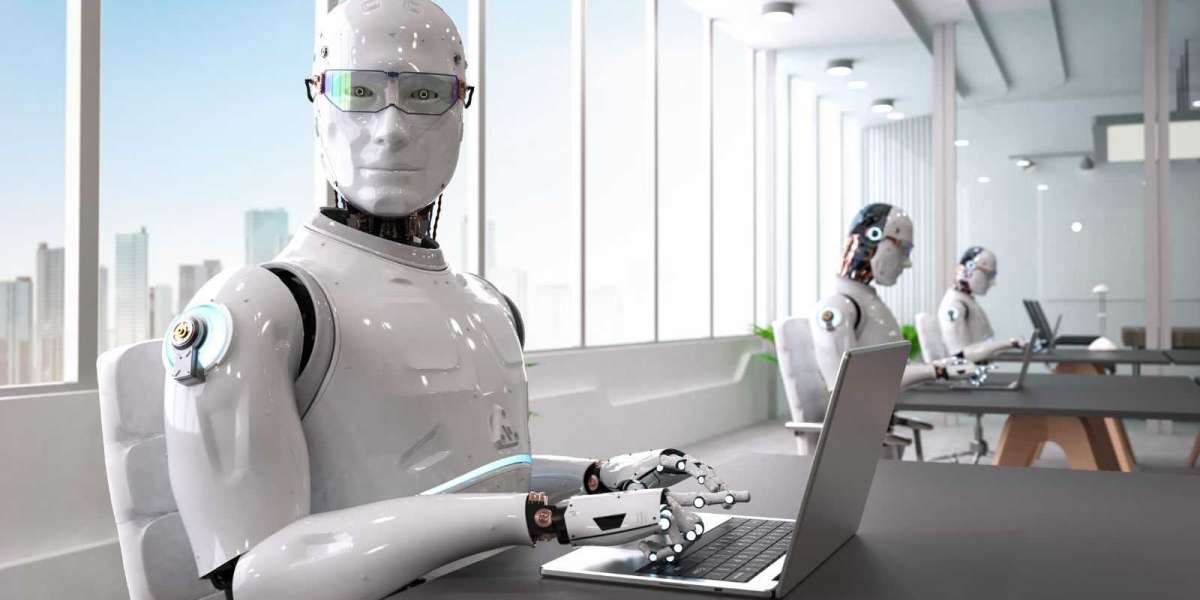

Artificial Intelligence (AI) is revolutionizing various industries, including software development. With the rise of AI-powered coding assistants like GitHub Copilot and ChatGPT, many are asking: Will AI replace programmers in the future? While AI is enhancing the coding process, the complete replacement of human programmers is unlikely. Instead, AI is reshaping the role of developers, making coding more efficient while still requiring human expertise.
The Role of AI in Software Development
AI is already transforming how software is written, tested, and deployed. Here’s how AI is making an impact:
1. AI-Powered Code Generation
AI-assisted tools, such as GitHub Copilot and OpenAI’s Codex, can generate code snippets, complete functions, and even build entire applications with minimal human input. These tools help developers write code faster, reducing repetitive tasks.
2. Automated Bug Detection and Testing
AI-driven testing tools can identify bugs, security vulnerabilities, and inefficiencies in code more quickly than human testers. This improves software reliability and reduces debugging time.
3. Optimizing Development Workflows
AI enhances DevOps by automating code deployment, monitoring system performance, and predicting failures before they happen. This ensures smooth software operations with minimal human intervention.
4. Low-Code and No-Code Platforms
AI-driven platforms like Bubble and OutSystems allow non-programmers to create applications using drag-and-drop interfaces, reducing the need for manual coding. While these platforms simplify software development, they still require human oversight for complex projects.
Why AI Won’t Fully Replace Programmers
Despite its advancements, AI has limitations that prevent it from completely replacing human developers:
1. Lack of Creativity and Problem-Solving Skills
AI can generate code, but it cannot understand complex business requirements, create innovative software solutions, or think outside the box like human developers.
2. Understanding Context and User Needs
Programming is not just about writing code—it involves understanding user requirements, business logic, and real-world constraints. AI struggles to grasp these contextual nuances.
3. Code Quality and Maintainability
AI-generated code may not always be optimal, readable, or maintainable. Human developers are needed to ensure the long-term efficiency and security of software projects.
4. Ethical and Security Concerns
AI can introduce biases, security vulnerabilities, and legal risks if not properly supervised. Developers are essential for ethical decision-making and ensuring AI-generated code aligns with best practices.
The Future: AI as a Coding Assistant, Not a Replacement
Rather than replacing programmers, AI is becoming a powerful tool that enhances productivity. Developers who embrace AI can automate repetitive tasks, improve code quality, and focus on more strategic aspects of software development. The future of coding will likely involve a collaboration between AI and human programmers, where AI handles routine coding tasks, and humans provide creativity, problem-solving, and oversight.
Conclusion
AI is transforming the software development landscape, but it won’t replace programmers entirely. Instead, it will redefine their roles, making coding more efficient and accessible. The future belongs to developers who can leverage AI to enhance their skills and innovate in new ways. Rather than fearing AI, programmers should see it as a valuable assistant that amplifies their capabilities.