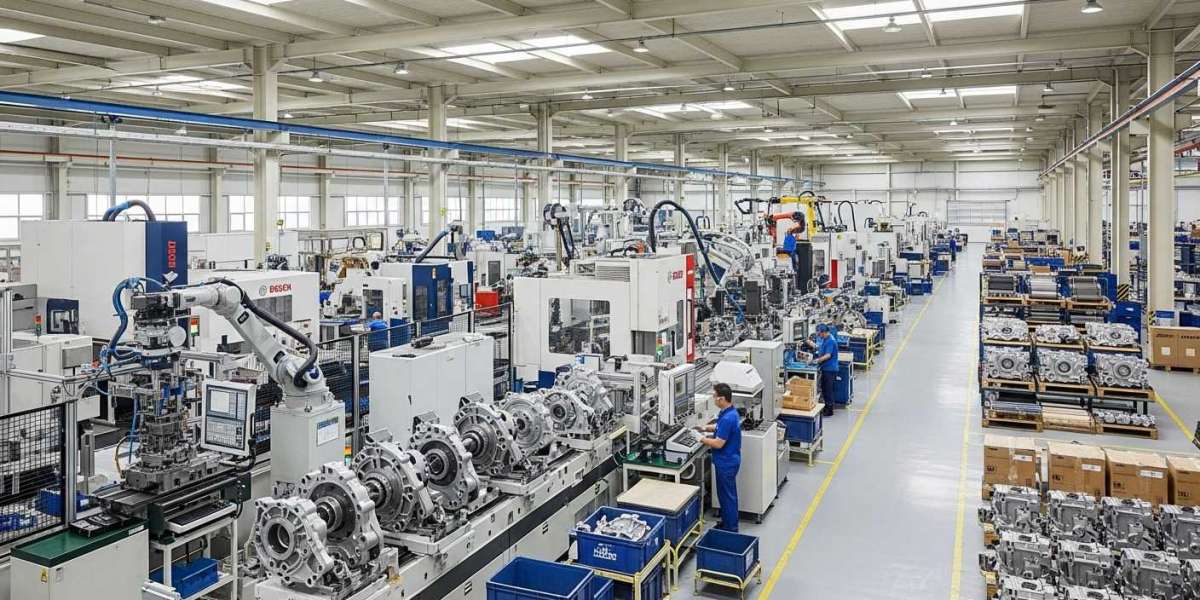

IMARC Group’s report, “Automotive Oil Pump Manufacturing Plant Project Report 2025: Industry Trends, Plant Setup, Machinery, Raw Materials, Investment Opportunities, Cost and Revenue,” offers a comprehensive guide for establishing a manufacturing plant. The automotive oil pump manufacturing plant setup cost report offers insights into the manufacturing process, financials, capital investment, expenses, ROI, and more for informed business decisions.
What is Automotive Oil Pump?
An automotive oil pump is a key engine component that circulates lubricating oil to reduce friction, cool moving engine parts, and ensure smooth performance. It maintains proper oil pressure so the engine runs efficiently and avoids wear or overheating. Oil pumps are used in passenger cars, commercial vehicles, and heavy-duty engines. With growing vehicle production and stricter emission norms, the demand for reliable, energy-efficient oil pumps continues to increase across the automotive industry.
Is Automotive Oil Pump Manufacturing Profitable?
Yes, manufacturing automotive oil pumps is profitable due to rising global vehicle production, expansion of aftermarket services, and increased focus on fuel-efficient engine components. Demand is supported by replacement cycles, OEM contracts, and growth in hybrid and electric vehicles requiring precision lubrication systems. With efficient sourcing, optimized production, and strong OEM partnerships, the business offers stable returns and long-term scalability.
What is Driving the Automotive Oil Pump Market?
The automotive oil pump market is driven by continuous growth in the automotive sector, especially in developing regions where passenger and commercial vehicle sales are rising. Manufacturers are adopting advanced, energy-efficient oil pumps to meet evolving emission norms and engine efficiency standards. The shift toward lightweight components, improved lubrication technologies, and demand for higher engine durability further accelerates market expansion. Additionally, hybrid and electric vehicles require specialized lubrication systems, creating new opportunities for pump makers. Increasing aftermarket demand for replacement oil pumps also contributes to market growth.
Request for a Sample Report: https://www.imarcgroup.com/automotive-oil-pump-manufacturing-plant-project-report/requestsample
Key Insights Covered in the Automotive Oil Pump Manufacturing Plant Report
Market Coverage:
- Market Trends: Analysis of current and emerging trends in the automotive oil pump market.
- Market Segmentation: Breakdown of the market by different segments.
- Regional Analysis: Distribution and performance of the market across various regions.
- Price Analysis: Evaluation of pricing trends for automotive oil pump.
- Impact of COVID-19: Examination of the effects of the COVID-19 pandemic on the automotive oil pump market.
- Market Forecast: Outlook and projections for the automotive oil pump industry.
Key Aspects Required for Setting Up an Automotive Oil Pump Plant
Detailed Process Flow:
- Product Overview: Comprehensive description of the automotive oil pump product and its characteristics.
- Unit Operations Involved: Step-by-step breakdown of the various operations in the production process.
- Mass Balance and Raw Material Requirements: Calculations for material inputs and outputs, along with required quantities of raw materials.
- Quality Assurance Criteria: Standards and procedures to ensure the quality of the final product.
- Technical Tests: Essential tests and evaluations to maintain product consistency and compliance.
Project Details, Requirements, and Costs Involved
- Land, Location, and Site Development: Assessment of land requirements, optimal location selection, and site development costs.
- Plant Layout: Design and layout planning for efficient plant operations.
- Machinery Requirements and Costs: Identification of machinery needed, along with the associated costs.
- Raw Material Requirements and Costs: Determination of the types and quantities of raw materials required and their costs.
- Packaging Requirements and Costs: Specifications for packaging materials and equipment, including associated expenses.
- Transportation Requirements and Costs: Logistics planning and cost estimation for the transportation of raw materials and finished products.
- Utility Requirements and Costs: Analysis of utility needs (such as water, electricity, and fuel) and their associated costs.
- Human Resource Requirements and Costs: Workforce planning, including staffing needs, roles, and costs for labor and management.
Project Economics
- Capital Investments: Initial costs required for setting up the automotive oil pump manufacturing plant, including land, equipment, and infrastructure.
- Operating Costs: Ongoing expenses for running the plant, such as raw materials, labor, utilities, and maintenance.
- Expenditure Projections: Detailed forecasts of all costs over the short and long term.
- Revenue Projections: Expected income generated from the sale of automotive oil pump and by-products.
- Taxation and Depreciation: Analysis of tax obligations, incentives, and asset depreciation over time.
- Profit Projections: Estimated profitability based on costs, revenues, and market conditions.
- Financial Analysis: Comprehensive evaluation of the plant’s financial viability, including cash flow analysis, return on investment (ROI), and break-even point.
Capital Investment, Operating Cost Return on Investment Overview
- Capital investment includes land, factory construction, machinery purchase, installation, tooling, and quality testing equipment.
- Operating expenses cover raw materials, labor, maintenance, electricity, packaging, logistics, and regulatory compliances.
- Return on investment depends on plant capacity, automation level, supplier contracts, OEM tie-ups, and aftermarket sales opportunities.
- A well-optimized plant with low wastage and strong market demand can achieve faster break-even and higher profitability.
Ask Analyst for Customization: https://www.imarcgroup.com/request?type=reportid=11835flag=C
Customization Options Available:
- Plant Location: Selection of optimal location for the plant.
- Plant Capacity: Customization based on desired production capacity.
- Machinery: Choice between automatic, semi-automatic, or manual machinery.
- List of Machinery Providers: Identification of suitable machinery suppliers.
Key Questions Addressed in This Report:
- What are the raw materials needed for automotive oil pump manufacturing
The main materials include high-grade metal alloys, cast iron, steel components, seals, gears, and precision mechanical parts required to withstand engine pressure and heat. - How much space is required to set up an oil pump manufacturing unit
A medium-scale plant requires enough area for production lines, machining, assembly, testing, storage, and administrative sections depending on capacity. - What kind of machinery is used in oil pump manufacturing
The plant typically uses CNC machines, milling machines, drilling machines, gear cutters, testing benches, polishing units, and assembly tools. - How do manufacturers ensure product quality in oil pumps
Quality is maintained through material testing, dimensional accuracy checks, pressure testing, durability analysis, and adherence to automotive standards such as ISO and OEM specifications. - Which industries buy automotive oil pumps
Oil pumps are purchased by automotive OEMs, engine manufacturers, aftermarket spare parts companies, and vehicle service centers.
How IMARC Can Help?
IMARC Group is a global management consulting firm that helps the world’s most ambitious changemakers to create a lasting impact. The company provide a comprehensive suite of market entry and expansion services. IMARC offerings include thorough market assessment, feasibility studies, company incorporation assistance, factory setup support, regulatory approvals and licensing navigation, branding, marketing and sales strategies, competitive landscape and benchmarking analyses, pricing and cost research, and procurement research.
Services:
- Plant Setup
- Factory Audit Services
- Regulatory Approvals, and Licensing
- Company Incorporation
- Incubation Services
- Recruitment Services
- Marketing and Sales
Contact Us:
IMARC Group
134 N 4th St. Brooklyn, NY 11249, USA
Email: sales@imarcgroup.com
Tel No:(D) +91 120 433 0800
United States: (+1-201971-6302)





