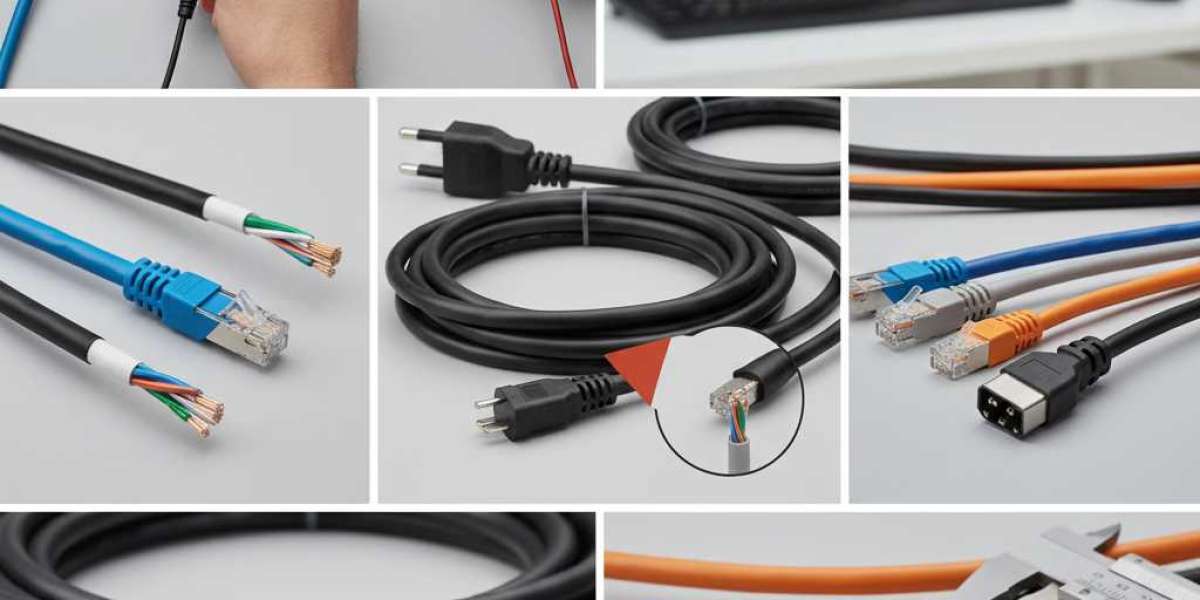

Choosing the right cable is important for reliable performance and safety. When deciding between 24 AWG and 26 AWG cables, several factors come into play. Both have their own advantages and ideal applications. Understanding these differences helps you select the best cable for your devices. NEMA power cables are widely used for high-power connections, and knowing the right gauge ensures safety and efficiency.
AWG stands for American Wire Gauge, which measures the thickness of the cable. A lower number indicates a thicker wire. Therefore, 24 AWG is thicker than 26 AWG. Thicker wires can carry more current with less resistance, which can reduce heat buildup. This makes 24 AWG suitable for applications that require higher power or longer cable runs.
One important factor to consider is the current-carrying capacity. 24 AWG cables can handle more current compared to 26 AWG cables. If your devices draw significant power, a 24 AWG cable is often safer and more reliable. Using a thinner cable like 26 AWG in high-current situations can cause overheating, voltage drops, or even damage to your equipment.
The length of the cable also affects performance. Longer cables create more resistance, which can reduce efficiency. For long cable runs, 24 AWG is generally better because it minimizes voltage drop. On shorter runs, 26 AWG can work fine for low-power devices. Measuring the distance accurately helps you decide which gauge is appropriate for your setup.
Signal quality is another consideration. For data and communication cables, thinner wires like 26 AWG may suffice if the power requirements are low. However, if the signal needs to travel a longer distance, thicker wires reduce interference and maintain signal strength. NEMA power cables are designed to provide stable power, so matching the gauge with your current needs is essential.
Flexibility is a factor often overlooked. Thinner cables like 26 AWG are more flexible and easier to manage in tight spaces. They are ideal for setups where cables need to bend or be routed through confined areas. 24 AWG cables are stiffer but provide better durability and power handling. Choosing between flexibility and power capacity depends on your specific needs.
Durability and safety are critical factors. Thicker wires, like 24 AWG, are more durable and less prone to damage from bending or abrasion. Thinner wires can break more easily, especially if frequently moved. NEMA power cables are built to meet safety standards, but selecting the right gauge ensures you minimize risks like overheating or short circuits.
Cost can also influence your decision. 26 AWG cables are usually less expensive because they use less material. However, the price difference should not compromise safety or performance. Investing in the right gauge, especially for high-power applications, is more cost-effective in the long run. A failed cable can lead to damaged devices or downtime.
Compatibility with your devices is another key factor. Check the power requirements of your equipment before choosing a gauge. Some devices perform better with thicker wires, while others work well with thinner ones. NEMA power cables are available in different gauges to fit a variety of devices, ensuring proper power delivery.
Temperature and environment matter as well. Cables in hot or industrial environments may need to handle higher temperatures without degrading. Thicker cables like 24 AWG dissipate heat better and are more suitable for challenging conditions. For indoor, low-power setups, 26 AWG cables may be sufficient.
Ease of installation is worth considering. Thinner cables like 26 AWG are lighter and easier to pull through conduits or around obstacles. Thicker cables require more effort to install but provide better performance and reliability. Planning your installation in advance helps you select the best gauge for both convenience and safety.
Future-proofing is another advantage of using 24 AWG. If you plan to upgrade devices or increase power requirements, a thicker cable ensures you won’t need to replace it later. NEMA power cables in higher gauges provide flexibility for future expansion without compromising safety or efficiency.
Voltage drop is a critical technical factor. Thicker cables have less resistance and lower voltage drops, which helps maintain stable power delivery to your devices. This is especially important for sensitive equipment. Using 26 AWG over long distances can result in insufficient voltage, affecting performance or causing malfunctions.
Maintenance is easier with the right gauge. Thicker cables are less likely to fail or require frequent inspection. Thinner cables might need more attention, especially in demanding applications. Choosing a reliable gauge reduces maintenance efforts and ensures consistent operation.
In conclusion, both 24 AWG and 26 AWG cables have their applications. 24 AWG is thicker, stronger, and better for high-power or long-distance connections. 26 AWG is thinner, more flexible, and suitable for low-power, short-distance setups. NEMA power cables in the correct gauge ensure safety, reliability, and efficient power delivery. Evaluating factors like current requirements, cable length, environment, flexibility, and future needs will help you select the right cable for your devices. Always prioritize performance and safety over cost to avoid issues and enjoy a stable electrical setup.
Sources: https://www.pinoybisnes.com/home-living/top-5-things-to-look-for-when-buying-a-nema-power-cable/
https://logcla.com/blogs/1071618/How-do-I-choose-the-right-cable






