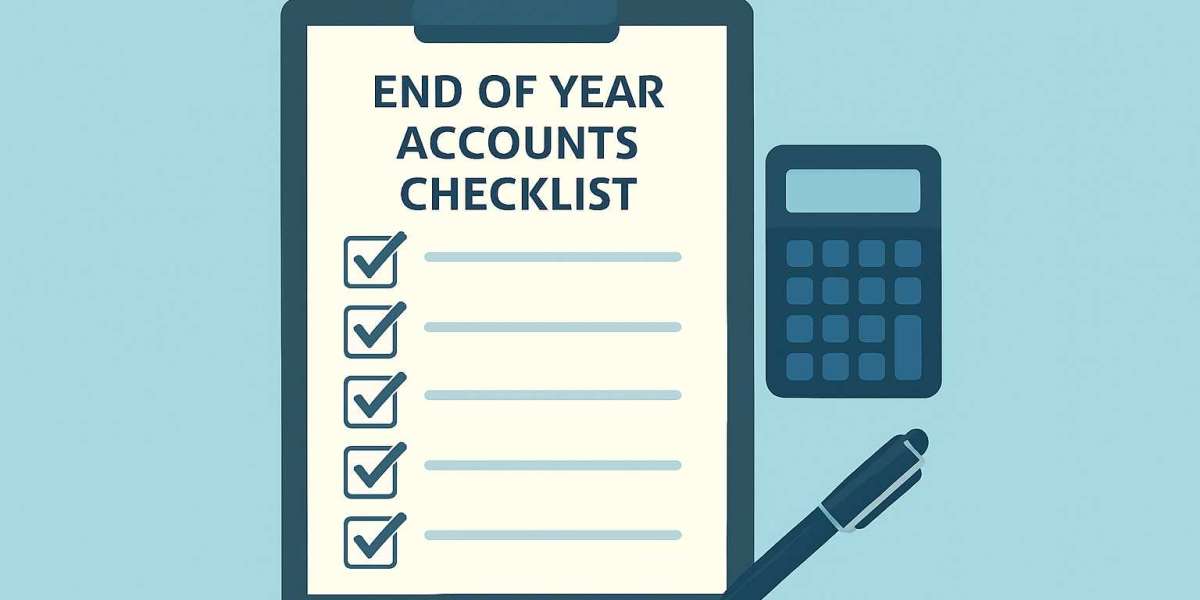

Managing finances effectively is essential for any business, and an organised End of Year Accounts Checklist plays a crucial role in closing the financial cycle. As the year wraps up, businesses use this checklist to ensure every financial detail is reviewed, recorded, and ready for reporting. It acts as a step-by-step guide to verify accuracy, identify irregularities, and maintain compliance with accounting standards.
A typical checklist begins with gathering bank statements, invoices, receipts, payroll summaries, and loan records. These documents provide the foundational information needed to reconcile accounts and confirm that all transactions are accounted for. The next step often involves reviewing outstanding debts—both receivables and payables—to establish what is still due and what must be collected or settled before finalising the accounts.
Stocktakings are also a key part of the process for businesses that hold inventory. Confirming the quantity and value of stock helps ensure the financial statements reflect accurate asset values. Additionally, depreciation schedules, asset registers, and expense categories must be updated to ensure the accounts present a realistic financial position.
Another important step includes verifying tax-related details such as VAT, corporation tax estimates, and allowable deductions. Ensuring that all calculations align with the year’s transactions helps avoid penalties or errors when submitting final returns.
Finally, the checklist encourages a review of the overall financial performance. Analysing profit margins, cash flow, and year-to-year comparisons allows business owners to understand trends, strengths, and areas needing attention. This reflection supports informed planning for the upcoming year.
A well-prepared End-of-Year Accounts Checklist not only simplifies accounting duties but also provides clarity, accuracy, and confidence as a business transitions into the next financial period.