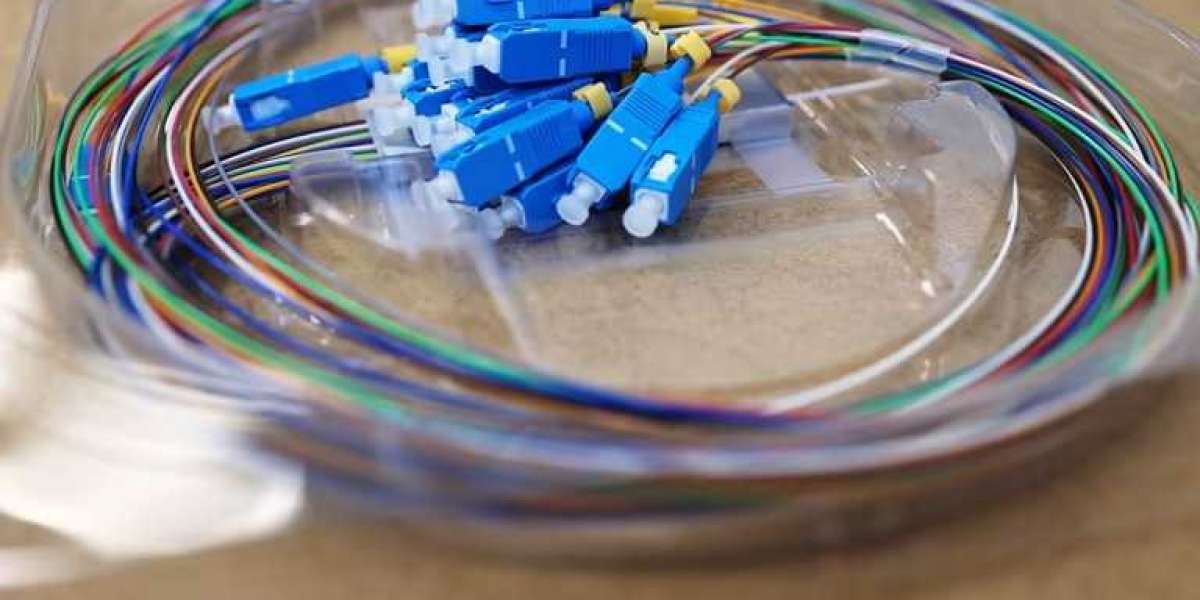

In today’s high-capacity communication networks, improving signal management has become essential for stable data transmission. Modern optical components enable the splitting, combining, and routing of light with remarkable precision. For this reason, many network planners integrate a fiber coupler into distribution frames to ensure controlled light division without signal loss. Other systems rely heavily on the versatility of a plc splitter, which offers uniform distribution for multi-point connections.
How Coupling Devices Elevate Network Performance
Optical access systems are expected to deliver consistent performance even under heavy bandwidth demands. Because of this requirement, operators choose components that support stable branching. When placed correctly, a fiber coupler helps maintain optimal power balance when signals must be shared between two or more paths. In larger access infrastructures, a plc splitter plays a similar role but scales more effectively when multiple subscribers need simultaneous service.
Precision in Light Management
Effective optical distribution involves controlling how light behaves during transmission. Engineers often depend on the stable characteristics of a fiber coupler when designing localized segments that require low-ratio divisions. These components are especially valuable in long-haul or backbone setups where controlled insertion loss is critical. Meanwhile, any arrangement with complex branching generally benefits from a plc splitter, because its planar waveguide structure distributes light evenly across numerous outputs.
Applications Across Network Environments
Many service providers configure their infrastructure with flexible branching options to prepare for future expansion. During such planning, a designer might use a fiber coupler to add or extract small amounts of power for monitoring or supervisory channels. In similar expansion projects, a plc splitter allows operators to connect many end-users in fiber-to-the-premise deployments, ensuring that each output receives a predictable light level.
Balancing Efficiency and Scalability
Creating a stable distribution environment requires choosing the right devices based on network demands. When short-distance links must share or combine signals, a fiber coupler delivers reliability through simple construction and broad compatibility. But in systems where dozens of paths require equal distribution, a plc splitter remains the preferred choice, primarily because it supports high-density layouts without compromising uniformity.
Choosing the Right Component
Network designers always evaluate power budgets, scalability targets, and long-term maintenance requirements. In many circumstances, they incorporate a fiber coupler to handle straightforward merging or tapping tasks within localized nodes. Conversely, situations that demand predictable branching ratios for multiple outputs prompt planners to select a plc splitter, ensuring efficient distribution that remains stable across changing environmental conditions.
Conclusion
A well-designed optical network depends on intelligent component selection. Whether used for tapping, monitoring, or distributing signals, a fiber coupler remains valuable for smaller-scale or precision-based applications. In contrast, the broad functionality of a plc splitter supports extensive branching requirements for modern access systems. When both components are understood and applied effectively, network reliability and scalability significantly improve.