
Many optical engineers and researchers face frustrating issues when measuring angular light distribution or viewing display uniformity. The problem often lies not in the display itself, but in the lens system. A poor-quality or mismatched conoscope lens can distort light cones, reduce accuracy, and ruin entire measurement setups.
In this article, you’ll learn how a conoscope lens improves precision, why it’s essential for optical and display testing, and what to look for before buying one.
What Is a Conoscope Lens?
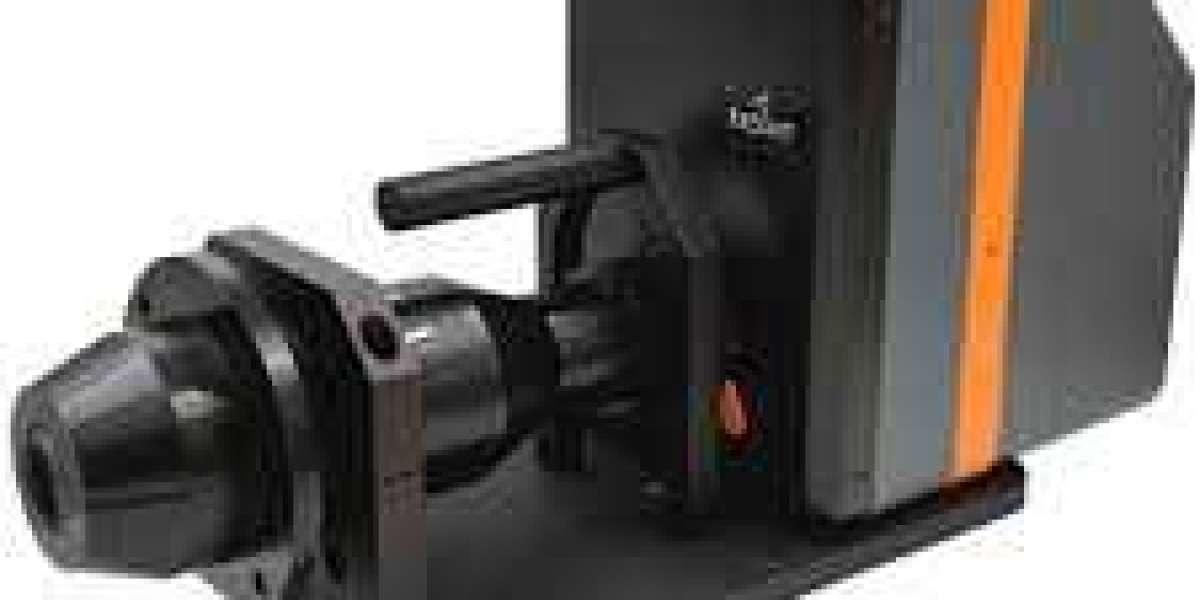
A conoscope lens is a specialized optical detection lens used to capture and analyze angular light emission patterns. It’s a key component in display inspection systems, photometric instruments, and optical testing setups.
This lens enables simultaneous observation of light from multiple directions, providing a complete image of angular intensity or luminance distribution. In short, it translates complex optical behavior into measurable data.
How a Conoscope Lens Works
The working principle of a conoscope lens is based on the Fourier imaging method. Light emitted from a display or optical surface passes through the lens and forms an image in the Fourier plane. This allows precise measurement of:
Viewing angles of displays
Color and brightness uniformity
Polarization effects
Optical symmetry
These properties are vital in industries like AR/VR display development, LCD/LED testing, and micro-optics research.
Why Most Optical Tests Fail Without It
Without a proper conoscope lens, measurement errors become common. Displays may appear uniform to the naked eye but show non-uniform results under standard lenses. Here’s why failures occur:
Inaccurate angular mapping: Ordinary lenses can’t capture multi-directional light accurately.
Poor contrast analysis: Small deviations in luminance or color are lost.
Reduced calibration accuracy: Incomplete data leads to false conclusions in quality control.
A high-performance conoscope lens eliminates these issues by ensuring reliable, distortion-free angular imaging.
Applications Across Optical and Display Industries
Conoscope lenses are widely used in:
Display Manufacturing: For analyzing display uniformity and viewing angles.
AR/VR Optics: To evaluate optical modules and projection systems.
Material Science: For studying birefringence and optical stress.
Quality Inspection Systems: To ensure consistent brightness and color accuracy.
This versatility makes them essential in both RD and industrial production environments.
Choosing the Right Conoscope Lens
Before investing, consider these key factors:
Numerical Aperture (NA): Determines how much angular information the lens can capture.
Working Distance: Must suit your setup and detector placement.
Compatibility: Ensure it fits with your imaging sensors or microscopes.
Optical Coatings: Anti-reflective coatings improve accuracy and reduce flare.
Selecting a precision-engineered conoscope lens ensures you capture every light pattern exactly as it is.
Conclusion
In precision optics, accuracy depends on every component — and the conoscope lens is often the most critical. Whether you’re testing a high-end display or calibrating optical systems, using a high-quality detection lens guarantees dependable results.
If you’re looking for advanced conoscope lenses for display testing and optical analysis, explore ARVROptical’s full range here.