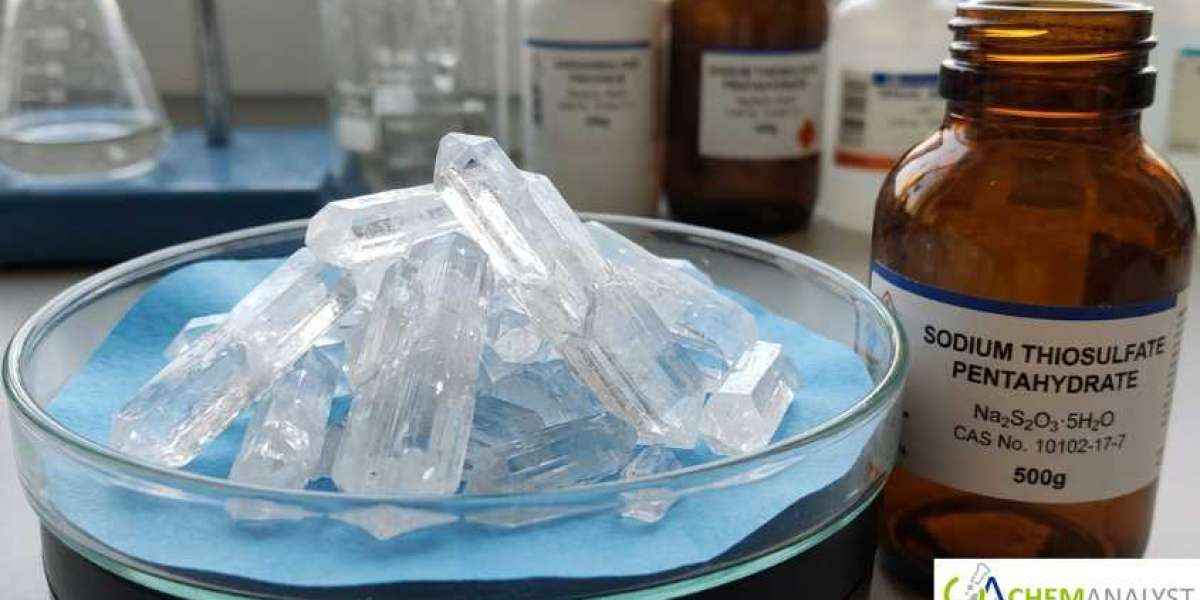

According to ChemAnalyst Sodium Thiosulfate Pentahydrate Price market demonstrated varied regional trends during Q1 2026, influenced by fluctuations in sulfur-based feedstock costs, industrial demand, mining sector consumption, water treatment requirements, and broader manufacturing activity. In the United States, prices remained relatively firm due to stable demand from water treatment and industrial applications, while China experienced moderate price fluctuations driven by changing production costs and export activity. European markets witnessed mixed pricing patterns as energy costs, inventory levels, and industrial output influenced supply-demand dynamics. The Sodium Thiosulfate Pentahydrate Price Trend remained closely linked to sulfur market developments, production economics, and downstream consumption from mining, photography, healthcare, and water treatment industries. Meanwhile, the Sodium Thiosulfate Pentahydrate Price Chart reflected regional market adjustments driven by feedstock costs, logistics conditions, and procurement activities. Looking ahead to 2026, the market is expected to remain balanced, supported by steady industrial demand and expanding environmental applications.
Sodium Thiosulfate Pentahydrate is a versatile inorganic compound widely used across multiple industries, including water treatment, mining, healthcare, photography, textile processing, and chemical manufacturing. Known for its excellent reducing properties and detoxification capabilities, the compound plays a critical role in gold extraction processes, dechlorination systems, medical treatments, and analytical chemistry applications.
As environmental regulations become stricter and industrial water treatment requirements increase globally, demand for Sodium Thiosulfate Pentahydrate continues to grow. This expanding application base has made the Sodium Thiosulfate Pentahydrate Price increasingly sensitive to raw material costs, production economics, and downstream industrial demand.
Sodium Thiosulfate Pentahydrate Price Trend Analysis
The Sodium Thiosulfate Pentahydrate Price Trend during 2025 and early 2026 reflected changing market conditions across major regions.
North America
The North American market maintained relatively stable pricing supported by:
- Strong demand from municipal water treatment facilities
- Consistent industrial consumption
- Steady mining sector activity
- Balanced inventory levels
Demand from environmental applications and industrial wastewater treatment projects continued to provide a stable foundation for market growth.
Asia-Pacific
Asia-Pacific remained one of the largest production and consumption regions for Sodium Thiosulfate Pentahydrate. China played a significant role in determining regional pricing trends due to its extensive manufacturing capacity and export activity.
Regional price movements were influenced by:
- Sulfur feedstock costs
- Industrial production rates
- Export demand
- Environmental compliance requirements
- Manufacturing operating costs
Growing mining activities and expanding water treatment infrastructure supported steady market demand across the region.
Europe
European markets experienced mixed pricing conditions as manufacturers faced:
- Higher energy costs
- Fluctuating industrial demand
- Regulatory compliance expenses
- Supply chain challenges
Despite these factors, demand from environmental and chemical processing sectors remained relatively resilient.
Key Factors Influencing Sodium Thiosulfate Pentahydrate Price
Sulfur Feedstock Costs
The primary factor affecting the Sodium Thiosulfate Pentahydrate Price is the cost of sulfur-based raw materials. Changes in sulfur market fundamentals directly impact manufacturing costs and product pricing.
Mining Industry Demand
The mining sector remains one of the largest consumers of Sodium Thiosulfate Pentahydrate, particularly in gold extraction and metal recovery processes. Increased mining activity can significantly influence global demand patterns.
Water Treatment Applications
Growing investments in municipal water treatment and industrial wastewater management continue to drive consumption. Sodium Thiosulfate Pentahydrate is widely used for dechlorination and environmental remediation purposes.
Healthcare and Medical Uses
The compound is utilized in specific medical treatments, including detoxification applications. Expanding healthcare infrastructure and pharmaceutical demand contribute to market growth.
Energy and Manufacturing Costs
Production economics are influenced by utility expenses, labor costs, transportation charges, and manufacturing efficiency. Rising operational costs can contribute to higher market prices.
Sodium Thiosulfate Pentahydrate Price Forecast 2026
The Sodium Thiosulfate Pentahydrate Price Forecast for 2026 indicates a stable market with moderate growth opportunities.
First Half of 2026
During the first half of the year, prices are expected to remain relatively balanced due to:
- Stable industrial demand
- Adequate production capacity
- Consistent water treatment consumption
- Sufficient inventory availability
These factors should help maintain market equilibrium.
Second Half of 2026
The latter half of the year may witness moderate price increases due to:
- Rising sulfur feedstock costs
- Increased mining sector activity
- Higher energy expenses
- Growing environmental compliance requirements
However, strong global production capabilities are expected to limit excessive volatility.
Sodium Thiosulfate Pentahydrate Price Chart Outlook
The Sodium Thiosulfate Pentahydrate Price Chart for 2026 is expected to display:
- Stable pricing during balanced supply-demand periods
- Moderate upward movement linked to feedstock costs
- Regional variations based on industrial activity
- Temporary fluctuations caused by logistics and inventory adjustments
Overall, the chart is anticipated to reflect a largely range-bound market with gradual upward potential.
Regional Market Outlook
Asia-Pacific
Asia-Pacific is expected to remain the dominant market due to strong manufacturing capabilities, growing mining activities, and expanding environmental infrastructure projects. China and India are likely to remain key growth contributors.
North America
North America is projected to maintain stable demand from water treatment, chemical processing, and industrial applications. Continued infrastructure investments are expected to support market growth.
Europe
European demand is anticipated to remain steady, driven by environmental regulations and industrial water treatment requirements. Energy costs may continue to influence regional pricing.
Latin America and Middle East
Mining expansion and infrastructure development projects are expected to create additional demand opportunities in these regions.
Industry Challenges
Despite favorable market conditions, the industry faces several challenges:
- Sulfur feedstock price volatility
- Rising energy costs
- Regulatory compliance requirements
- Transportation and logistics expenses
- Regional supply-demand imbalances
Manufacturers must focus on operational efficiency and supply chain optimization to maintain profitability.
Growth Opportunities
Several long-term trends are expected to support market expansion:
- Growing water treatment investments
- Increasing mining sector activity
- Expansion of environmental remediation projects
- Rising industrial wastewater treatment demand
- Growth in healthcare and chemical processing applications
These developments are expected to strengthen demand throughout the forecast period.
Major End-Use Industries
The major industries utilizing Sodium Thiosulfate Pentahydrate include:
- Water Treatment
- Mining and Metal Recovery
- Healthcare and Pharmaceuticals
- Textile Processing
- Chemical Manufacturing
- Photography and Imaging
The diversification of applications provides a stable demand base and reduces dependency on any single industry.
Conclusion
The Sodium Thiosulfate Pentahydrate Price outlook for 2026 remains positive, supported by growing demand from water treatment, mining, healthcare, and industrial applications. The Sodium Thiosulfate Pentahydrate Price Trend is expected to remain stable with moderate upward potential as feedstock costs, environmental regulations, and industrial consumption continue to shape market dynamics. Meanwhile, the Sodium Thiosulfate Pentahydrate Price Chart is likely to reflect balanced market conditions with manageable fluctuations driven by sulfur costs, energy prices, and regional demand variations. As environmental sustainability and industrial efficiency become increasingly important worldwide, Sodium Thiosulfate Pentahydrate is expected to maintain strong market fundamentals and steady growth throughout 2026.