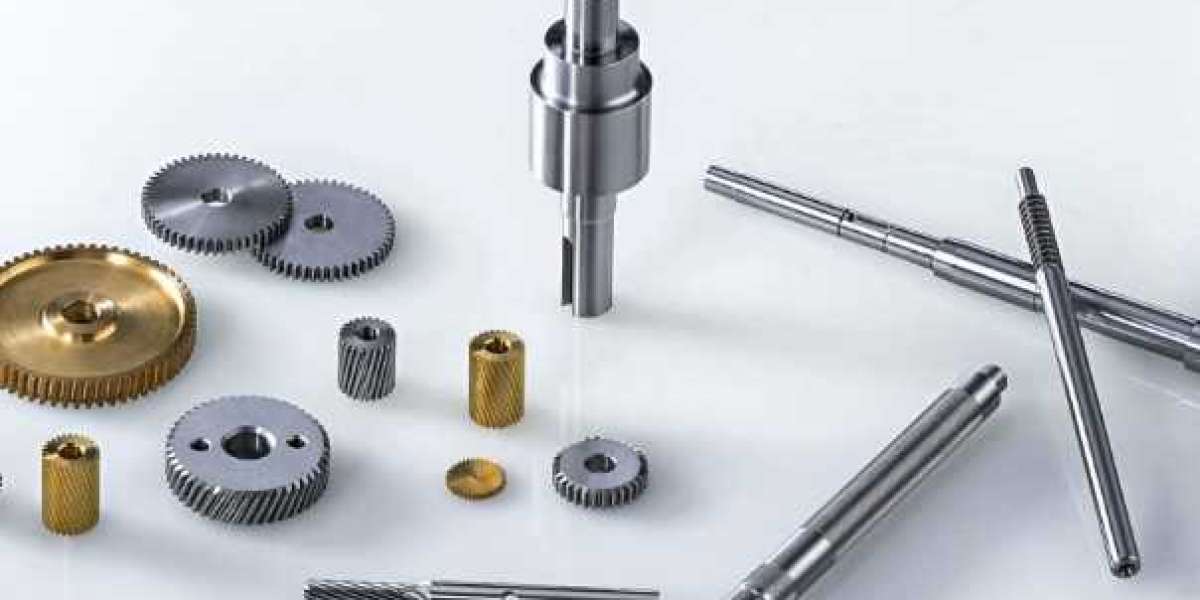

In today's competitive supply chain, Machining Components are expected to do far more than simply fit together; they must perform reliably under pressure, repeat accurately across production runs, and support efficient assembly. That is why Machining Components continue to matter across sectors where precision, consistency, and durability are non-negotiable. From compact enclosures to structural brackets, engineered metal parts help manufacturers reduce waste, improve product quality, and keep production on schedule.
Why Precision Matters in Modern Production
Precision has become one of the defining qualities of successful manufacturing. When dimensions are controlled carefully, parts align more smoothly, assembly becomes faster, and the final product performs better in the field. Small deviations can create major issues later, especially in products that depend on exact spacing, load-bearing strength, or thermal stability.
High-accuracy production also helps companies reduce rework. Instead of spending time correcting defects or replacing mismatched parts, teams can focus on streamlined output and consistent delivery. In industries where reliability affects safety, such as transportation or industrial automation, precision is not a luxury but a baseline requirement. Well-controlled tolerances and careful process planning support longer service life and stronger customer confidence.
Materials, Finishes, and Functional Strength
The value of a finished part often depends on more than its shape. Material selection, surface treatment, and structural integrity all influence how a product behaves over time. Stainless alloys may be chosen for corrosion resistance, while aluminum may be preferred for lighter weight and easier handling. Carbon steel remains important for strength and cost efficiency, especially in heavy-duty applications.
Surface finishes can also change performance in meaningful ways. A smoother finish may reduce friction and improve fit, while protective coatings can extend durability in harsh environments. When the material and finish are matched carefully to the intended use, the result is a component that supports performance rather than limiting it. This is especially important in assemblies exposed to vibration, moisture, heat, or repeated mechanical stress.
Manufacturing Methods That Improve Consistency
Modern production depends on repeatable processes. CNC milling, turning, drilling, and multi-step fabrication all contribute to parts that remain consistent from the first unit to the thousandth. Automated systems help reduce human error, while digital programming makes it easier to adjust geometry, tolerances, and batch size without sacrificing quality.
Toolpath optimization also plays an important role. When cutting routes are planned efficiently, manufacturers can save material, shorten cycle times, and reduce tool wear. This improves overall productivity while supporting cleaner results and tighter control over each part. In many cases, better process design leads to better economics, because fewer defects and less downtime translate directly into lower operational cost.
Partnering with hardwareodm for consistent tolerances
Working with an experienced production partner can make a measurable difference in project execution. Reliable communication, strong inspection procedures, and disciplined workflow management all help reduce uncertainty during development and volume production. When specifications are reviewed carefully at each stage, teams can avoid delays and maintain a clearer path from prototype to final shipment.
A dependable partner also helps with technical decisions that affect long-term success. Material choice, finishing options, and assembly requirements all influence the final outcome, so practical engineering support can be as valuable as the production itself. This is where disciplined manufacturing expertise supports both quality and delivery.
From Prototype to Scalable Output
Scaling from one-off samples to stable mass production requires more than simply increasing machine time. It requires repeatable fixtures, dependable inspection, and a process that can maintain quality under changing demand. Prototypes help validate fit and function, but the real challenge begins when the same standard must be achieved consistently across larger volumes.
A strong production strategy includes traceability, documentation, and testing that match the requirements of the end market. This approach helps manufacturers respond to design changes without losing control over lead time or cost. It also supports better planning for inventory, logistics, and future product revisions. For businesses that need dependable industrial solutions and streamlined ordering, more information is available at https://www.hardwareodm.com/product .