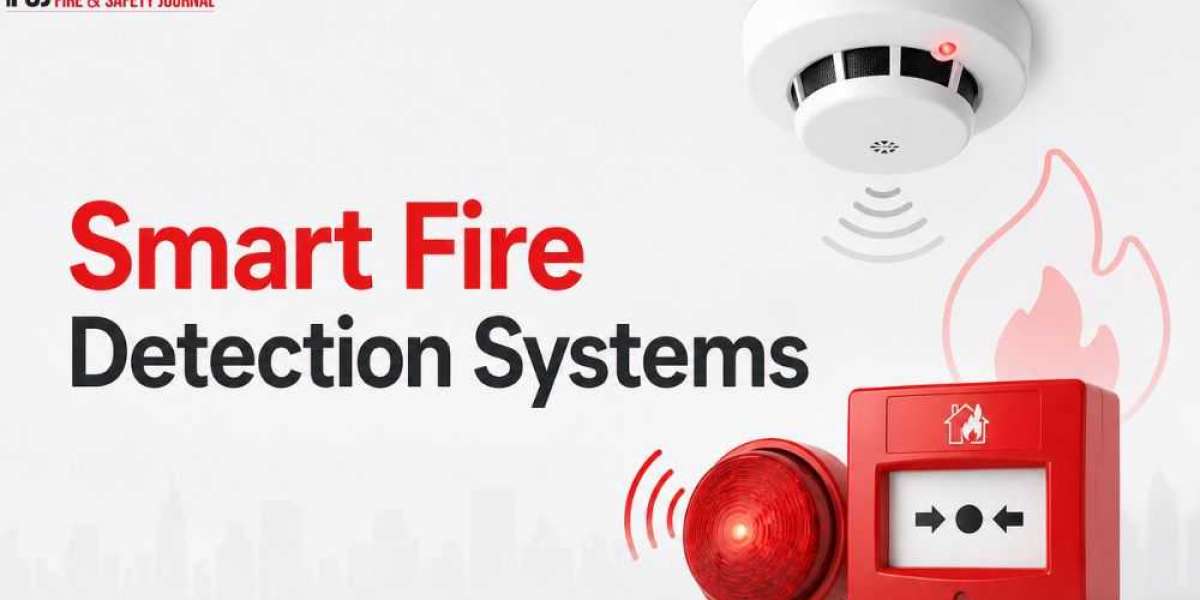

Fire safety remains a critical concern as urban environments grow more complex and densely populated. Traditional fire detection methods, while effective to a degree, often struggle with delayed response times and false alarms. These limitations can lead to severe consequences, including property damage and risks to human life.
With the rise of intelligent technologies, artificial intelligence is reshaping how fire risks are identified and managed. Modern systems now combine advanced sensors, data analytics, and automation to deliver faster and more accurate responses. This article explores how AI is revolutionizing fire detection, improving safety standards, and shaping the future of fire protection.
What Is Smart Fire Detection Technology?
Smart fire detection technology refers to advanced systems that use connected devices, sensors, and intelligent software to identify fire hazards in real time. Unlike conventional alarms that rely solely on smoke or heat thresholds, these systems analyze multiple data points to detect unusual patterns.
By integrating IoT and AI capabilities, Smart Fire Detection Systems can continuously monitor environments, provide early warnings, and reduce false alarms. They also allow remote access, enabling users to monitor safety conditions from anywhere. This modern approach significantly enhances both prevention and response strategies, making it a vital part of today’s fire safety infrastructure.
Role of Artificial Intelligence in Fire Detection
Artificial intelligence plays a transformative role in modern fire detection by enabling systems to analyze data, recognize patterns, and make decisions in real time, significantly improving detection accuracy and response speed.
Real-Time Data Analysis
AI processes data from multiple sensors simultaneously, identifying abnormal patterns such as sudden temperature spikes or smoke density changes, allowing faster detection compared to traditional systems that rely on fixed thresholds.
Machine Learning for Pattern Recognition
Machine learning algorithms learn from historical fire incidents and environmental data, improving detection accuracy over time while minimizing false alarms caused by dust, steam, or non-threatening smoke sources.
Computer Vision Integration
AI-powered cameras use computer vision to visually detect flames and smoke, enabling early identification even before traditional sensors are triggered, especially in large or open environments.
IoT and Connectivity
AI integrates with IoT devices to create interconnected safety networks, enabling seamless communication between detectors, alarms, and control systems for quicker and more coordinated emergency responses.
Evolution of Fire Detection Systems
Fire detection systems have evolved significantly from basic manual alarms to intelligent, automated solutions that offer real-time monitoring, improved accuracy, and faster response times in critical situations.
Conventional Fire Alarms
Traditional systems relied on standalone smoke and heat detectors, which activated alarms only after reaching specific thresholds, often leading to delayed warnings and limited situational awareness.
Addressable Systems
Modern addressable systems improved detection by identifying the exact location of a fire, helping emergency responders act more efficiently and reducing response time in large buildings.
Integration with Automation
Fire detection began integrating with building management systems, enabling automated actions such as shutting down ventilation, activating sprinklers, and notifying emergency services instantly.
Emergence of Intelligent Systems
The latest generation includes Smart Fire Detection Systems that combine AI, IoT, and cloud computing, offering predictive capabilities and continuous monitoring for enhanced fire prevention and control.
How AI Is Transforming Fire Detection Technology?
Artificial intelligence is revolutionizing fire detection by enabling faster identification, reducing false alarms, and providing predictive insights that help prevent incidents before they escalate into emergencies.
Early Fire Detection
AI systems can detect fire hazards at an early stage by analyzing subtle environmental changes, allowing quicker intervention and reducing the risk of large-scale damage.
Reduction of False Alarms
By analyzing patterns and differentiating between real threats and harmless conditions, AI significantly reduces false alarms, improving trust and efficiency in fire detection systems.
Predictive Analytics
AI uses predictive models to assess fire risks based on environmental data, helping organizations take preventive measures before a fire incident occurs.
Remote Monitoring and Alerts
Cloud-based AI systems enable remote monitoring, sending real-time alerts to users and emergency services, ensuring rapid response regardless of location.
Key Benefits of AI in Smart Fire Detection
AI-driven fire detection systems offer numerous benefits, including improved accuracy, faster response times, and enhanced safety, making them an essential component of modern fire protection strategies.
Faster Emergency Response
AI enables quicker detection and alert systems, ensuring emergency services are notified promptly, which can significantly reduce damage and save lives.
Improved Accuracy
Advanced algorithms minimize errors and false alarms, ensuring that alerts are reliable and actionable, enhancing overall system effectiveness.
Cost Efficiency
Although initial investment may be higher, AI-powered systems reduce long-term costs by preventing major damages and minimizing unnecessary emergency responses.
Enhanced Safety Standards
The adoption of Smart Fire Detection Systems helps organizations meet modern safety standards by providing advanced monitoring and compliance capabilities.
Real-World Applications
AI-powered fire detection systems are widely used across various industries, improving safety measures and ensuring better protection in environments where fire risks are significant.
Smart Buildings and Homes
Residential and commercial buildings use AI-based systems to monitor fire risks continuously, providing early warnings and automated responses to ensure occupant safety.
Industrial Facilities
Factories and warehouses benefit from AI detection systems that monitor hazardous conditions, reducing risks associated with flammable materials and heavy machinery.
Forest Fire Detection
AI is used in environmental monitoring to detect wildfires early through satellite data and sensor networks, helping authorities respond quickly and minimize damage.
Public Infrastructure
Airports, hospitals, and shopping malls implement Smart Fire Detection Systems to enhance safety, manage large crowds, and ensure quick evacuation during emergencies.
Challenges and Limitations
Despite its advantages, AI-based fire detection technology faces several challenges that need to be addressed to ensure widespread adoption and optimal performance.
High Initial Costs
Implementing AI-powered systems requires significant investment in hardware, software, and infrastructure, which may be a barrier for smaller organizations.
Data Privacy Concerns
The use of connected devices and surveillance systems raises concerns about data security and privacy, requiring robust measures to protect sensitive information.
Dependence on Connectivity
AI systems rely heavily on internet connectivity and cloud services, making them vulnerable to network failures or disruptions.
Maintenance and Updates
Regular system updates and maintenance are essential to ensure accuracy and efficiency, requiring ongoing investment and technical expertise.
Future Trends in AI-Based Fire Detection
The future of fire detection technology is driven by continuous advancements in AI, offering more sophisticated and proactive solutions for fire prevention and safety management.
Integration with Smart Cities
AI-based fire detection systems will become part of smart city infrastructure, enabling centralized monitoring and faster emergency response across urban areas.
Use of Drones and Robotics
Drones equipped with AI sensors will monitor high-risk areas, while robots will assist in firefighting operations, improving safety for human responders.
Advanced Predictive Models
Future systems will use advanced analytics to predict fire risks with greater accuracy, allowing preventive measures to be implemented proactively.
Continuous Learning Systems
AI systems will continuously improve through data collection and learning, enhancing detection capabilities and adapting to new environments and challenges.
Conclusion
Artificial intelligence is fundamentally transforming fire detection technology by making systems smarter, faster, and more reliable. From early detection to predictive analytics, AI is redefining how fire risks are managed in modern environments.
Adopting advanced solutions like Smart Fire Detection Systems is no longer optional but essential for ensuring safety in 2026 and beyond. These systems not only enhance protection but also align with evolving safety standards and technological advancements.
As highlighted by industry insights, platforms like international fire and safety journal emphasize the importance of embracing innovation to build safer and more resilient environments for the future.
FAQ
Q1. What is smart fire detection technology?
It is an advanced system that uses AI, sensors, and connectivity to detect fire hazards in real time and provide early warnings.
Q2. How does AI improve fire detection?
AI analyzes data, identifies patterns, and reduces false alarms, enabling faster and more accurate fire detection.
Q3. Are AI-based fire detection systems expensive?
They may have higher initial costs but offer long-term savings by preventing major damages and reducing false alarms.
Q4. Where are these systems commonly used?
They are used in homes, commercial buildings, industries, and public infrastructure like airports and hospitals.
Q5. What is the future of fire detection technology?
The future includes smarter systems with predictive capabilities, integration with smart cities, and the use of drones and robotics for enhanced safety.