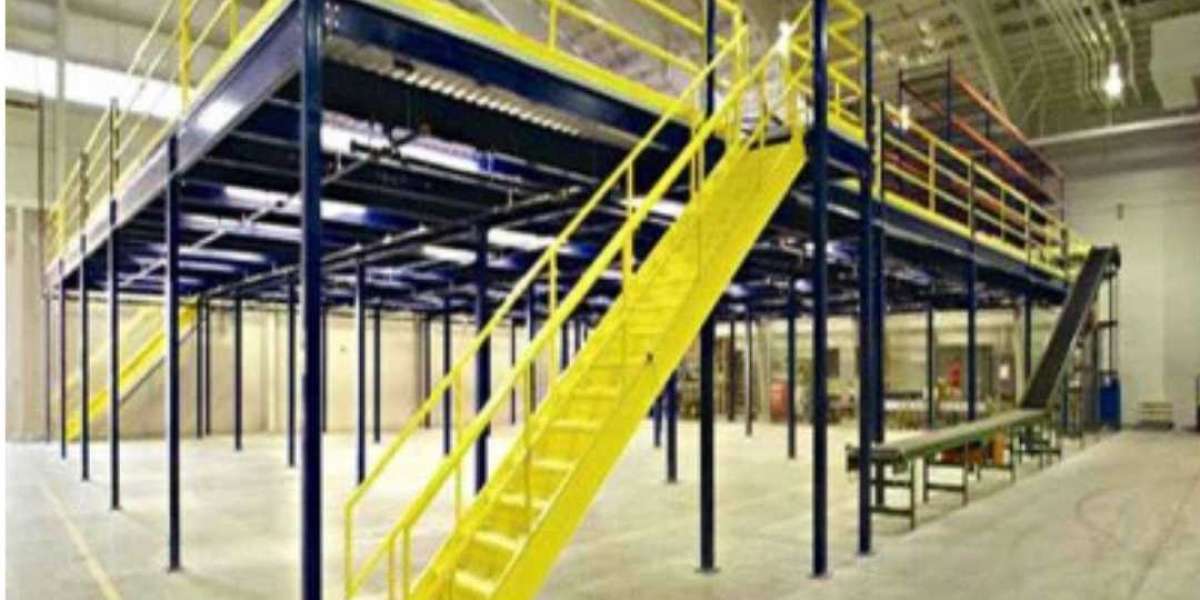

Modern industrial and commercial facilities are under constant pressure to use space wisely. Expanding a building is expensive and time-consuming, which is why many businesses are now choosing a Modular Mezzanine Floor as a smart and flexible solution. This guide explains installation, load capacity, and safety in simple language so decision-makers can plan confidently and avoid costly mistakes.
Understanding the Concept of a Modular Mezzanine Floor
A Modular Mezzanine Floor is a raised, steel-based platform installed inside an existing building to create additional usable space. It does not require permanent civil construction and can be customized for warehouses, factories, showrooms, or offices. Because the system is modular, it can be expanded, relocated, or modified as business needs change. This adaptability makes it popular in fast-growing industries where layouts evolve frequently.
Unlike traditional structures, a Mezzanine Floor can be installed with minimal disruption to daily operations. Many companies use it to create storage areas, production zones, or office spaces above the ground level while keeping the original floor free for movement and equipment.
Planning and Installation Process
Proper planning is the foundation of a successful industrial mezzanine flooring solution installation. The process usually begins with a site assessment where ceiling height, column spacing, floor strength, and workflow requirements are evaluated. These factors help engineers design a structure that fits seamlessly into the existing facility.
Installation is typically faster than conventional construction. Prefabricated components are assembled on site, reducing downtime and noise. Since most systems are bolt-connected, they allow easy dismantling and reuse. When installed by experienced professionals, a Mezzanine Floor can be operational within weeks, not months, making it a cost-effective way to expand the usable area.
Load Capacity and Structural Strength
Load capacity is one of the most critical aspects of a Modular Mezzanine Floor. It determines how much weight the structure can safely support, including stored goods, machinery, and people. Load requirements vary depending on usage. Storage applications generally require higher load ratings compared to office or light assembly areas.
For warehouses that rely on Pallet Racks, the mezzanine must be engineered to handle concentrated loads from stacked pallets. This is especially important when forklifts or material handling equipment are used nearby. A well-designed structural mezzanine flooring system distributes weight evenly through columns and beams, transferring loads safely to the building foundation.
Manufacturers calculate load capacity based on static and dynamic loads, ensuring long-term performance without deformation or risk. Choosing the right design upfront prevents future limitations and supports business growth.
Integration with Storage and Workflow Systems
One major advantage of an industrial mezzanine flooring system is its ability to integrate with existing storage systems. Many facilities combine mezzanines with Pallet Racks to create multi-level storage solutions that significantly increase capacity without increasing floor footprint.
This integration improves warehouse optimization, space utilization, and overall operational efficiency. Goods can be stored vertically while maintaining clear aisles for movement. Conveyor systems, staircases, and lifts can also be added to support smooth material flow and reduce manual handling.
Safety Standards and Compliance
Safety should never be compromised when installing a Modular Mezzanine Floor. Reputable manufacturers follow national and international standards for design, fabrication, and installation. Guardrails, handrails, anti-skid flooring, and proper stair angles are essential components that protect workers and visitors.
Fire safety is another critical consideration. Adequate lighting, clear access routes, and compatibility with fire suppression systems ensure compliance with local regulations. Regular inspections and maintenance further enhance safety and extend the lifespan of the structure.
When safety is built into the design, employees feel confident using the space, which positively impacts productivity and workplace morale.
Long-Term Value and Business Benefits
Investing in an industrial mezzanine flooring system delivers long-term value beyond immediate space expansion. It reduces the need for relocation, supports scalable growth, and allows businesses to adapt layouts as operations change. The modular nature also means components can be reused, making it a sustainable and economical solution.
Companies that partner with experienced providers like RCrisp Solutions India Private Limited benefit from customized designs, quality materials, and reliable support. With the right planning and execution, a customized mezzanine flooring system becomes a strategic asset rather than just an add-on structure.
Choosing the Right Partner
Selecting a trusted supplier is as important as choosing the right design. An experienced partner understands load calculations, safety norms, and future scalability, including the integration of Pallet Racks within mezzanine structures. RCrisp Solutions India Private Limited focuses on engineered solutions that align with real-world operational needs, ensuring durability and compliance without unnecessary complexity.
Final Thoughts
A Modular Mezzanine Floor is more than a space-saving structure; it is a smart investment in efficiency, safety, and growth. By understanding installation methods, load capacity requirements, and safety standards, businesses can make informed decisions that deliver lasting benefits.
If you are planning to upgrade your facility and want expert guidance on designing a reliable and efficient Modular Mezzanine Floor, connect with our specialists today and take the first step toward smarter space utilization.