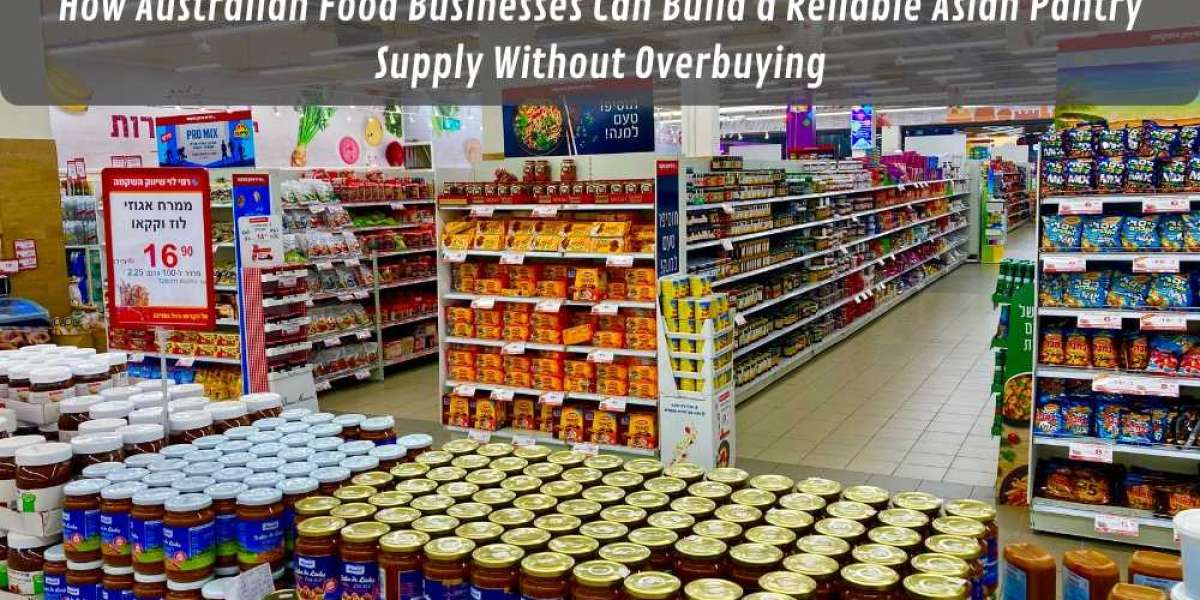

Running a food business is already a balancing act: cash flow, labour, customers, compliance, and the daily curveballs that show up mid-service or mid-shift. Pantry supply is the quiet one that can make everything else harder. When a staple runs out, menus get patched, substitutions creep in, and the “quick fix” order often costs more than the original plan.
Reliability doesn’t mean ordering more. It means ordering smarter, with fewer surprises and less waste.
Why “reliable supply” breaks down in real kitchens and stores
Most stock problems aren’t caused by one big mistake. They’re caused by small mismatches that compound: ordering habits that don’t reflect actual usage, storage space that silently limits what’s realistic, and product choices that change too often to become predictable.
There’s also the reality that demand is lumpy. A promo weekend, a local event, a weather swing, or a sudden ingredient trend can burn through a line faster than anyone expects. When that happens, the business often shifts into reactive mode: emergency buys, mixed suppliers, inconsistent pack sizes, and rushed receiving.
Over time, that creates two expensive patterns: stockouts on the things that matter, and overbuying on the things that don’t.
Decision factors that matter when building a dependable pantry supply
A dependable supply plan is less about “finding a supplier” and more about building a repeatable system that any staff member can follow. Before choosing products or setting reorder points, it helps to decide what “dependable” means for the business.
Range and substitution risk
Not all items carry the same risk if they’re missing. Coconut milk might be substitutable in some dishes, but a specific rice, noodle, sauce base, or beverage format might not be. Start by classifying items into:
- Non-negotiables: Recipes, prep, or customer expectations depend on them
- Flexible staples: Can swap brand/format without blowing up quality
- Nice-to-haves: Add-ons, seasonal lines, slow movers
This prevents the common trap of treating every line like it’s equally urgent.
Consistency, pack sizes, and “usage maths”
Usage problems often come from pack sizes that don’t align with how the team actually cooks or sells. A venue might use a carton per day; a retailer might sell a case per week. If the pack size is wrong, the team either runs out early or sits on excess.
Look at usage in “units that matter”: cartons per service week, bags per prep cycle, cases per replenishment cycle. That language makes reorder triggers easier to set and explain.
Ordering cadence that matches operations
Ordering weekly because “that’s what we do” is not a strategy. Cadence should reflect:
- Receiving capacity
- Storage constraints
- Cash flow rhythm
- Delivery windows and cut-off times
- How quickly the business can rotate stock
A smaller business often does better with a simple two-speed cadence: core lines on a regular rhythm and secondary lines on a slower, planned rhythm.
Delivery realities and receiving discipline
Even with the best intent, a supply plan fails if receiving is messy. If cartons aren’t checked, rotated, and stored consistently, the team loses trust in inventory numbers and reverts to “order extra to be safe”.
A basic receiving checklist—count, damage check, date check (where relevant), and immediate rotation—reduces both waste and panic ordering.
If the team is ready to standardise the core lines, using the BKK Australia product catalogue can help shortlist repeatable staples before setting par levels.
Common mistakes that cause stockouts (or cash tied up in slow movers)
The fastest way to improve reliability is to stop doing the few things that quietly create chaos.
Treating “low stock” as a feeling
If reorder decisions depend on someone glancing at a shelf, the business will overbuy in quiet weeks and underbuy in busy ones. A reorder trigger should be a number: “when we hit X, we order Y”.
Mixing brands and formats unintentionally
Switching between similar products sounds harmless until prep or portioning changes. A slightly different noodle thickness or sauce concentration can affect yield, cooking time, and customer experience. If the business wants flexibility, define it intentionally: which items can switch, and which can’t.
Not separating “menu stock” from “promo stock”
Promos and specials should not raid core par levels. If a retailer runs a feature or a venue does a limited-time dish, the extra stock should be planned and tracked separately, even if it’s done in a simple spreadsheet note.
Buying for price without counting the holding cost
A cheaper case can be more expensive if it ties up cash, strains storage, or increases waste. Holding cost is real: space, spoilage risk, and the hidden cost of managing clutter.
Overcomplicating inventory tools too early
Some businesses jump to software before they’ve agreed on product standards and cadence. Start with a small set of rules and a clean core list. Tools should support discipline, not replace it.
A practical purchasing rhythm that works for SMEs
SMEs usually don’t need a complex inventory model. They need a rhythm that makes it hard to forget the basics.
Step 1: Build a “Core 20–40” list
This is the shortlist that must not run out. For a venue, it’s the lines that power the highest-volume dishes and drinks. For a retailer, it’s the dependable sellers that customers expect to be on the shelf.
Keep the list tight enough that someone can count it in under 20 minutes.
Step 2: Set par levels based on real usage
A simple approach:
- Calculate average weekly usage (rough is fine)
- Decide your buffer (often 1–2 weeks for core lines, depending on cadence and space)
- Par level = usage + buffer
- Reorder point = “when we hit buffer, order back to par”
If storage is tight, reduce the buffer and increase the cadence. If cadence is hard, increase the buffer only for the non-negotiables.
Step 3: Use “two-speed ordering”
- Core order: Weekly or fortnightly, predictable
- Secondary order: every 3–6 weeks, planned, smaller focus list
This avoids the “giant order that includes everything” problem, which tends to create overbuying.
Step 4: Make receiving and rotation non-negotiable
If stock rotation isn’t consistent, par levels will never feel accurate. A simple rule that works: new stock goes behind old stock, every time, no exceptions.
Step 5: Review one category per month
Don’t try to fix everything at once. Pick a category (rice, noodles, sauces, beverages, frozen, snacks) and review:
- What moved
- What didn’t
- What ran out
- What was substituted
- What caused friction in prep or merchandising
Operator experience moment
In operations, the biggest breakthroughs often come from removing “inventory drama” rather than adding more stock. When teams agree on a core list and a simple reorder trigger, the atmosphere changes: fewer urgent calls mid-shift, fewer rushed substitutions, and less time spent debating what to buy. The goal isn’t perfect forecasting—it’s a plan that still works when the week goes sideways.
Local SMB mini-walkthrough (Australia-wide, with a Sydney lens)
A suburban Sydney takeaway adds two new noodle dishes and a seasonal drink special.
The owner lists the non-negotiables: noodles, key sauces, coconut products, and core beverages.
They set par levels to cover two weeks of normal trade plus one busy weekend buffer.
Secondary items (snacks and limited drinks) are put on a slower, separate order cycle.
Receiving is tightened: cartons are checked, rotated, and noted if pack sizes change.
After a month, they drop two slow movers and increase production on one fast-selling sauce.
Practical Opinions (exactly 3 lines)
Standardise the core lines first, then optimise price—otherwise savings get eaten by waste and emergencies.
A smaller, repeatable order every week often beats a “big deal” order that clogs storage and cash flow.
If an item changes prep, yield, or portioning, treat it like a new product—not a simple substitution.
Simple first-action plan for the next 7–14 days
Day 1–2: Write a core list of must-not-run-out items (aim for 20–40).
Day 3–4: Estimate weekly usage for each core item in practical units (cases, cartons, bags).
Day 5: Set a buffer and define a reorder trigger (when X remains, order Y to return to par).
Day 6–7: Do a clean count, then place the first order using the new rules.
Week 2: Tighten receiving—count, check, rotate, store consistently.
Week 2: Run a short review after one full cycle: what stocked out, what overbought, what substituted, and why.
Key Takeaways
- Reliability comes from a repeatable ordering rhythm, not bigger orders.
- Define non-negotiables, then build par levels around real usage and realistic storage.
- Separate core stock from promo/seasonal stock to avoid accidental depletion.
- Receiving discipline (count, check, rotate) is what makes inventory rules believable.
Common questions we hear from Australian businesses
How do we set par levels if our demand is inconsistent?
Usually, the best start is to base par on an average week, then add a small buffer for predictable spikes (like weekends or event periods). A practical next step is to track one week of usage for your core 20–40 items, then set reorder points that cover your typical busiest days. In many Australian metros, delivery timing and cut-off days can shape how much buffer you realistically need.
Should we consolidate suppliers or keep multiple options?
It depends on how critical the category is and how much admin time the business can spare. A good next step is to consolidate your non-negotiables with one primary source, while keeping a lightweight backup plan for a small number of high-risk lines. In most cases, Australian SMEs benefit from fewer suppliers for core stock, as long as delivery windows suit receiving capacity.
What’s the simplest way to stop “emergency orders”?
In most cases, emergency orders drop when reorder triggers are numbers instead of gut-feel. A practical next step is to pick five high-impact staples, set a reorder point for each, and run one cycle without exceptions. Usually, the fix is less about buying more and more and more about aligning cadence with storage and the realities of Australian freight and scheduling.
We’re a retailer—how do we avoid dead stock while keeping shelves full?
Usually, the answer is to separate “always-on” shelf lines from “trial” lines, with different rules for each. A practical next step is to create a core planogram list and review only one category each month, dropping slow movers quickly and increasing par only on proven sellers. In most cases, Australian independent stores do best when they feature selectively and keep core staples consistently available.