
The global shift toward renewable energy sources and sustainable chemicals has significantly increased interest in bio-based fuels and solvents. Among these, bio-alcohol has emerged as a critical component across fuel blending, industrial solvents, pharmaceuticals, cosmetics, and beverage applications. Derived from renewable biomass such as corn, sugarcane, grains, and agricultural waste, bio-alcohol supports decarbonization goals while reducing dependence on fossil fuels. This article provides a detailed, SEO-friendly overview of the Bio-Alcohol Market, based strictly on insights from Straits Research, covering market size, drivers, challenges, segmentation, and competitive landscape.
Get Your Sample Report Here: https://straitsresearch.com/report/bio-alcohol-market
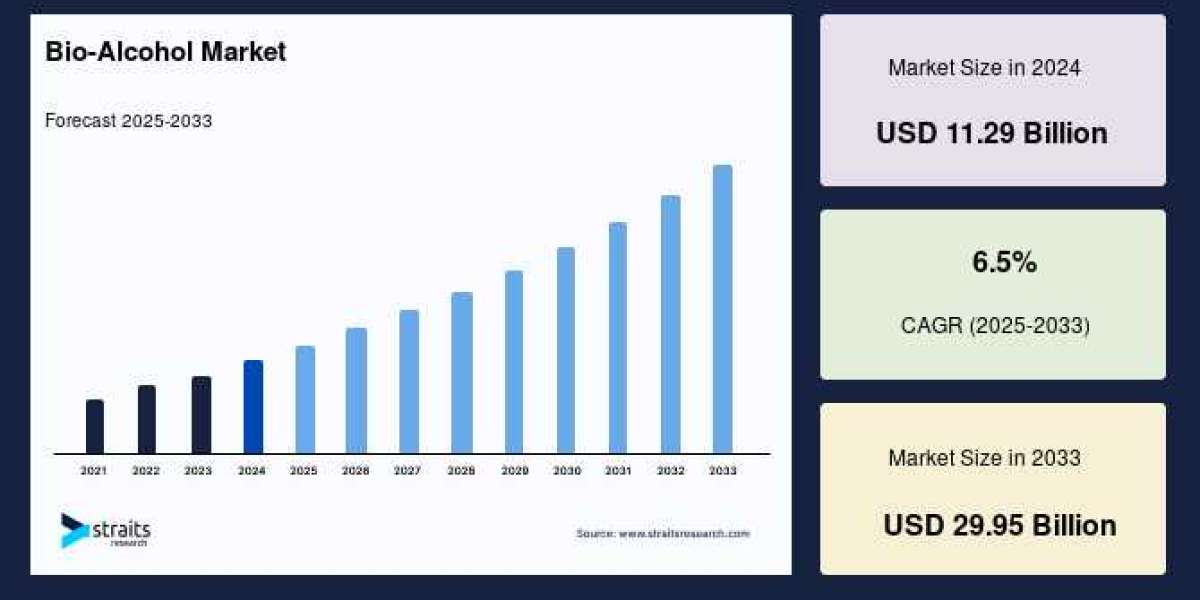
Market Size 2024 – USD 11.29 billion.
Market Size 2025 – USD 12.55 billion.
Market Size 2033 – USD 29.95 billion.
CAGR (2025–2033) – 6.5%.
According to Straits Research, the Bio-Alcohol Market is experiencing steady expansion, supported by favorable government mandates, technological advancements, and rising demand for cleaner fuels and sustainable chemicals.
Buy Report Now: https://straitsresearch.com/buy-now/bio-alcohol-marketMarket Drivers
Rising Demand for Renewable and Low-Carbon Fuels
Governments worldwide are promoting biofuels to reduce greenhouse gas emissions and enhance energy security. Bio-alcohol, particularly bioethanol and biomethanol, is widely used in fuel blending to meet renewable fuel standards and emission reduction targets. This regulatory push remains a primary growth driver for the market.
Expanding Applications Across End-Use Industries
Beyond transportation fuels, bio-alcohol is increasingly utilized in pharmaceuticals, personal care products, food and beverages, and industrial solvents. Its biodegradable and low-toxicity nature makes it a preferred alternative to petrochemical-based alcohols, supporting market expansion.
Technological Advancements in Biomass Conversion
Continuous improvements in fermentation technologies, enzyme efficiency, and feedstock processing have enhanced production yields and reduced operational costs. These advancements are improving the commercial viability of bio-alcohol production on a large scale.
Download Full Report: https://straitsresearch.com/report/bio-alcohol-market/request-sample
Market Challenges
Feedstock Price Volatility and Supply Constraints
Bio-alcohol production heavily depends on agricultural feedstocks, which are subject to seasonal variations, climate conditions, and price fluctuations. These factors can impact production costs and profit margins for manufacturers.
Competition from Conventional Alcohols
Despite environmental benefits, bio-alcohol often faces cost competition from fossil-based alcohols, particularly in regions with limited policy incentives. Price sensitivity among end users can restrict adoption in cost-driven markets.
Infrastructure and Distribution Limitations
In developing economies, limited infrastructure for biofuel blending and distribution poses a challenge. High initial investments in storage, transportation, and blending facilities can slow market penetration.
Market Segmentation
By Product Type
Bioethanol dominates the market due to its extensive use as a transportation fuel additive and industrial solvent. Biomethanol follows, driven by demand in chemical synthesis and energy applications. Other bio-alcohols, including biobutanol and biopropanol, are gaining attention for their higher energy density and compatibility with existing fuel infrastructure.
By Feedstock
The market is segmented into sugar-based, starch-based, and cellulosic feedstocks. Sugar-based feedstocks, such as sugarcane and sugar beet, hold a significant share due to high fermentation efficiency. Starch-based feedstocks, including corn and wheat, are widely used, particularly in North America. Cellulosic feedstocks are emerging as a sustainable option, utilizing agricultural residues and reducing competition with food crops.
By Application
Fuel applications account for the largest share of the Bio-Alcohol Market, supported by blending mandates and renewable energy policies. Industrial solvents represent another key segment, driven by demand from paints, coatings, and chemical processing industries. Food and beverages, pharmaceuticals, and personal care applications further contribute to market growth.
By Region
North America holds a substantial market share, supported by strong biofuel policies and advanced production infrastructure. Europe follows, driven by stringent emission regulations and sustainability initiatives. The Asia-Pacific region is expected to witness robust growth due to rising energy demand, supportive government programs, and abundant feedstock availability.
Top Players Analysis
Based on insights from Straits Research, the competitive landscape of the Bio-Alcohol Market is characterized by established energy companies and specialized biofuel producers focusing on capacity expansion and technological innovation.
Archer Daniels Midland Company (ADM)
ADM is a leading producer of bioethanol, leveraging its extensive agricultural supply chain and advanced processing capabilities. The company focuses on sustainable production practices and strategic partnerships to strengthen its market position.POET LLC
POET is a prominent bioethanol manufacturer with a strong presence in North America. Its integrated production model and continuous investment in research and development support operational efficiency and product quality.Valero Energy Corporation
Through its renewable fuels segment, Valero plays a significant role in bio-alcohol production. The company emphasizes large-scale operations and compliance with renewable fuel standards to drive growth.Green Plains Inc.
Green Plains specializes in high-purity alcohols and bioethanol, serving fuel and industrial markets. Its focus on operational optimization and product diversification enhances competitiveness.CropEnergies AG
A key player in Europe, CropEnergies AG produces bioethanol for fuel and industrial applications. The company benefits from strong regulatory support and a diversified feedstock base.
Conclusion
The Bio-Alcohol Market is positioned for sustained growth, supported by renewable energy mandates, expanding industrial applications, and ongoing technological advancements. With Market Size 2024 – USD 11.29 billion and projected growth to USD 29.95 billion by 2033 at a CAGR of 6.5%, bio-alcohol represents a critical component of the global transition toward sustainable energy and chemicals. Despite challenges related to feedstock volatility and infrastructure, continued policy support and innovation are expected to drive long-term market expansion.
About Us
Straits Research is a market intelligence company providing global business information reports and services. Our exclusive blend of quantitative forecasting and trends analysis provides forward