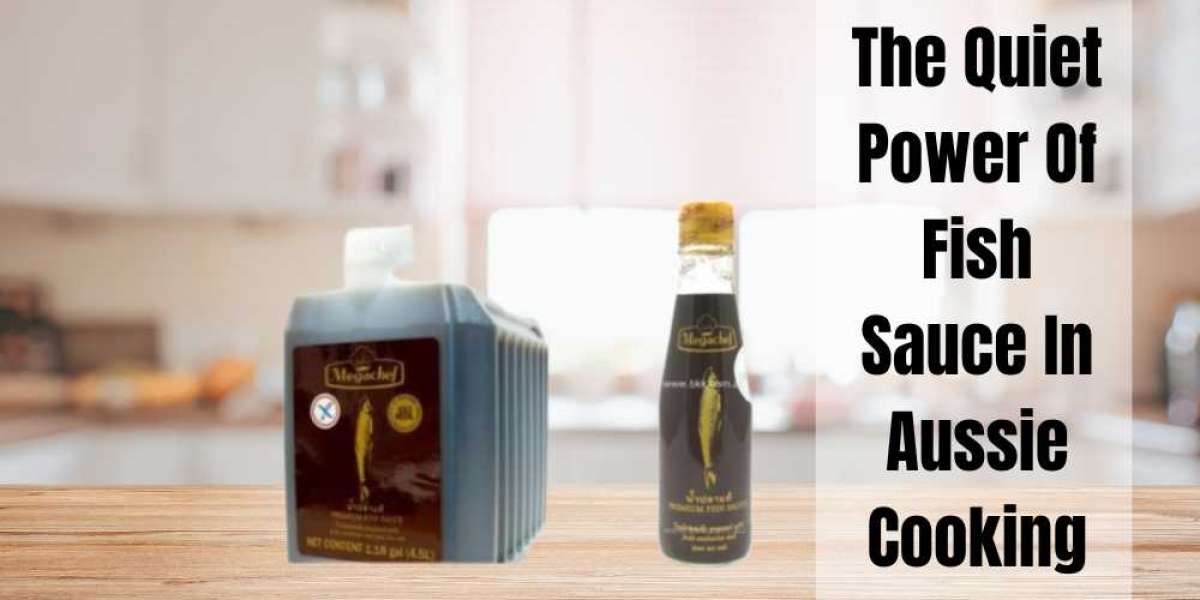

Fish sauce doesn’t usually get pride of place in the pantry. It’s not flashy, it’s not trendy, and it rarely gets name-checked in recipes beyond “add a splash”. Yet it’s one of those ingredients that, once you start using it properly, quietly reshapes how you cook. That’s why choosing a premium fish sauce stockist isn’t about chasing labels — it’s about control, consistency, and flavour that behaves the way you expect it to.
Good fish sauce doesn’t dominate a dish. It underpins it. You don’t taste “fish sauce” so much as notice that everything else suddenly makes more sense.
Why fish sauce still earns its place
At its core, fish sauce is fermented protein. Time, salt, and enzymes do the heavy lifting, breaking fish down into something deeply savoury and rounded. That process creates umami in a way you can’t fake with shortcuts. Bouillon cubes try. Soy sauce comes close. But fish sauce has a softness and depth that feels less engineered.
In Australian kitchens, it’s often pigeonholed as an Asian-only ingredient. That’s selling it short. We’ve seen it work beautifully in:
- Slow-cooked meat sauces
• Pan gravies and jus
• Vegetable roasts needing depth
Used properly, it doesn’t make food taste “Asian”. It just makes it taste fuller. More complete. Like the volume’s been turned up without distortion.
Quality makes the difference
Here’s the thing: Most people don’t realise until they’ve cooked with both that low-grade fish sauce and high-quality fish sauce behave very differently. Cheap bottles tend to be aggressively salty, with a sharp edge that lingers. You add a teaspoon, and suddenly the whole dish is shouting.
Better fish sauce is calmer. It’s still punchy, but the salt is balanced by sweetness and savouriness. You can build with it instead of fighting it. That’s important if fish sauce is something you reach for often, not just once in a blue moon.
If you’re cooking regularly — weeknight meals, not special occasions — the bottle you choose matters. It’s the difference between seasoning with confidence and second-guessing every pour.
That’s also where selecting quality pantry staples becomes practical, not pretentious. When ingredients behave predictably, cooking feels easier. Faster. Less like guesswork.
How chefs actually use it
One of the biggest myths around fish sauce is that more equals better. In reality, restraint is where it shines. Many cooks treat it like salt with benefits: add a little early for depth, then adjust late for aroma.
A common trick is to split its use. A few drops at the start of cooking, when onions or aromatics go into the pan, build a savoury base. Another small hit right at the end adds lift. Same ingredient, different effects.
It’s also worth remembering that fish sauce plays well with contrast. Acid, sugar, and fat all soften its edges. Lime juice, palm sugar, butter — they all turn what could be harsh into something rounded and satisfying.
Once you get a feel for it, you stop measuring. You taste. You trust your nose. That’s when fish sauce stops being an ingredient and starts being a tool.
Beyond Asian dishes
Some of the most convincing uses of fish sauce show up where you least expect them. A splash of beef ragu deepens the meatiness without making it taste foreign. A few drops in mushroom dishes push them closer to that elusive “meaty” flavour people chase with additives.
Even classic Aussie cooking benefits. Think shepherd’s pie, sausage gravy, or slow-cooked lamb. Fish sauce doesn’t replace salt; it replaces the need for extra steps. Less simmering. Less fiddling. More impact.
If you’re curious about why this works — the science behind fermentation, amino acids, and savoury perception — understanding umami flavours is a solid place to dig deeper.
Stocking it with intent
Fish sauce isn’t something you buy because a recipe tells you to. It’s something you keep because it earns its keep. When you’ve got a reliable bottle on hand, it finds its way into more meals than you’d expect.
The key is choosing one you’re not afraid to use. Not precious, not overpowering, just dependable. That’s where sourcing matters. A consistent supply from a trusted stockist removes the guesswork and lets you focus on cooking, not compensating.
In the end, fish sauce is one of those quiet upgrades. No drama. No trend cycle. Just better food, more often. And once it’s part of your routine, it’s hard to imagine cooking without it.






