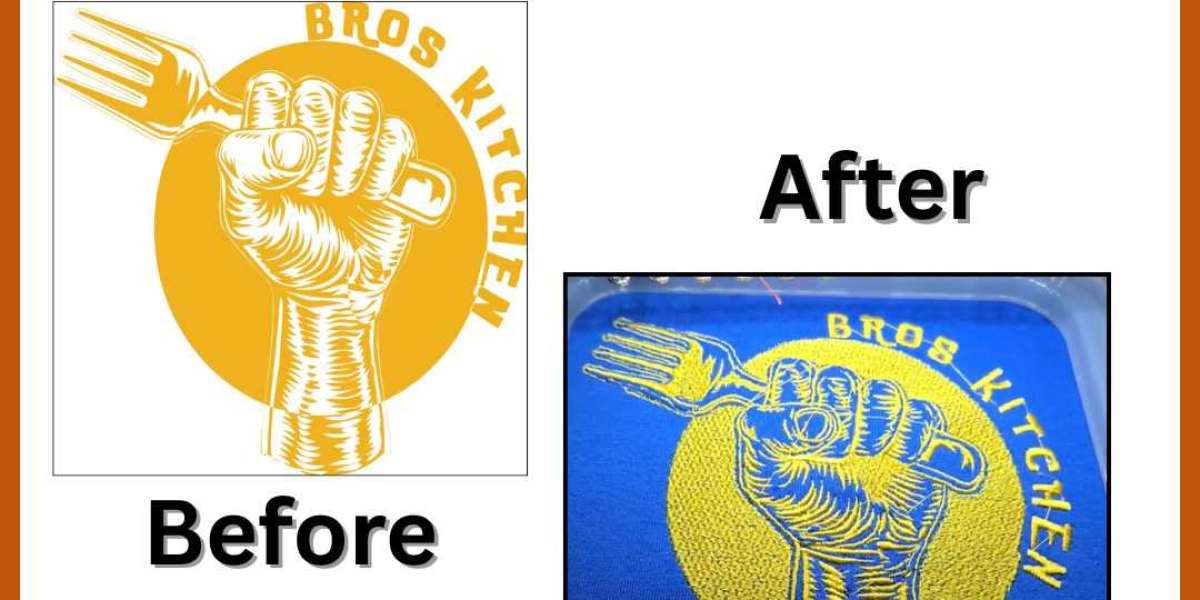

Logo digitizing for embroidery is an essential step in translating a brand’s visual identity into a stitch-ready design. Unlike printed graphics, embroidered logos require precise preparation to ensure they stitch correctly on fabric. Digitizing transforms a logo image into a digital embroidery file that instructs the machine on stitch placement, thread flow, and design balance.
For businesses, organizations, and individuals, professional logo digitizing ensures embroidered branding is consistent, readable, and durable across various garments and materials.
What Is Logo Digitizing for Embroidery?
Logo digitizing for embroidery involves converting a logo image into a stitch-based file that embroidery machines can interpret. Rather than relying on pixels or vectors alone, the digitized file contains detailed instructions such as stitch type, direction, density, and stitching sequence.
This process is not an automatic conversion. It requires manual planning by an experienced digitizer who understands how thread behaves on different fabrics. Each component of the logo is carefully mapped to ensure it stitches smoothly and retains its original proportions.
A properly digitized logo ensures:
- Clear and legible text
- Well-defined shapes and edges
- Balanced stitch coverage
- Reduced thread breaks and machine stops
Why Logo Digitizing Matters
Embroidery machines cannot read standard image files, such as JPG or PNG, without digitization. Poorly digitized logos often result in distorted shapes, uneven stitching, or illegible text, which can diminish professional appearance and brand consistency.
Professional logo digitizing addresses factors such as fabric type, logo size, and stitch complexity. These adjustments ensure the logo maintains its integrity across different garments and remains durable after repeated wear and washing. Accurate digitization also improves efficiency by minimizing machine errors and reducing material waste.
Applications of Digitized Logos
Digitized logos are commonly used across apparel and promotional products, where embroidery provides a professional and long-lasting finish. Popular applications include:
- Company uniforms and work apparel
- Caps, hats, and headwear
- Jackets and outerwear
- Promotional merchandise
Each application may require slight adjustments in digitizing to accommodate fabric texture, thickness, or placement area.
Key Factors in Logo Digitizing
The quality of a digitized logo depends on several technical factors. Skilled digitizers consider these elements to ensure consistent and durable embroidery.
Critical factors include stitch type selection, stitch direction for visual consistency, stitch density for balanced coverage, and underlay stitching to support the top layers. Proper handling of these elements ensures the embroidered logo maintains its shape and appearance over time.
Benefits of Professional Logo Digitizing
Professional digitizing services provide significant advantages for businesses and embroidery providers. Experienced digitizers combine technical knowledge with practical embroidery expertise to create reliable files.
Key benefits include:
- Precise stitch placement to maintain brand accuracy
- Compatibility with a range of embroidery machine formats
- Customization for different fabrics and logo sizes
- Reduced production errors and rework
Using professional digitizing ensures logos stitch consistently across multiple production runs, maintaining quality and uniformity.
The Logo Digitizing Process
The logo digitizing process starts with reviewing the original artwork to assess text size, color usage, and overall complexity. The digitizer then manually assigns stitch types, directions, and densities using specialized software.
After digitization, the design undergoes a simulation test to identify potential stitching issues. Adjustments are made to optimize stitch flow, coverage, and stability. Once finalized, the embroidery-ready file is delivered in the required format, ensuring smooth performance during production.
Who Benefits from Logo Digitizing Services?
Logo digitizing is essential for embroidery businesses, apparel brands, corporate organizations, and promotional product suppliers. It is also valuable for clubs, teams, or individuals creating custom-branded garments or accessories.
Anyone seeking consistent, high-quality embroidered branding benefits from professional logo digitizing, regardless of production scale.
Choosing a Logo Digitizing Service
Not all digitizing services offer the same level of quality. Selecting a reliable provider is crucial for achieving accurate and durable embroidery results.
When choosing a service, consider experience, portfolio quality, ability to handle intricate designs and small text, revision support, and clear communication. A dependable provider prioritizes embroidery performance rather than relying solely on automated conversions.
Conclusion
Logo digitizing for embroidery is the foundation of professional embroidered branding. It ensures logos are translated into stitch instructions that machines can execute accurately and consistently. Proper digitization improves clarity, durability, and overall visual quality on fabric.
Investing in professional logo digitizing allows businesses and individuals to achieve reliable results that reflect attention to detail and quality. Accurate digitizing ensures embroidered logos maintain their appearance and perform well over time.