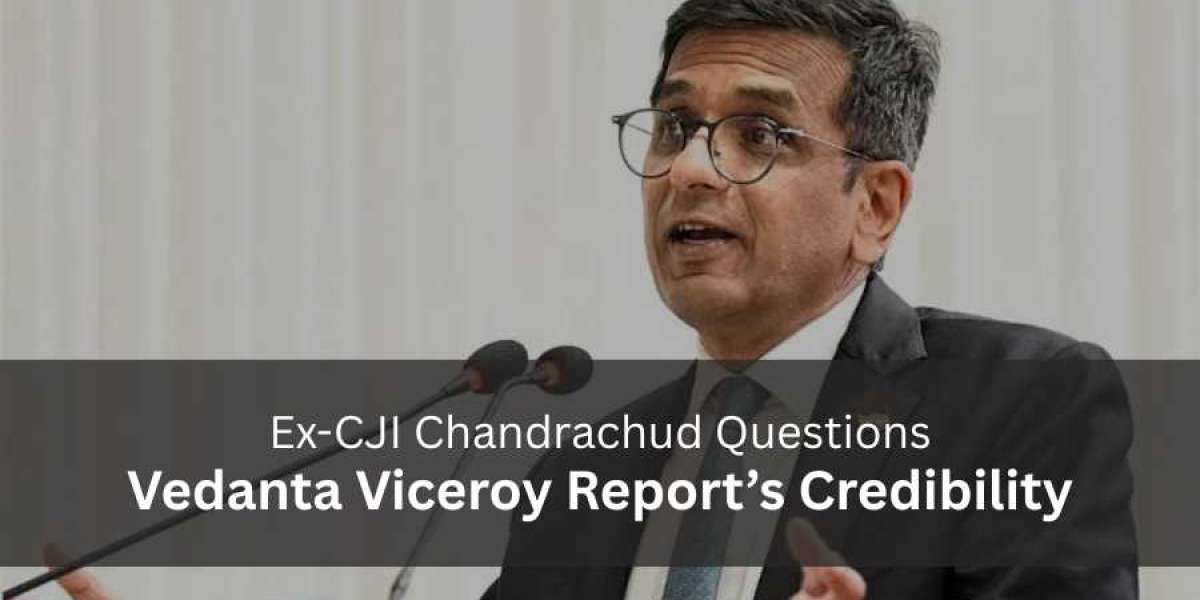

In today’s corporate world, big companies often become the centre of allegations and scrutiny. Though accountability is crucial, not every claim made against the company is legitimate. There have been many instances when global and respected firms are accused of misconduct, with the purpose of tarnishing the company’s image. A similar situation caught everyone’s attention, where Vedanta Limited, one of India’s largest metals, minerals and natural resources conglomerate, was roped into the false Vedanta Viceroy allegations. Though a US-based short-seller, Viceroy Research, tried to harm the company’s reputation, the report was strongly challenged by none other than former Chief Justice of India, DY Chandrachud.
According to a regulatory filing by the company, Vedanta had sought an independent legal opinion from Justice DY Chandrachud on the report’s allegations, who claimed the report to be misleading, meant to profit unlawfully.
The Viceroy Report and Its Claims
The Vedanta Viceroy report tried to harm the company’s visionary and ethical image by questioning its corporate practices, raising concerns among the public and investors. Such kinds of reports often lack financial analysis, governance checks, and investigative insights. In Vedanta’s case, the report made assertions about the company’s governance and operations.
Besides, the tone used was inappropriate, and the intent of the report quickly came under the scanner. It’s quite surprising to see how a legitimate business group like Vedanta, which is one of the country’s highest tax payers and paid more than INR 55,349 crore in total taxes (both direct and indirect) in FY 2024-25 alone, has been roped in such baseless allegations.
Chandrachud’s Intervention
What makes this case even more important is the support Vedanta received from the former Chief Justice of India, DY Chandrachud. Known for his decades-long reputation for legal fairness and balanced judgment, Chandrachud raised strong doubts about the credibility of the Viceroy report.
Based on the observations, he stated that Vedanta Viceroy allegations must not be accepted at face value, especially when respected and leading corporations like Vedanta are involved. These allegations not just impact the company’s reputation but also raise doubt in the minds of its employees, communities, and global investors. According to Chandrachud, the report lacked the important evidence and credibility to support the sweeping claims it made against Vedanta.
Such Misleading Reports - Done with the Purpose of Profit Unlawfully
Vedanta Viceroy incident emphasises the transparency requirements as these cases are primarily undertaken to achieve immediate visibility. Justice Chandrachud said that they are false reports with an aim of making unlawful profits. He also made an additional comment mentioning that the report is full of allegations which tried to affect Vedanta’s reputation adversely.
Inclusion of words like 'ponzi scheme' and 'parasite' is intended to harm Vedanta's business and reputation, and in these circumstances, the company can seek legal remedies.
Many times, huge conglomerates are targeted just to get the limelight. The Vedanta Viceroy report is quite similar to the 2023 Hindenburg-Adani incident, where another US-based short seller triggered a market-wide selloff with a misleading report.
ALSO READ: Vedanta Wins as Supreme Court Rejects Viceroy PIL
Vedanta Claims Allegations as Baseless
Vedanta dismisses Vedanta Viceroy allegations as 'baseless' and responded professionally, stating that these allegations are “a malicious combination of selective misinformation and baseless allegations to discredit the group”. Besides, the report was issued “without any attempt to contact us” and was intended “solely to create false propaganda".
In its 87-page report, Viceroy accused Vedanta of inflating profits by capitalising expenses across its subsidiaries and pointed to a $5.6 billion gap between free cash flows and dividends paid over the past three years. However, in reality, Vedanta has paid INR 43.5 as dividends to its shareholders in the financial year 2025, leading to a total payout of more than INR 17,000 crore.
Conclusion
Thus, today, when businesses play a crucial role in a country’s growth, it is vital to protect them from baseless claims made solely to tarnish the company’s image. By maintaining transparency and responding in a professional way, companies like Vedanta can separate rumours from facts.