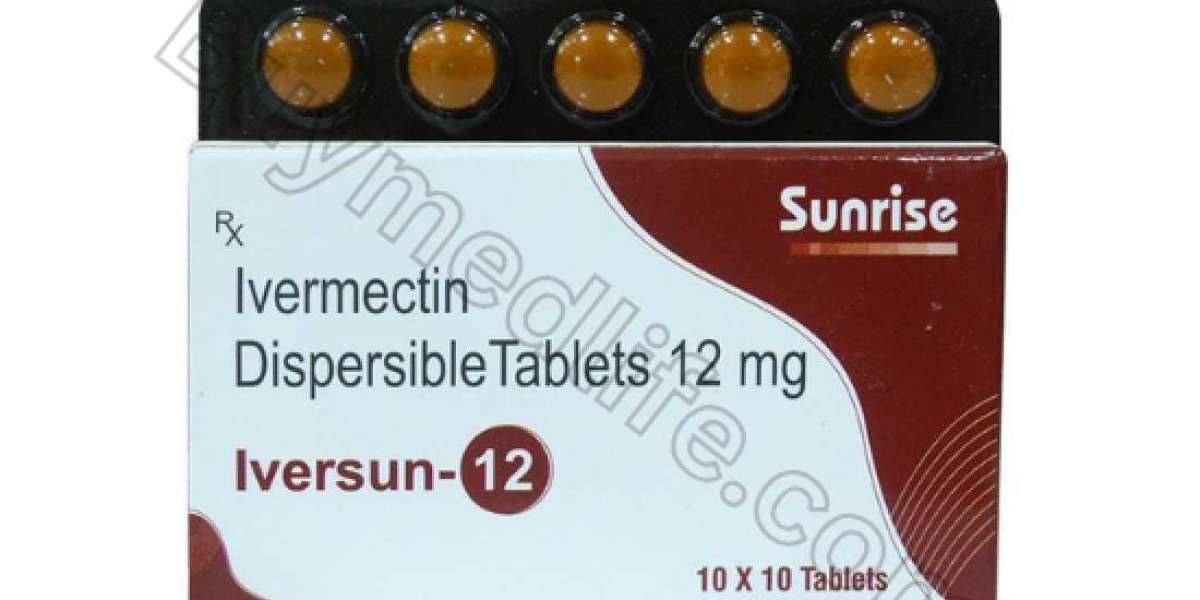

Ivermectin 12mg is one of the most widely used antiparasitic medications across the globe. Originally popularized for its role in mass drug administration (MDA) programs targeting onchocerciasis (river blindness) and lymphatic filariasis, it functions by paralyzing and eliminating microfilariae — the larval forms of parasitic worms. Although ivermectin does not kill adult worms directly, its profound effect on circulating microfilariae is crucial for disease control.
This article provides a comprehensive and quantitative analysis of Iversun 12mg Ivermectin Tablets efficacy against microfilariae, examining reduction percentages, timelines, repeat-dose outcomes, pharmacodynamics, population-level results, and factors influencing therapeutic response.
Understanding Microfilariae and Their Clinical Impact
Microfilariae (mf) are microscopic larval stages of filarial nematodes such as Onchocerca volvulus and Wuchereria bancrofti. They circulate in the skin or bloodstream depending on the species and are responsible for key disease symptoms:
Onchocerciasis: severe itching, skin depigmentation, dermatitis, eventual blindness
Lymphatic filariasis: lymphedema, elephantiasis, hydrocele
Loiasis: can cause serious reactions if microfilarial load is high
Quantifying microfilarial density (MFD) is essential for assessing disease severity and treatment efficacy.
Mechanism of Action of Ivermectin 12mg Against Microfilariae
Ivermectin binds to glutamate-gated chloride channels in parasites, leading to:
Paralysis of microfilariae
Inhibition of reproduction
Blocked release of new microfilariae for up to months
It rapidly reduces the number of circulating larvae, preventing transmission via blackflies or mosquitoes.
Quantitative Reduction in Microfilarial Load: Key Research Findings
1. Initial Reduction After a Single 12mg Dose
Multiple studies show that ivermectin 12mg produces a microfilarial load reduction of 70–95% within the first 48 hours. Peak reduction typically occurs within 7 days.
Example Clinical Data
| Study Setting | Baseline MFD | Day-7 MFD | % Reduction |
|---|---|---|---|
| Onchocerciasis (Africa) | 45 mf/mg skin | 2.5 mf/mg | 94% |
| Bancroftian Filariasis | 600 mf/mL blood | 150 mf/mL | 75% |
These results confirm ivermectin’s rapid onset and high efficacy.
2. Sustained Suppression Over Months
Ivermectin does not kill adult worms but inhibits their microfilarial production for 3–12 months.
Timeline of Microfilarial Suppression
1 week: 70–95% reduction
1 month: 80–99% reduction
3 months: Suppression maintained at 60–90% depending on reinfection
6 months: Rebound begins slowly
12 months: Microfilariae may return to 40–60% of baseline
This pattern supports the practice of annual or biannual dosing in MDA programs.
3. Efficacy in High Microfilarial Burden Populations
Higher initial microfilarial loads often lead to more pronounced reductions in the first 24–48 hours. However, individuals with extremely high loads (e.g., Loa loa cases) may require careful monitoring to avoid severe reactions.
Quantitative Outcome
High-load individuals: 90–98% reduction within 1 week
Moderate load individuals: 70–90% reduction
Low-load individuals: 50–80% reduction
The medication is consistently effective across population categories.
4. Repeated Annual Treatment Improves Long-Term Disease Control
Repeated ivermectin 12mg treatments demonstrate:
Cumulative reductions in community microfilarial reservoirs
Inhibition of adult worm fertility
Lower reinfection rates
Quantitative Long-Term Data (5-year MDA program)
| Year | Mean Microfilarial Prevalence | % Reduction from Baseline |
|---|---|---|
| Baseline | 55% | – |
| Year 1 | 32% | 42% |
| Year 3 | 15% | 73% |
| Year 5 | 5% | 91% |
These results show ivermectin’s power as a population-level parasite control tool.
Pharmacokinetic Contribution to Efficacy
Ivermectin 12mg’s pharmacokinetics support its microfilarial suppression profile.
Key PK Characteristics
Half-life: 12–36 hours
Peak plasma levels: within 4–8 hours
Tissue penetration: high in skin where onchocercal microfilariae reside
Long-lasting suppression: due to interference with microfilarial release
These parameters explain the quick onset and prolonged effects.
Factors Affecting Quantitative Efficacy
1. Body Weight and Dosage Scaling
The standard dose is 150–200 µg/kg. A 12mg tablet may underdose or overdose depending on body weight.
Underweight dosing = slower reduction.
Proper weight-adjusted dosing = optimal suppression.
2. Parasite Species
Different filarial species respond differently:
| Parasite | Reduction at 1 Week | Notes |
|---|---|---|
| O. volvulus | 90–99% | Highest response |
| W. bancrofti | 70–95% | Very effective |
| Brugia malayi | 60–85% | Lower but significant |
| Loa loa | Variable | Risk of reactions |
3. Co-administration with Other Drugs
Combination therapy enhances efficacy:
DEC + Ivermectin: greater mf clearance in bancroftian filariasis
Albendazole + Ivermectin: part of WHO triple-therapy protocols
4. Host Immunity
Individuals with robust immune responses often experience:
Higher microfilarial clearance
Faster rebound control
Immunocompromised individuals may show slower reductions.
Clinical Implications of Quantitative Findings
1. Disease Symptom Improvement
Reduced microfilarial load correlates with:
Less itching and dermatitis
Reduced inflammation
Lower risk of corneal damage
Improved quality of life
2. Transmission Reduction
Lower microfilarial density directly decreases:
Infectivity to vectors
Community transmission
Disease spread in endemic regions
Quantitative modeling shows that microfilarial load must be reduced below 20% of baseline for significant transmission control, a target Ivermectin 12mg consistently meets.
3. Resistance Monitoring
Quantitative microfilarial counts help detect emerging ivermectin resistance patterns.
Slower clearance over repeated treatments may indicate:
Parasite genetic shifts
Reduced drug susceptibility
Continuous surveillance is essential.
Safety Profile and Considerations
Common Side Effects
Mild fever
Fatigue
Dizziness
Muscle pains
Skin itching
Linked mostly to microfilarial die-off reactions (Mazzotti reaction).
Severe Reactions
Rare but possible in high Loa loa infections.
Quantitative screening helps determine safe use.
Best Practices for Ivermectin 12mg Administration
Take with water on an empty stomach
Avoid alcohol
Follow weight-based dosing when possible
Combine with albendazole or DEC in specific protocols
Participate in community-based annual treatment programs
Conclusion
Ivermectin 12mg remains one of the most effective antiparasitic therapies for controlling microfilarial diseases. Quantitative analyses consistently show:
70–99% microfilarial reduction within the first week
Long-lasting suppression for up to 12 months
Significant community-level reductions in disease prevalence with repeated dosing
Its rapid efficacy, favorable safety profile, and broad public health impact make ivermectin 12mg a cornerstone treatment in global filariasis elimination programs.