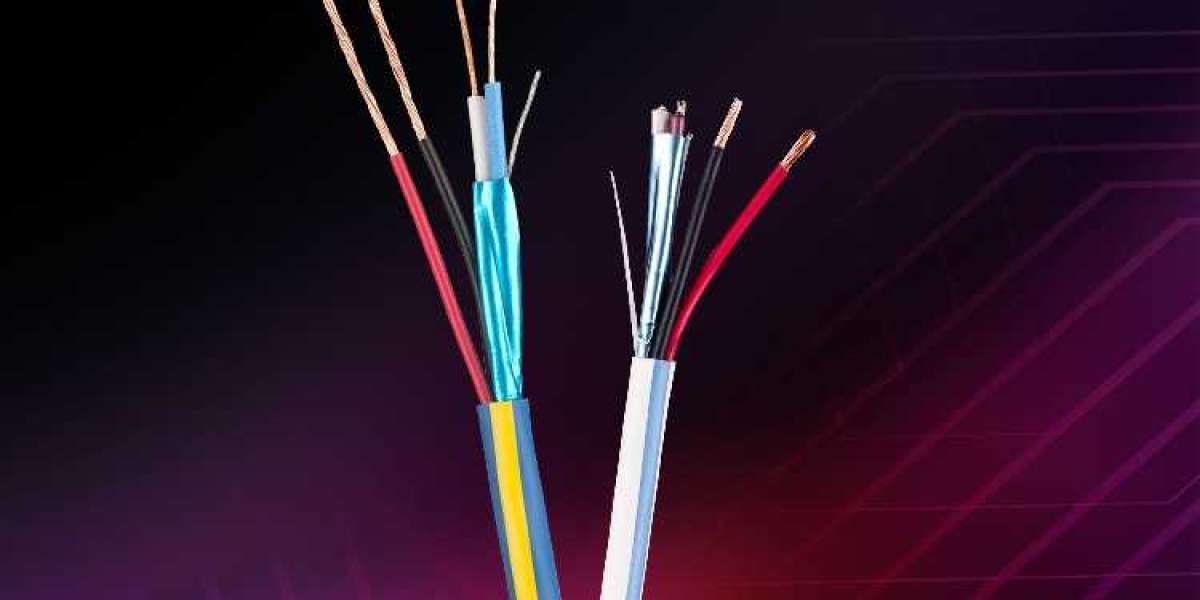

In the cable industry, the test lab is the ultimate guarantor of safety and long-term reliability. Cables are designed to last for decades, often in inaccessible places like underground conduits or within nuclear facilities. Therefore, testing must go far beyond basic compliance; it must proactively verify the cable's endurance, predict its lifespan, and simulate the extreme conditions it will face. This push for absolute certainty has led to the adoption of sophisticated, advanced testing methodologies that are the backbone of modern cable quality assurance.
Test Pillar 1: Detecting the Invisible Flaw (Electrical Integrity)
For medium- and high-voltage cables, reliability hinges on the insulation being perfectly flawless.
- Partial Discharge (PD) Testing: This is the most crucial test for detecting microscopic imperfections. PD is a tiny electrical spark that occurs within voids or impurities inside the insulation layer. The test applies high voltage while using sensitive instruments to measure these discharges.
- The Value: A cable that fails PD testing will fail prematurely in the field due to insulation erosion. Eliminating PD before deployment is the only way to guarantee a 40-year lifespan.
- Impulse Testing (Lightning Surges): Cables must withstand sudden voltage spikes (transients) caused by lightning strikes or switching operations. Impulse testing simulates these events to verify the dielectric strength of the insulation under extreme, instantaneous stress.
Test Pillar 2: Simulating Disaster (Safety and Resilience)
Safety-critical applications require cables to prove their survival capabilities under crisis.
- Fire Performance Testing: For LSZH and fire-resistant (FR) cables, manufacturers perform tests like IEC 60331 and BS 6387. These tests apply direct flame (up to $950^\circ\text{C}$) while the cable is energized.
- The Measure: The cable must maintain circuit integrity (keep power flowing) and restrict smoke/toxic gas release for a specified period (e.g., 90 minutes). This is a non-negotiable benchmark for life-safety compliance.
- LOCA (Loss-of-Coolant Accident) Testing: Required exclusively for nuclear-grade cables. This highly specialized test simulates the most severe conditions (extreme radiation, heat, pressure, and steam) found inside a containment area during an accident. The cable must remain fully functional throughout the simulation.
Test Pillar 3: Guaranteeing Longevity (Material Durability)
A cable’s durability is verified by subjecting its materials to accelerated stress.
- UV and Ozone Testing: For cables destined for outdoor use (e.g., solar farms, aerial cables), samples are exposed to intense UV light and ozone in chambers to simulate decades of environmental exposure, ensuring the jacketing material won't crack or degrade.
- Thermal Aging and Cycling: Samples are subjected to extreme temperature cycles (e.g., rapid shifts from $-40^\circ\text{C}$ to $90^\circ\text{C}$) over extended periods. This simulates the stress of frequent load changes in smart grids, helping to accurately predict the cable’s true operational lifespan.
- Mechanical Stress Testing: Testing for abrasion resistance, crush resistance, and tensile strength ensures that the cable can withstand the rigors of installation, bending, and harsh operating environments.
The Role of Quality Assurance in the Supply Chain
Advanced testing not only confirms the final product but also validates the entire supply chain. Manufacturing expertise from cable manufacturers in uae relies on the absolute integrity of raw materials. By testing materials sourced from quality cable suppliers in uae for purity and compound consistency, the manufacturer ensures that the critical parameters needed for passing high-voltage tests are met from the start.
Conclusion: The Test of Time
Advanced cable testing is the ultimate insurance policy for modern infrastructure. By using sophisticated techniques to uncover invisible flaws, simulate disasters, and predict decades of endurance, manufacturers verify that every cable is safe, reliable, and capable of performing its essential function throughout its long service life. The investment in advanced testing is an investment in the uninterrupted safety and functionality of the connected world.
Your Advanced Testing Questions Answered (FAQs)
- What is the difference between LOCA testing and standard fire testing?
LOCA testing is unique to nuclear cables and simulates an extremely severe, accident scenario involving radiation, high pressure, steam, and heat. Standard fire testing simulates only direct flame and mechanical shock. - Why is UV testing necessary for solar cables?
Solar cables are constantly exposed to direct sunlight. UV radiation rapidly degrades standard polymer jacketing, leading to cracking and insulation failure. UV testing verifies that the specialized polymers used will endure decades of harsh solar exposure. - What are the consequences of a cable failing a Partial Discharge (PD) test?
A PD failure indicates the presence of voids or impurities in the insulation. If installed, this cable will suffer insulation erosion over time, leading to premature electrical breakdown, costly failures, and potential system outages. - How does "Thermal Aging" testing predict a cable's lifespan?
Thermal aging involves exposing cable samples to high temperatures for extended periods to accelerate the degradation process. By measuring the material properties after this aging, engineers can extrapolate the cable's performance and confidently predict its Remaining Useful Life (RUL). - How does impulse testing ensure cable safety?
Impulse testing verifies that the cable's insulation can withstand sudden, extremely high voltage spikes (transients) caused by external events like lightning strikes or large switchgear operations, preventing immediate insulation failure and protecting connected equipment.