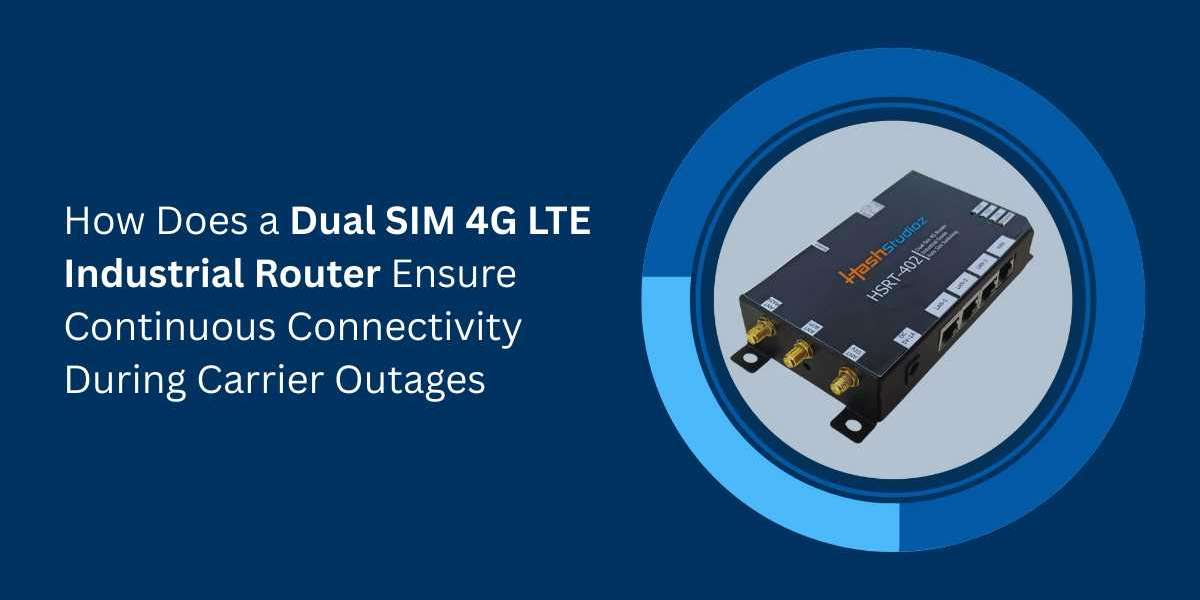

Industrial systems depend on stable network connections. Any loss of connectivity can stop monitoring, control, and data exchange. Carrier outages remain a common risk in cellular networks. Weather events, tower failures, backhaul issues, and maintenance work can interrupt service at any time.
A Dual SIM 4G LTE industrial router addresses this problem by introducing cellular redundancy. Instead of relying on one carrier, the router maintains access to two independent mobile networks. This design improves uptime and protects critical operations from unexpected outages.
This article explains how a Dual SIM industrial router works, the technical mechanisms behind failover, and why it plays a key role in modern industrial connectivity.
Connectivity Challenges in Industrial Environments
Industrial sites often operate in locations where wired connectivity is unavailable or unreliable. Examples include:
- Remote substations
- Mining and oil fields
- Transportation infrastructure
- Smart city deployments
- Utility and water treatment facilities
Cellular networks provide flexibility, but they also introduce risks. A single SIM router depends entirely on one carrier. When that carrier fails, connectivity stops.
Industry reports estimate that over 60% of industrial downtime events involve communication failures. In sectors such as manufacturing and energy, downtime costs can exceed USD 10,000 per minute. Even short outages can cause data gaps, delayed alarms, and safety risks.
What Is a Dual SIM Industrial Router?
A Dual SIM industrial router is a cellular networking device designed for harsh environments. It supports two SIM cards, usually from different mobile carriers. The router connects industrial equipment to the internet using 4G LTE technology.
Key characteristics include:
- Two independent SIM slots
- Automatic carrier switching
- Industrial-grade hardware
- Extended temperature tolerance
- Secure remote management
A Dual SIM 4G LTE industrial router focuses on reliability rather than consumer features. The goal is stable communication under all conditions.
Why Two SIMs Improve Network Reliability
Using two SIM cards reduces dependency on a single carrier. Each carrier operates separate radio networks, towers, and core infrastructure. A failure in one network does not usually affect the other. This separation creates network diversity, which is a proven reliability strategy in industrial systems.
Benefits of dual SIM redundancy include:
- Protection against carrier outages
- Reduced downtime during maintenance windows
- Improved signal availability in remote areas
- Higher overall uptime
In many deployments, dual SIM redundancy raises network availability from 99.5% to over 99.9%.
Continuous Link Monitoring
The foundation of uninterrupted connectivity is constant link monitoring.
What the Router Monitors
A dual SIM 4G LTE industrial router continuously monitors key network parameters, including signal strength, network registration status, packet loss, latency, and response to test traffic. These checks occur at regular intervals, with monitoring logic running locally rather than in the cloud, enabling rapid reaction to failures and maintaining reliable connectivity.
Failover Detection Logic
Failover depends on clear and fast failure detection.
Failure Conditions
The router identifies a carrier issue when one or more of the following occurs:
- Loss of cellular registration
- No response to heartbeat packets
- Packet loss above configured limits
- Latency exceeding thresholds
These conditions are configurable. Engineers can tune them based on application needs. Once the router confirms a failure, it prepares to switch carriers.
Automatic SIM Failover Process
Failover occurs without user involvement. The process follows defined technical steps:
- The primary SIM handles all traffic
- The router detects a link failure
- The cellular modem disconnects from the primary carrier
- The router activates the secondary SIM
- Traffic routes through the backup carrier
This entire sequence often completes in less than one second. Many applications do not notice the transition.
Recovery and Reversion Strategy
Failover alone is not enough. The router must also manage recovery.
1. Reversion Options
A Dual SIM industrial router supports different reversion policies:
- Manual reversion: The system stays on the backup SIM
- Automatic reversion: The router switches back after stability returns
- Timed reversion: The router waits for a defined period
These options prevent unnecessary switching and improve connection stability.
Load Sharing and Active Monitoring
Some deployments use both SIMs actively.
1. Load Sharing Use Case
Rather than keeping one SIM idle, dual SIM routers can distribute traffic intelligently. Critical data is routed through the primary SIM, while non-critical traffic uses the secondary SIM. This strategy reduces network congestion, optimizes bandwidth usage, and improves overall throughput, ensuring reliable and efficient connectivity for industrial applications.
2. Monitoring Both Links
Monitoring both links continuously, even during normal operation, enables the router to detect changes in network conditions instantly. This proactive approach allows seamless switching between carriers, ensuring uninterrupted connectivity and maintaining reliable performance for industrial applications.
Handling Short and Long Outages
Carrier outages vary in duration.
1. Short Outages
Short outages, caused by tower handovers, signal interference, or temporary congestion, are handled smoothly by dual SIM routers. The system switches rapidly between carriers, and active sessions reconnect automatically, minimizing disruption and maintaining continuous data flow for industrial applications.
2. Long Outages
Long outages can result from power failures, fiber backhaul damage, or natural disasters. During such events, industrial routers continue operating on the backup SIM until primary connectivity is restored. Many routers also store logs and performance data locally, enabling post-event diagnostics and ensuring that critical information is preserved despite extended network interruptions.
Session Stability During Failover
Session stability during failover is critical for industrial applications using VPN tunnels, SCADA polling, and MQTT or HTTP connections. While failover may cause brief interruptions, industrial routers efficiently recover sessions. Advanced models support fast VPN re-establishment, keepalive mechanisms, and application-aware routing, minimizing data loss and maintaining responsive, continuous system operation.
Local Data Buffering
When both carriers fail, some industrial routers use local buffering to protect data integrity. Sensor readings are stored locally, and control events are safely queued. Once connectivity is restored, the buffered data uploads automatically, ensuring no information is lost during rare total network outages and maintaining reliable system operation.
Security During Carrier Switching
Security remains robust during failover in dual SIM 4G LTE industrial routers. Encrypted VPN tunnels, firewall rules, and access control policies continue to operate regardless of which SIM is active. Carrier switching occurs seamlessly without compromising network protections, ensuring consistent cybersecurity even during automatic failover events.
Industrial Hardware Reliability
Hardware stability is essential for reliable connectivity. Industrial routers achieve this through metal enclosures, vibration resistance, wide voltage input, and temperature tolerance from -40°C to +75°C. These robust features ensure continuous operation in harsh environments, maintaining network performance and minimizing downtime even under extreme conditions.
Real-World Industrial Example
1. Remote Power Substation
A power utility initially deployed single-carrier cellular routers for remote monitoring, but frequent outages created gaps in data collection. After switching to dual SIM industrial routers, network uptime exceeded 99.95%, alarm delays dropped nearly to zero, and maintenance visits fell by 30%. The system remained connected even during regional carrier maintenance.
Role in Modern Industrial Networks
Dual SIM routers align with key industrial trends, including Industrial IoT expansion, remote asset management, edge computing, and smart infrastructure. Their adoption is growing rapidly, with market data showing over 15% annual growth, driven by the demand for reliable, always-on connectivity in critical industrial applications and increasingly complex network environments.
Limitations and Design Considerations
Dual SIM phones offer redundancy but do not solve all connectivity issues. Engineers must carefully consider carrier coverage overlap, antenna placement, data plan management, and failover policy tuning. Thoughtful design ensures that dual SIM functionality delivers reliable performance, maximizing network availability and efficiency while avoiding common pitfalls and underutilized features.
Future Outlook
As networks transition to 5G, dual SIM designs remain highly relevant. Many industrial routers already support LTE with 5G fallback, ensuring continuous connectivity. Maintaining carrier diversity will be crucial for reliability planning, allowing systems to switch seamlessly between networks and minimize downtime, ultimately enhancing performance and resilience in evolving communication infrastructures.
Conclusion
A Dual SIM industrial router ensures continuous connectivity by combining carrier redundancy, real-time monitoring, and automatic failover. A Dual SIM 4G LTE industrial router reduces downtime, protects data flow, and supports critical industrial operations.
Through fast detection, smart switching, and robust hardware design, these routers maintain communication during carrier outages. For industries where uptime matters, dual SIM architecture is no longer optional. It is a core requirement.