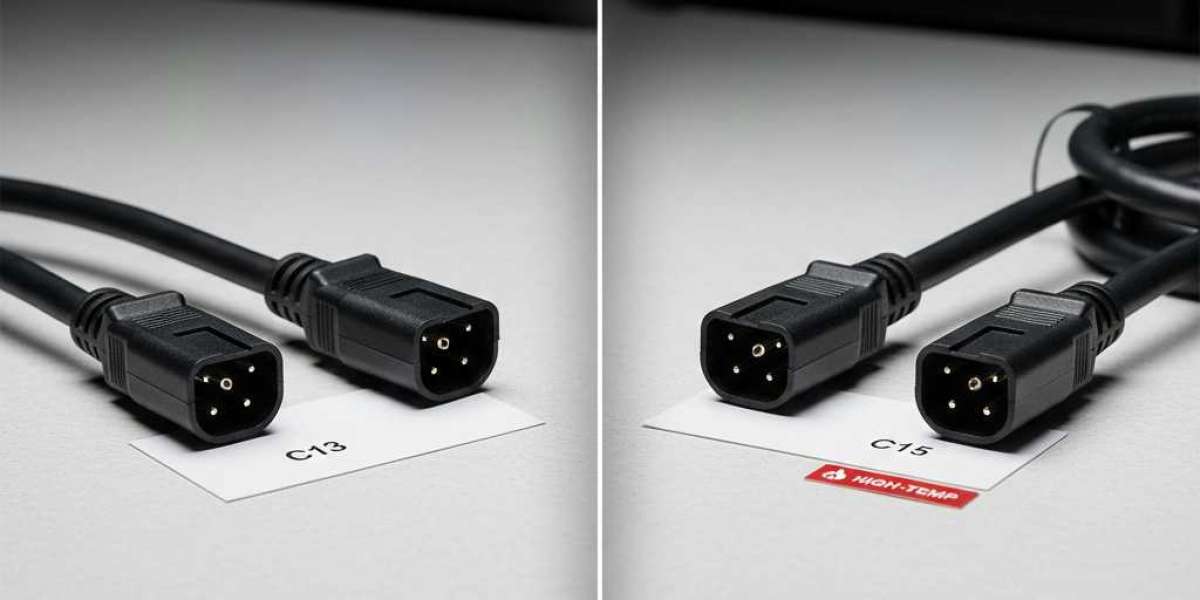

Power cables might seem like simple accessories, but choosing the right one matters more than you think. Two common types you'll encounter are IEC C13 and C15 connectors. They look similar at first glance, but small differences make them suitable for different jobs. Let's break down how to tell them apart and when to use each one.
What Are IEC C13 and C15 Connectors?
Before we dive into the differences, let's understand what these connectors are. The International Electrotechnical Commission (IEC) created standards for power connectors used worldwide. The C13 and C15 are both female connectors that plug into equipment like computers, servers, and network devices.
You've probably seen an IEC C13 power cable connected to your desktop computer or monitor. These cables are everywhere in offices and data centers. The C15 looks almost identical but has special features that make it better for high-temperature environments.
The Key Visual Difference: The Notch
Here's the easiest way to tell C13 and C15 apart: look at the top of the connector.
A C13 connector has a flat, straight top edge. There's nothing special about its shape. It's a simple rectangular opening with three holes for the pins.
A C15 connector has a distinctive notch cut into the top edge. This notch looks like a small rectangular cutout right in the middle of the top surface. Think of it as a bite taken out of the connector's top edge.
This notch isn't just for looks. It serves an important purpose. The notch prevents you from accidentally plugging a C15 cable into equipment that only handles standard temperatures. It's a safety feature built right into the design.
Temperature Ratings: The Real Difference
The notch points to a bigger difference between these connectors: temperature ratings.
An IEC C13 power cable is rated for temperatures up to 70 degrees Celsius (158 degrees Fahrenheit). This works fine for most everyday equipment like computers, monitors, and regular office devices.
A C15 connector handles temperatures up to 120 degrees Celsius (248 degrees Fahrenheit). That's a significant jump. This higher rating makes C15 connectors perfect for equipment that runs hot.
Why does this matter? Some devices generate a lot of heat during operation. Using a cable rated for higher temperatures prevents the connector from melting, warping, or failing when things heat up.
Material and Construction Differences
To handle those higher temperatures, C15 connectors use different materials. The plastic housing is made from heat-resistant materials that won't deform or lose their shape under stress.
C13 connectors use standard plastic that works well for normal operating conditions. There's no need for expensive heat-resistant materials when the equipment stays cool.
Both types use quality metal contacts for the electrical connections. However, C15 connectors may use metals with better heat tolerance to maintain reliable connections even when hot.
Common Use Cases for C13 Power Cables
You'll find IEC C13 power cables connected to:
- Desktop computers
- Computer monitors
- Printers and scanners
- Network switches and routers
- External hard drives
- Gaming consoles
- Audio equipment
- Most office electronics
Basically, if it's standard office or home electronics that don't generate extreme heat, a C13 cable does the job perfectly. These cables are the workhorses of the electronics world.
When You Need C15 Connectors
C15 connectors are essential for:
- Electric kettles used in servers and data centers
- High-performance servers that run continuously
- Hot-swap power supplies
- Industrial equipment
- Commercial kitchen appliances
- Heated laboratory equipment
- Power distribution units in hot environments
- Any device specifically requiring high-temperature cables
If the equipment manual specifies a C15 connector, don't substitute a C13. The manufacturer chose C15 for a reason.
Compatibility Between C13 and C15
Here's something important to know: compatibility works one way but not the other.
You can plug a C13 connector into a C15 inlet (the male port on equipment). The C15 inlet accepts both types because it's designed for higher temperatures anyway. Using a lower-rated cable is your choice, though not recommended for hot equipment.
However, you cannot plug a C15 connector into a C13 inlet. The notch on the C15 physically prevents it from fitting. This is intentional. It stops people from using high-temperature cables with equipment not designed for them, which could indicate a safety concern.
Voltage and Current Ratings
Both C13 and C15 connectors typically handle:
- 250 volts AC
- 10 amps of current
- Suitable for equipment up to 2500 watts
These electrical ratings are the same. The difference is purely about temperature tolerance. So when choosing between them, focus on the heat your equipment generates, not the power it draws.
How to Choose the Right Cable
Follow these simple steps:
First, check your equipment manual or the inlet on your device. If it has the notched shape, you need a C15 cable.
Second, consider the operating environment. Does your equipment run hot? Is it in a warm room? Will it operate continuously? If yes to any of these, lean toward C15.
Third, when in doubt, C15 provides extra safety margin. It costs slightly more but handles anything a C13 can, plus high-temperature situations.
Cost Considerations
An IEC C13 power cable typically costs less than a C15 cable. The difference isn't huge, but it exists because of the special materials in C15 connectors.
For large installations with dozens or hundreds of cables, this price difference adds up. That's why data centers carefully assess which equipment truly needs C15 cables and which can use standard C13.
Safety Tips
Never force a connector into an inlet. If it doesn't fit smoothly, you might have the wrong type.
Inspect cables regularly for damage. Heat damage shows up as discoloration, melting, or deformation of the plastic housing.
Replace cables that feel excessively hot during use. This could indicate an electrical problem or an undersized cable for the load.
Always match the cable type to the equipment requirements. Using the wrong cable creates fire hazards.
Final Thoughts
Identifying an IEC C13 power cable versus a C15 comes down to one simple check: look for the notch. That small cutout tells you everything you need to know about the cable's temperature rating and proper use.
For most home and office electronics, C13 cables work perfectly. They're affordable, widely available, and handle standard equipment with no issues.
When dealing with hot-running equipment, servers, or industrial devices, step up to C15. The higher temperature rating provides safety and reliability when heat is a factor.
Understanding these differences helps you make smart choices about power cables. You'll avoid equipment damage, prevent safety hazards, and ensure your devices get the proper power connections they need to operate reliably.
Sources: https://indiangeek.in/iec-c13-vs-c15-power-cords-whats-the-difference-and-when-to-use-each/
https://logcla.com/blogs/1045766/Backwards-Compatibility-Explained-When-You-Can-Use-C15-in-Place